
Introduction
Effective delivery route optimization is essential for logistics companies aiming to enhance supply chain efficiency and customer satisfaction. By implementing effective strategies, businesses can significantly reduce costs, improve delivery times, and minimize environmental impact.
Businesses often struggle with the intricacies of real-time data and unpredictable traffic patterns, which complicate route optimization. Identifying best practices for logistics companies is crucial for streamlining operations and fostering long-term customer loyalty. Addressing these challenges is vital for companies seeking to maintain competitive advantage and foster lasting customer relationships.
Understand the Importance of Delivery Route Optimization
Delivery route optimization is essential for enhancing supply chain efficiency and ensuring customer satisfaction. Efficient path planning can reduce shipping costs by up to 20%, along with lowering fuel consumption and travel time. Meight's platform enhances this process by analyzing driving patterns and leveraging network data, including location and usage, to predict errors and encourage drivers to improve their performance on key road segments.
For instance, sophisticated algorithms and real-time data integration enable transport providers to flexibly modify paths according to existing traffic situations, resulting in enhanced reliability of shipments. Additionally, automated order sending to drivers and comprehensive real-time operational insights ensure that deliveries are completed within promised timeframes, which is crucial for maintaining customer trust and loyalty.
In a competitive transportation landscape, recognizing the importance of delivery route optimization through Meight's automated solutions is essential for survival and growth.

Implement Effective Route Planning Techniques
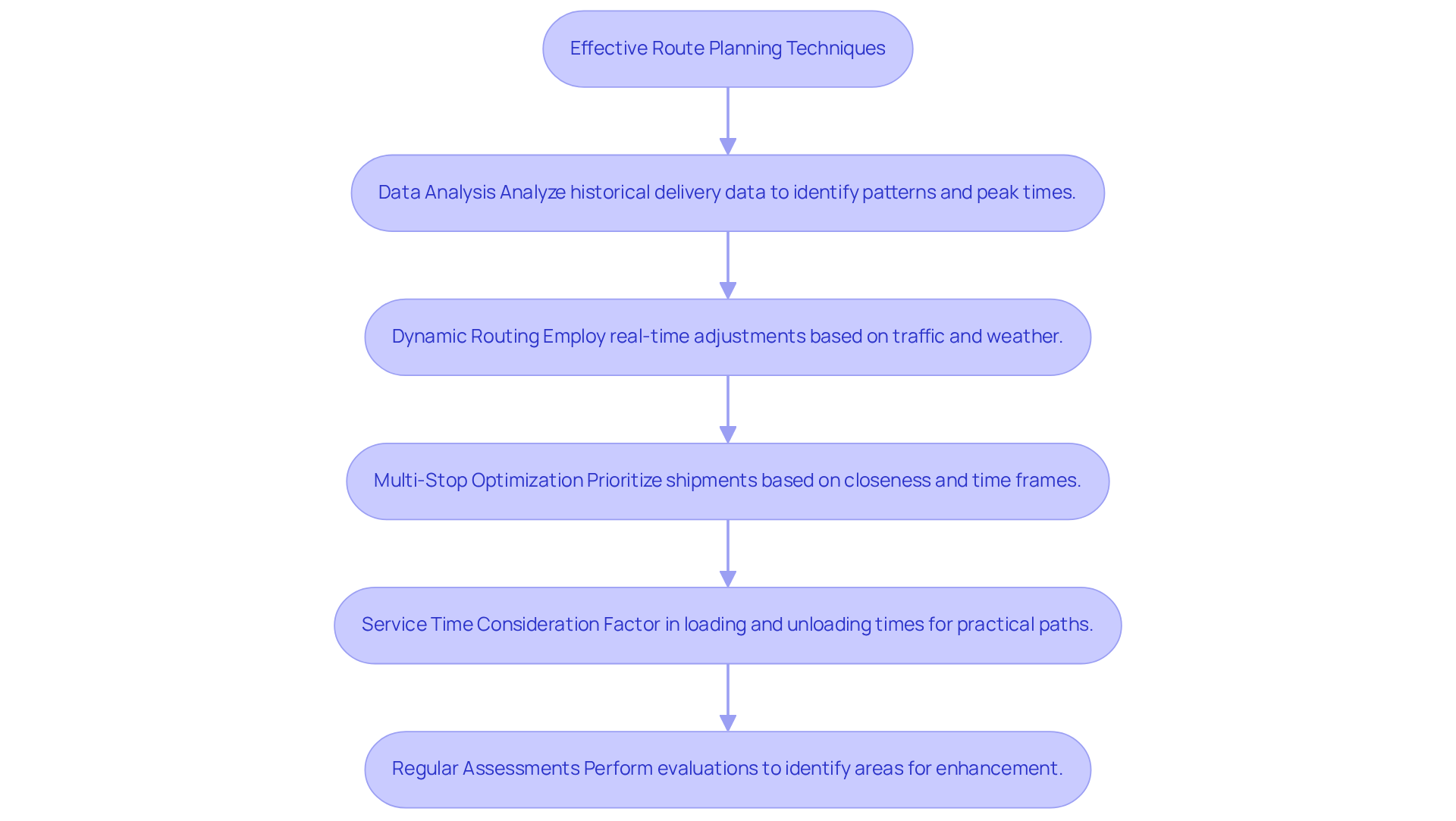
To enhance logistics efficiency, managers must adopt techniques for delivery route optimization.
- Data Analysis: Analyze historical delivery data to identify patterns and peak times. This understanding helps identify effective paths and necessary modifications. Companies utilizing data analytics have reported significant advancements in operational performance and cost reduction.
- Dynamic Routing: Employ dynamic routing techniques that facilitate real-time adjustments based on traffic conditions, weather, and other unforeseen factors. This flexibility can significantly improve distribution efficiency, as contemporary navigation planning software employs real-time data streams to facilitate delivery route optimization by continuously optimizing paths.
- Multi-Stop Optimization: When arranging paths with several stops, prioritize shipments based on closeness and time frames. This approach minimizes backtracking and reduces overall travel distance, allowing drivers to complete more stops per shift while maintaining geographical coherence.
- Service Time Consideration: Factor in the time required for each shipment, including loading and unloading times. This ensures intended paths are practical and attainable, ultimately enhancing accuracy of shipments and customer contentment.
- Regular Assessments: Perform regular evaluations of pathway performance to identify areas for enhancement. Modify paths according to input from operators and outcome results to consistently improve efficiency. Companies that implement regular performance evaluations often find opportunities to optimize their operations further.
By applying these techniques, logistics companies can achieve delivery route optimization, streamline their operations, reduce costs, and improve overall service quality, which ultimately leads to enhanced customer satisfaction and stronger business relationships. Ultimately, these strategies not only improve operational efficiency but also foster long-term customer loyalty.
Leverage Technology for Enhanced Route Efficiency
Integrating technology into logistics not only enhances operational efficiency but also supports sustainability efforts. Here are key technologies to consider:
- Utilize advanced delivery route optimization software that employs algorithms to determine the most efficient routes. These tools analyze factors such as traffic patterns and shipping timeframes. They then recommend the most efficient routes. Companies utilizing dynamic routing report a 45% increase in shipments per vehicle, highlighting the effectiveness of these solutions. Meight's innovative platform contributes to managing 43.8 kton CO2 emissions, reinforcing the importance of efficiency in reducing environmental impact.
- Implement GPS tracking systems to monitor vehicle locations in real-time. This allows for quick adjustments to routes based on current traffic, helping ensure timely deliveries and reducing delays. Real-time dynamic routing can result in on-time arrival rates surpassing 90%, greatly improving customer satisfaction while also reducing fuel usage and emissions.
- Equip drivers with mobile applications that provide real-time updates and navigation assistance. For instance, mobile applications can alert drivers to traffic jams or delays, allowing them to reroute quickly and maintain efficiency. This capability is vital for preserving operational efficiency and sustainability.
- Utilize data analysis to evaluate the performance of shipments and identify inefficiencies. By examining metrics like transit durations and fuel usage, transport managers can make knowledgeable choices to improve planning of paths. Businesses that implement advanced route management software have reported 15-30% reductions in total delivery costs within the first year, showcasing the financial benefits of delivery route optimization. Meight's dedication to controlling CO2 emissions corresponds with these analytics, encouraging a more sustainable transportation method.
- Ensure that new technologies integrate seamlessly with existing IT systems. This enhances data exchange and communication across the supply chain, leading to better decision-making and increased operational efficiency. The significance of data integration capabilities cannot be exaggerated, as they ensure precise decision-making and comprehensive visibility in supply chain operations, further supporting Meight's sustainability initiatives.
By embracing these technologies, logistics companies can significantly contribute to a more sustainable future while optimizing their operations. Additionally, dynamic routing supports environmental sustainability by reducing fuel consumption and greenhouse gas emissions, aligning with Meight's commitment to greener practices in the logistics industry.

Monitor and Adjust for Continuous Improvement
Ongoing enhancement in delivery route optimization relies on the meticulous observation and adjustment of performance metrics. Here are essential steps to ensure ongoing enhancement:
- Performance Metrics: Set key performance indicators (KPIs) such as punctuality rates, fuel effectiveness, and driver productivity. Consistently evaluating these metrics can uncover the efficiency of current paths and emphasize areas requiring enhancement. Many firms that have adopted AI-based optimization report significant improvements in performance and fuel efficiency. They have recorded decreases in overall transportation expenses of 15% to 30% within the first year.
- Feedback Mechanisms: Establish strong channels for drivers to offer input on travel effectiveness and obstacles faced during shipments. This firsthand information is crucial for implementing effective adjustments. For example, logistics companies that actively integrate driver insights into their routing strategies often observe increased operational performance and better first-attempt delivery success rates.
- Regular Training: Conduct ongoing training sessions for drivers centered on best practices for navigation and effectiveness. Keeping drivers informed about new technologies and techniques can significantly enhance their performance and adaptability in dynamic environments.
- Adapt to Changes: Adjusting routes can be challenging due to unpredictable traffic and changing customer needs. Be prepared to modify routes based on evolving traffic patterns, customer demands, or operational constraints. This flexibility leads to improved customer satisfaction and operational reliability. Companies employing dynamic routing have attained on-time arrival rates surpassing 90%.
- Benchmarking: Regularly compare performance against industry standards and competitors. This benchmarking can illuminate areas for improvement and inspire innovative solutions. Organizations that utilize advanced algorithms and real-time data for planning paths often see a 20.7% enhancement in time efficiency, highlighting the advantages of remaining competitive.
By prioritizing continuous improvement, logistics companies can achieve delivery route optimization while significantly enhancing customer satisfaction and operational efficiency.

Conclusion
In an increasingly competitive market, effective delivery route optimization is essential for maintaining supply chain efficiency and customer satisfaction. By leveraging advanced technologies and strategic planning techniques, logistics companies can significantly reduce costs, improve delivery times, and foster customer loyalty. The integration of data analytics, dynamic routing, and regular performance assessments streamlines operations and positions businesses for sustainable growth in a competitive landscape.
Throughout the article, key practices such as:
- Data analysis
- Dynamic routing
- The use of advanced software tools
have been highlighted as essential components of successful route optimization. Continuous monitoring and adjustment are vital, enabling companies to adapt to changing conditions and uphold high service standards. By adopting these strategies, organizations can achieve remarkable improvements in operational efficiency and customer satisfaction.
For businesses aiming to thrive, embracing delivery route optimization is a strategic necessity that drives long-term success. The benefits extend beyond immediate cost savings; they encompass enhanced brand reputation, increased customer trust, and a commitment to sustainability. As logistics companies navigate the complexities of modern transportation, prioritizing these best practices will be key to unlocking long-term success and fostering a more efficient, environmentally conscious industry.
Frequently Asked Questions
What is delivery route optimization and why is it important?
Delivery route optimization is the process of planning efficient delivery paths to enhance supply chain efficiency and ensure customer satisfaction. It is important because it can reduce shipping costs by up to 20%, lower fuel consumption, and decrease travel time.
How does Meight's platform contribute to delivery route optimization?
Meight's platform enhances delivery route optimization by analyzing driving patterns and leveraging network data, such as location and usage, to predict errors and encourage drivers to improve their performance on key road segments.
What technologies does Meight use for route optimization?
Meight uses sophisticated algorithms and real-time data integration to enable transport providers to modify paths flexibly according to existing traffic situations, which enhances the reliability of shipments.
How does automated order sending benefit delivery operations?
Automated order sending to drivers ensures that deliveries are completed within promised timeframes, which is crucial for maintaining customer trust and loyalty.
Why is delivery route optimization crucial for businesses in the transportation industry?
In a competitive transportation landscape, recognizing the importance of delivery route optimization through automated solutions is essential for survival and growth.