
Introduction
Small trucking companies face significant challenges in maintaining competitiveness, where efficient logistics management is crucial for success. The emergence of trucking management software (TMS) offers significant advantages for these businesses, enabling them to streamline operations, reduce costs, and enhance customer satisfaction. Given the numerous options available, small operators must carefully evaluate which TMS solution aligns with their specific needs and budget. This article delves into the essential features, benefits, and leading software solutions, guiding small transport companies through the decision-making process to ensure they thrive in an evolving logistics landscape.
Understanding Transport Management Software (TMS) for Small Trucking Companies
For minor trucking companies, managing logistics efficiently is a persistent challenge that can significantly impact their bottom line. Trucking management software for small transport companies is a vital tool that streamlines logistics and reduces costs. By facilitating the planning, execution, and optimization of goods movement, TMS enables modest fleets to manage their transportation processes with greater efficiency. Key benefits include improved route planning and enhanced communication between drivers and dispatchers, which directly impacts their operational success.
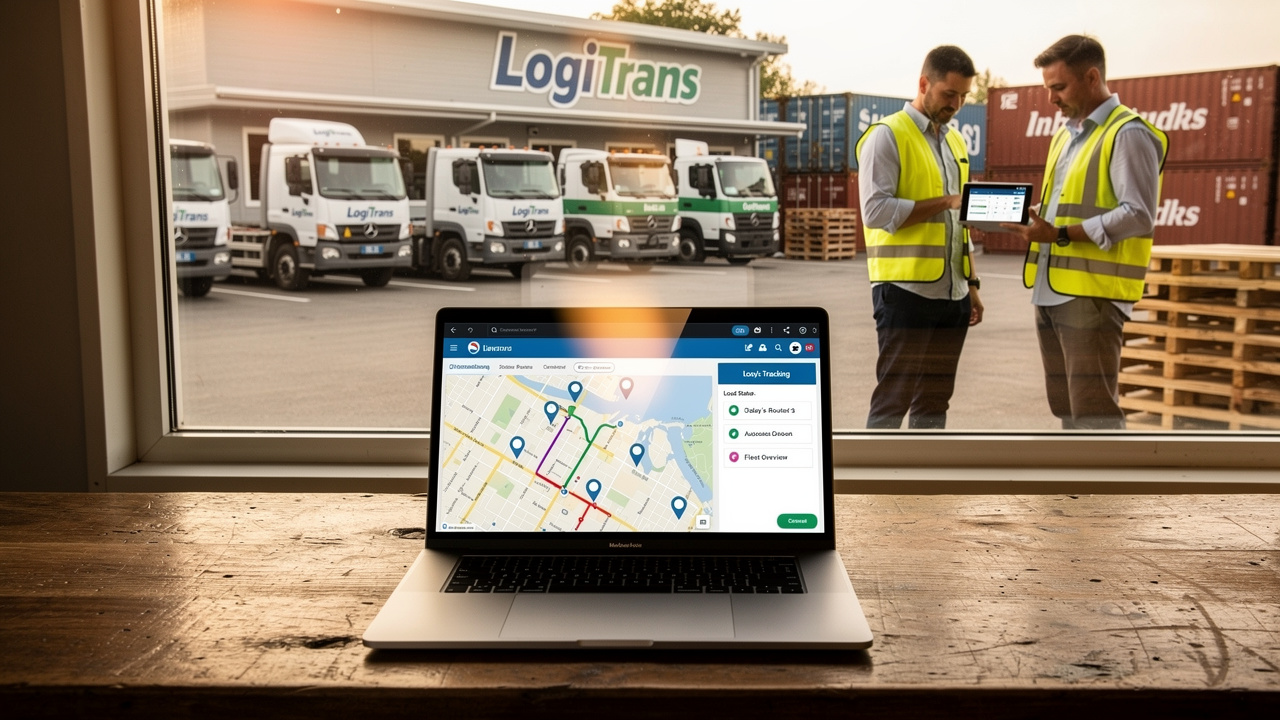
With Meight's seamless cloud integration, minor operators can manage their loads within budget and on time with just a few clicks from their laptops. Automating manual tasks such as load tracking, invoicing, and compliance reporting allows these operators to concentrate on core business activities. This shift directly boosts profitability and significantly improves customer satisfaction. For example, organizations utilizing Meight's TMS report a dramatic reduction in dispatch time per load and the ability to submit invoices on the same day, which is essential for maintaining cash flow.
Additionally, TMS solutions are now acknowledged for their proactive role in compliance management, helping companies avoid costly violations. As the logistics landscape evolves, the adoption of trucking management software for small transport companies, especially with Meight's intelligent transport platform, is becoming a strategic necessity for these companies to compete effectively against larger carriers. With the North American TMS market expected to reach USD 7.32 billion in 2025 and demonstrate a CAGR of 9.8% from 2026 to 2034, investing in TMS is a progressive strategy that enhances intelligence and long-term sustainability. Furthermore, the significance of mobile-first design in 2026 improves communication and functional transparency for drivers and dispatchers, further reinforcing the relevance of TMS solutions in today's logistics environment. As the logistics landscape continues to evolve, those who invest in TMS will not only survive but thrive in a competitive market.

Identifying the Needs of Small Trucking Companies in Logistics Management
Small trucking companies face significant challenges that threaten their operational viability and profitability. Key challenges encompass:
- Managing costs, which have risen by an average of 3.1 percent per mile for repairs and maintenance in 2023.
- Ensuring compliance with evolving regulations.
- Optimizing routes for maximum efficiency.
- Struggling with fragmented communication systems.
- The critical need for real-time data access.
Industry leaders emphasize that addressing these challenges is essential for enhancing operational performance, as evidenced by case studies demonstrating improved efficiency among companies that have adopted advanced logistics solutions.
Effective logistics management solutions, such as the Meight Cloud, provide features like:
- Automated dispatching
- Real-time tracking
- Integrated accounting functionalities
These features directly address the challenges by streamlining operations and improving communication. Meight offers flexible and secure data management solutions that enable logistics providers to enhance service delivery and streamline workflows, supported by tailored expert assistance.
As the industry faces rising expenses and regulatory pressures, the implementation of advanced trucking management software, such as Meight, is essential for the success of these businesses. Moreover, with congestion expenses projected to increase to $108.8 billion, the need for efficiency in operations is more evident than ever. Those who adapt through technology will not only survive but thrive.

Key Features to Compare in Trucking Management Software
For small trucking companies, the right management software can be the difference between operational success and costly inefficiencies. When evaluating trucking management software, several essential features should be prioritized:
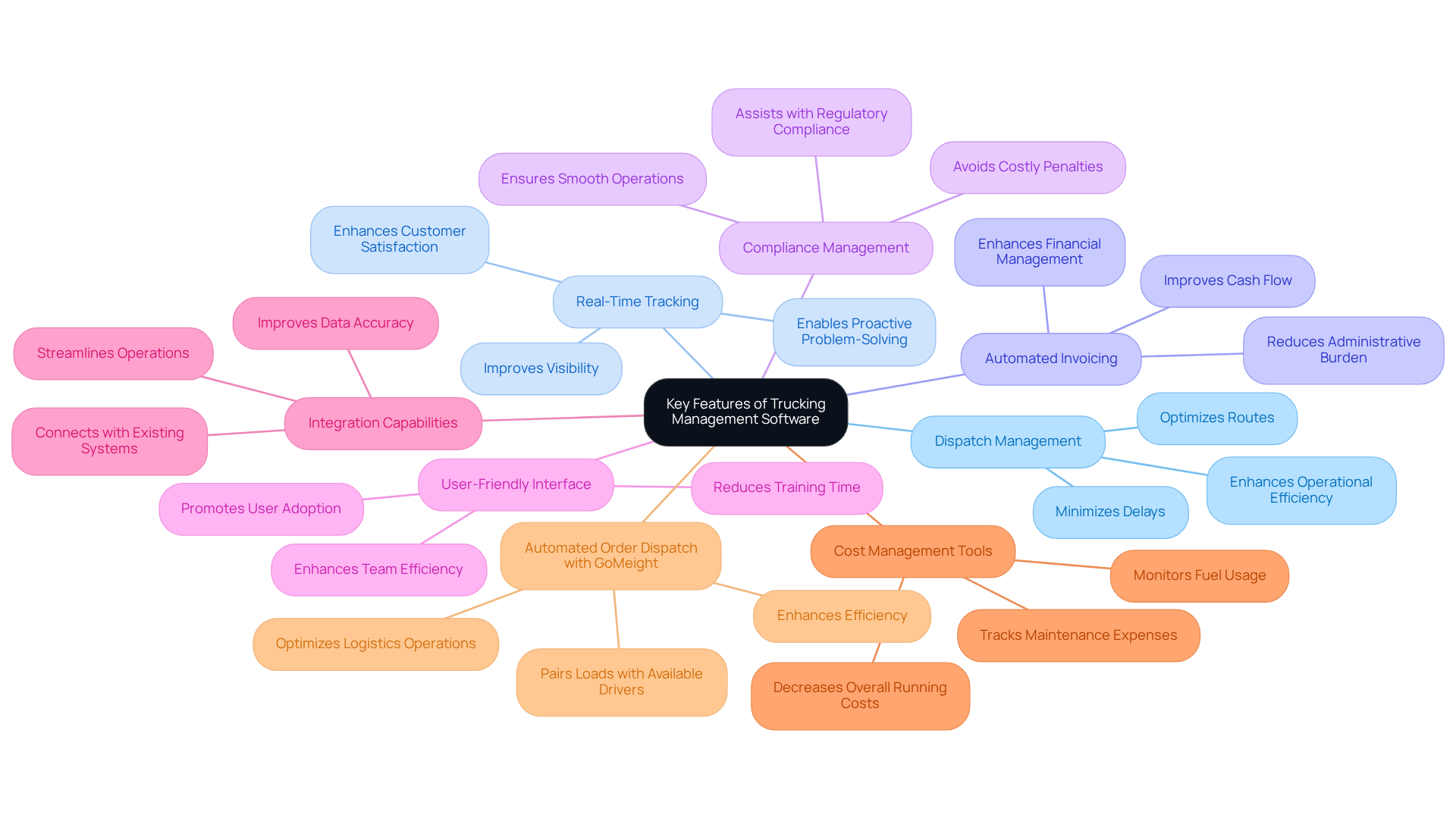
- Dispatch Management: Effective scheduling and dispatching capabilities are vital for optimizing routes and minimizing delays, directly affecting operational efficiency. Meight's cloud-based platform integrates seamlessly, enhancing operational efficiency by allowing users to manage freight operations efficiently from their laptops.
- Real-Time Tracking: The ability to monitor shipments in real-time significantly enhances visibility, enabling proactive problem-solving and improving customer satisfaction. Meight's platform offers real-time logistics monitoring, ensuring that companies can stay ahead of potential issues.
- Automated Invoicing: Streamlining billing processes reduces administrative burdens, leading to improved cash flow and efficiency. Meight's solutions can integrate these functionalities seamlessly, enhancing overall financial management.
- Compliance Management: Features that assist with regulatory compliance, such as IFTA reporting and ELD integration, are crucial for avoiding costly penalties and ensuring smooth operations. Meight's platform supports compliance through its comprehensive features.
- User-Friendly Interface: An intuitive interface is essential for ensuring that all team members can effectively utilize the software without extensive training, promoting user adoption. Meight's cloud-based solutions are designed with user experience in mind, making it easy for teams to adapt.
- Integration Capabilities: The capacity to effortlessly connect with current systems, such as accounting software and load boards, improves overall efficiency and data accuracy. Meight's platform is fully cloud-based, allowing for easy integration with various systems to streamline operations.
- Cost Management Tools: Features that monitor fuel usage and maintenance expenses are essential in decreasing overall running costs, aiding in improved financial management. Meight's solutions provide the necessary tools to monitor and manage these costs effectively.
- Automated Order Dispatch with GoMeight: The GoMeight app allows for automated order dispatch, pairing upcoming loads with available drivers and trucks at any location. This functionality optimizes logistics operations and enhances efficiency.
Without these essential features, trucking companies risk falling behind in a rapidly evolving logistics landscape.
Comparative Analysis of Leading Trucking Management Software Solutions
Selecting the right trucking management software for small transport companies is crucial for enhancing operational efficiency. In evaluating the leading trucking management software solutions for small transport companies, several options stand out based on their features, pricing, and user feedback:
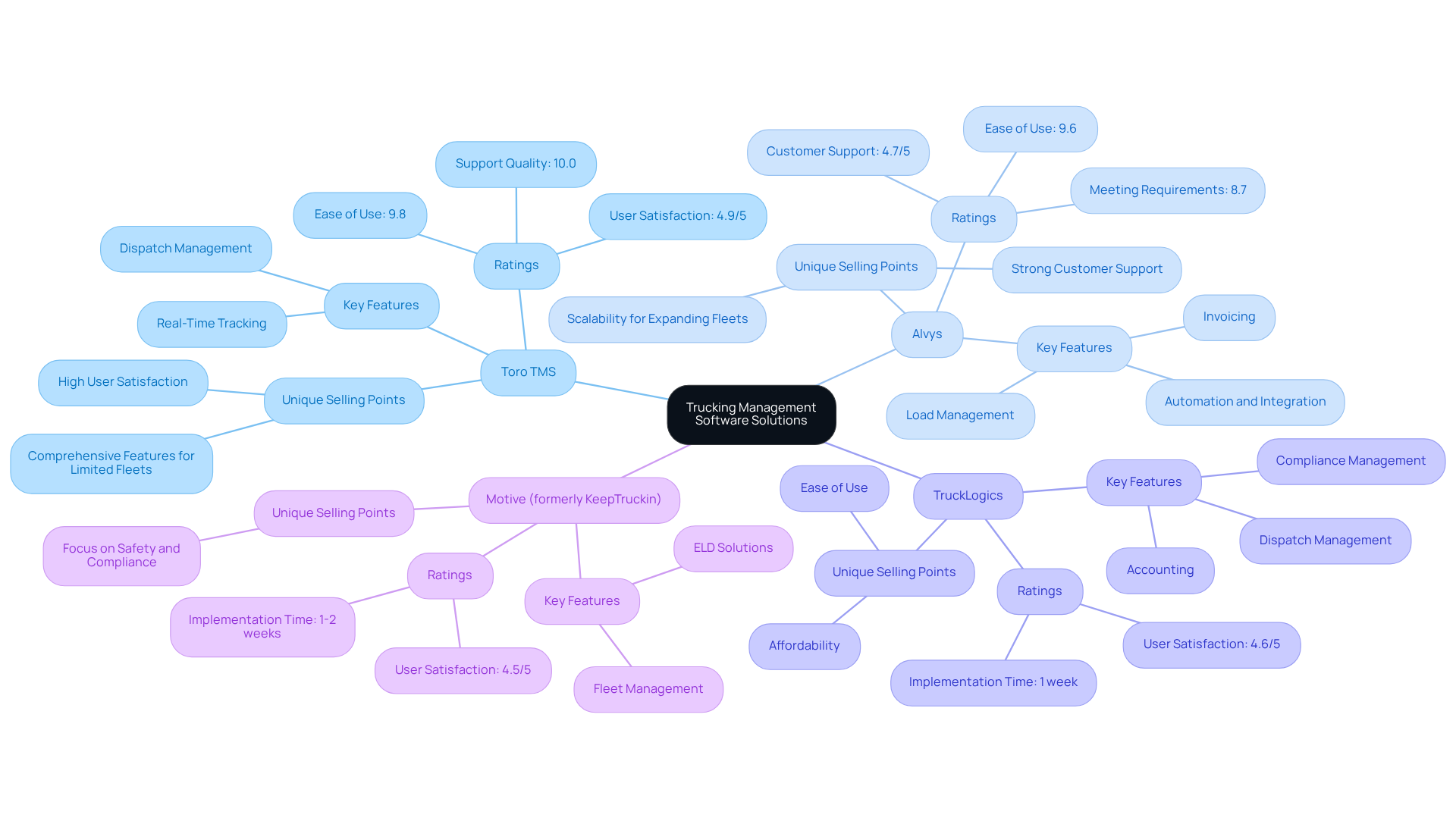
- Toro TMS: Renowned for its comprehensive features tailored for limited fleets, Toro TMS excels in dispatch management and real-time tracking capabilities. It has garnered significant acclaim for its user-friendly interface, achieving 9.8 for ease of use and a perfect score of 10.0 for support quality. This makes it an excellent choice for small trucking companies seeking trucking management software for small transport companies that ensures efficiency and reliability. It also holds a rating of 4.9 out of 5, indicating high user satisfaction.
- Alvys: This platform is distinguished by its automation and integration capabilities, offering tools for load management, invoicing, and compliance. Alvys is especially recognized for its strong customer support, with a rating of 4.7 out of 5, and its scalability, which can significantly benefit expanding fleets. It scored 8.7 for meeting requirements, indicating its effectiveness in addressing user needs. This effectiveness can lead to smoother operations as fleets grow.
- TruckLogics: Aimed at modest to mid-sized trucking businesses, TruckLogics offers a variety of features such as dispatch, accounting, and compliance management. Its affordability and ease of use have made it a popular option among minor operators, with a rating of 4.6 out of 5 on Capterra, demonstrating its effectiveness as trucking management software for small transport companies to handle basic operational needs. Notably, TruckLogics has an implementation time of about 1 week, making it accessible for new users.
- Motive (formerly KeepTruckin): While primarily recognized for its ELD solutions, Motive also offers a comprehensive TMS that includes fleet management features. Its strong focus on safety and compliance, combined with a rating of 4.5 out of 5, makes it a valuable choice for minor trucking firms dedicated to regulatory adherence.
Each of these solutions has distinct advantages, and the optimal selection of trucking management software for small transport companies will depend on the specific requirements and budget of the trucking firm. Ultimately, the right choice can significantly impact a trucking firm's operational success and growth potential.
Evaluating Implementation and Integration of TMS Solutions
Implementing trucking management software for small transport companies poses significant challenges for small trucking firms with limited IT resources. Key considerations include:
- Data Migration: Transferring existing data to the new system presents challenges, particularly with varied formats. A well-defined data migration plan is essential to ensure accuracy and completeness during the transition.
- Training: Comprehensive training for all staff members is crucial for successful TMS adoption. This includes hands-on training and ongoing support for employee proficiency.
- Integration with Existing Systems: Small trucking firms often rely on multiple software solutions for accounting, dispatching, and compliance. Ensuring that the new TMS integrates smoothly with these systems is essential for maintaining efficiency and preventing disruptions.
- Customization: Depending on the specific functional needs of the trucking company, some level of customization may be necessary to tailor the TMS to fit unique workflows. This adaptability can enhance user experience and efficiency.
- Ongoing Support: Selecting a TMS provider that offers robust customer support is critical. This assistance can help address any issues that arise during and after implementation, ensuring a smoother transition and sustained performance.
By carefully evaluating these factors, small trucking companies can better prepare for the implementation of trucking management software for small transport companies, which ultimately leads to improved operational efficiency and reduced costs.

Conclusion
Small transport companies face mounting pressures to enhance operational efficiency and competitiveness, making the investment in trucking management software crucial. Utilizing tools such as Meight enables these businesses to streamline logistics processes, enhance communication, and significantly increase profitability. Automating tasks and ensuring compliance simplifies daily operations, allowing small trucking companies to thrive despite challenges.
Throughout this article, we have highlighted key insights, including the importance of features such as:
- real-time tracking
- automated invoicing
- user-friendly interfaces
The comparative analysis of leading software solutions underscores how tailored tools can address specific needs and challenges faced by small trucking firms. With rising costs and stricter regulations, small trucking companies must adopt effective TMS solutions to survive and grow.
In conclusion, the decision to invest in TMS will determine whether small trucking companies can adapt and thrive in a rapidly evolving logistics landscape.
Frequently Asked Questions
What is Transport Management Software (TMS) and why is it important for small trucking companies?
Transport Management Software (TMS) is a tool that streamlines logistics and reduces costs for small trucking companies by facilitating the planning, execution, and optimization of goods movement. It helps manage transportation processes more efficiently, improving operational success.
What are the key benefits of using TMS for small trucking companies?
Key benefits of TMS include improved route planning, enhanced communication between drivers and dispatchers, automation of manual tasks like load tracking and invoicing, and better compliance management, all of which contribute to increased profitability and customer satisfaction.
How does Meight's TMS specifically help small trucking companies?
Meight's TMS allows small operators to manage their loads within budget and on time with ease, automating tasks such as load tracking and compliance reporting. It also reduces dispatch time and enables same-day invoice submissions, which is crucial for maintaining cash flow.
What challenges do small trucking companies face in logistics management?
Small trucking companies face challenges such as rising costs, ensuring compliance with regulations, optimizing routes, fragmented communication systems, and the need for real-time data access.
How does Meight address the challenges faced by small trucking companies?
Meight addresses these challenges by providing features like automated dispatching, real-time tracking, and integrated accounting functionalities, which streamline operations and improve communication.
What is the expected growth of the North American TMS market?
The North American TMS market is expected to reach USD 7.32 billion by 2025, with a compound annual growth rate (CAGR) of 9.8% from 2026 to 2034.
Why is mobile-first design significant for TMS solutions in 2026?
Mobile-first design is significant as it improves communication and functional transparency for drivers and dispatchers, reinforcing the relevance of TMS solutions in the evolving logistics environment.
What is the overall importance of adopting TMS for small trucking companies?
Adopting TMS is essential for small trucking companies to compete effectively against larger carriers, enhance operational performance, and ensure long-term sustainability in a competitive market.