
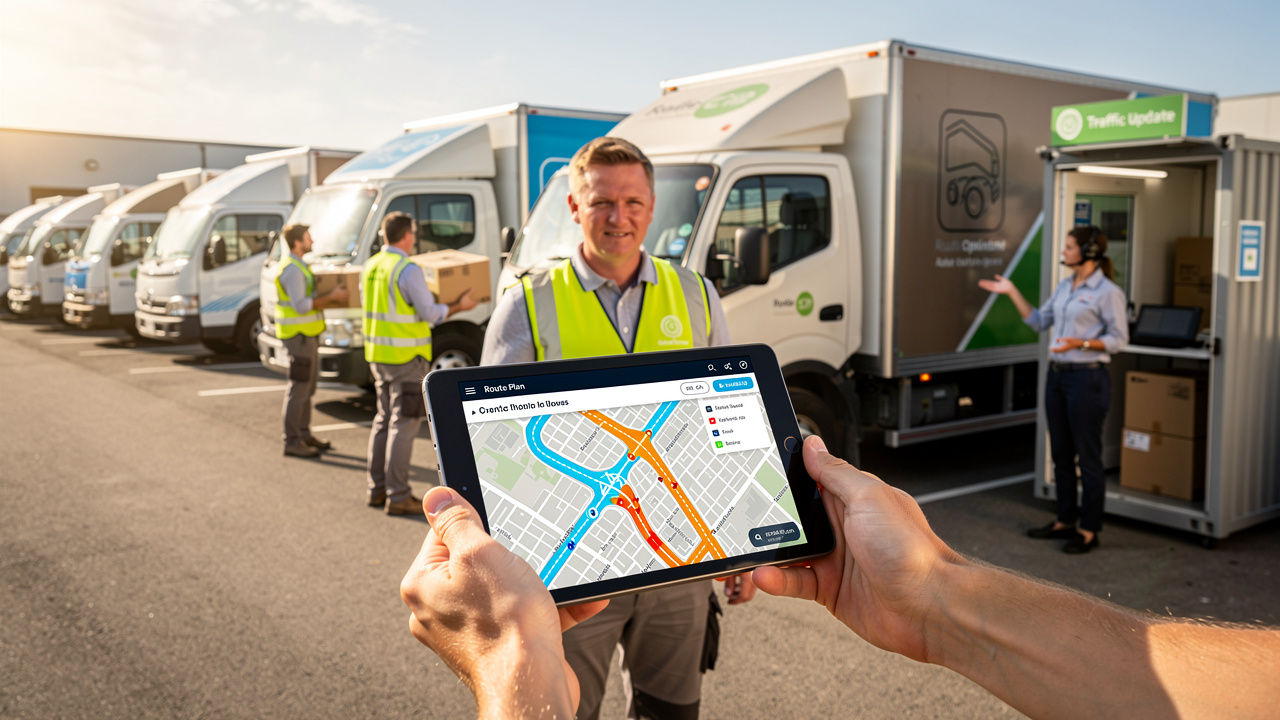
Introduction
In logistics, the challenge of meeting rising customer demands while managing operational complexities is critical to a transport company's success. As these pressures increase, selecting the appropriate route planning software becomes essential for navigating these challenges effectively. This software not only enhances operational efficiency but also plays a significant role in reducing costs. However, with numerous options available, understanding how to select the right route planning software can significantly impact a company's operational efficiency and cost-effectiveness.
Understanding Route Planning Software: Definition and Importance
In an era of rising customer expectations and operational challenges, software for transport companies with route planning has become essential for achieving efficient logistics. It employs advanced algorithms and real-time data to determine the most efficient routes, considering traffic conditions, vehicle capacity, and arrival timeframes.
The importance of navigation planning tools, particularly software for transport companies with route planning, is profound; they enhance operational efficiency by minimizing fuel usage, shortening transit times, and improving overall service quality.
In 2026, as logistics operations encounter stricter timeframes and increasing customer expectations, the necessity of this application is underscored. Statistics indicate that effective path optimization through software for transport companies with route planning can reduce travel distances by 10-30%, leading to substantial cost savings and lower emissions.
Case studies show that companies utilizing software for transport companies with route planning have reported decreases in fuel expenses by as much as 25% and enhancements in delivery efficiency by 15-25%. Moreover, industry specialists highlight that the transition to AI-driven routing systems, a form of software for transport companies with route planning, is revolutionizing logistics by allowing companies to automate organization and improve decision-making.
With Meight's cloud solutions, logistics providers gain improved flexibility, security, and scalability in data management, ensuring that their journey organization is not only efficient but also backed by thorough, personalized support from Meight's expert team. This integration enables road freight carriers to streamline workflows and drive digital transformation, ultimately revolutionizing logistics with AI-driven intelligent transport solutions.

Key Features of Leading Route Planning Software Solutions
In the competitive landscape of logistics, the right software for transport companies with route planning can be a game changer for operational efficiency. The leading software for transport companies with route planning solutions is equipped with a variety of features that significantly enhance logistics operations. Key features include:
- Real-Time Traffic Updates: This feature allows the software to flexibly modify paths according to present traffic situations, ensuring prompt arrivals and minimizing holdups. Without real-time updates, companies may face delays that impact customer satisfaction.
- Multi-Stop Navigation: Crucial for delivery companies, this functionality enables effective scheduling and resource distribution by organizing paths with several stops.
- Integration Capabilities: Seamless integration with existing IT systems and other logistics tools enhances data flow and operational efficiency, allowing for smoother operations. For example, Meight's cloud-based platform enables users to manage loads efficiently, ensuring they stay within budget and meet deadlines with just a few clicks.
- User-Friendly Interface: A straightforward interface is crucial for quick adoption by drivers and dispatchers, minimizing training time and facilitating ease of use. Meight's Planificador offers a quick and easy-to-use solution for load planning, replacing traditional tools like Excel and providing a comprehensive, real-time perspective of operations from a single control panel.
- Analytics and Reporting: For instance, advanced analytics tools can reveal patterns in delivery times, allowing companies to adjust routes and schedules for maximum efficiency. These insights enable companies to make data-driven decisions that optimize operations and enhance efficiency.
- Mobile Accessibility: Mobile applications, such as the GoMeight app, allow drivers to access navigation information on-the-go, enhancing communication and operational efficiency in the field while automating order dispatch and load matching for streamlined logistics operations.
Together, these features significantly improve navigation tools, making them indispensable software for transport companies with route planning that aim to enhance operational efficiency. Without these advanced features, transport firms risk falling behind in an increasingly demanding market.

Evaluating Benefits and Drawbacks of Route Planning Software
When assessing software for transport companies with route planning, it is essential to weigh both its benefits and drawbacks to make informed decisions.
Benefits:
- Cost savings are a significant advantage of route optimization, as it leads to substantial reductions in fuel consumption and vehicle wear, ultimately resulting in lower operational costs. Private fleets adopting advanced routing software typically save between 10% to 30% in transportation costs, highlighting the financial impact of efficient routing.
- Enhanced efficiency is another key benefit. Automated path planning significantly decreases the time dispatchers and drivers spend on manual tasks, allowing for more shipments within the same timeframe. This efficiency is crucial, as dispatchers often spend excessive hours creating and adjusting routes manually, which is prone to human error.
- Moreover, enhanced customer satisfaction is a direct result of timely deliveries facilitated by optimized routing. Improved communication with customers leads to higher satisfaction rates. Companies utilizing advanced routing systems often observe a direct correlation between efficiency and customer satisfaction.
- Finally, data-driven insights provided by the analytics features of routing applications offer valuable performance metrics. These insights enable companies to identify areas for continuous improvement, informing strategic decisions such as adjusting distribution strategies or optimizing fleet composition.
Drawbacks:
- The initial investment required for implementing route planning software can be considerable, especially for smaller transport companies, which may view this as a significant barrier to entry. However, the payback period is often determined more by operational complexity than fleet size, with many companies realizing a return on investment sooner than expected.
- The learning curve associated with some applications can be steep, as their complex interfaces may necessitate extensive training for users. This complexity can lead to temporary productivity losses as staff adjust to the new system.
- Dependence on technology can create challenges, particularly if technical issues arise, which may disrupt operations. Companies must ensure they have contingency plans in place to mitigate these risks.
Understanding these factors enables transport firms to enhance their operational effectiveness and maintain a competitive edge in the industry.

Comparative Analysis of Top Route Planning Software for Transport Companies
Software Solution Comparison:
- Route4Me
Key Features: Multi-stop routing, real-time traffic updates, mobile app
Pros: User-friendly interface, cost-effective for various business sizes, dynamic route planning capabilities
Cons: Limited advanced analytics capabilities may hinder deeper insights; add-on modules for customization can lead to imbalanced workloads - Onfleet
Key Features: Real-time tracking, driver communication, proof of delivery
Pros: Excellent customer support, intuitive interface enhances user experience; Launch plan starts at $599 per month for 2,500 delivery tasks
Cons: This pricing structure may limit access to essential features for smaller businesses, impacting their delivery efficiency; treats routing as a dispatch step rather than part of a broader scheduling engine - OptimoRoute
Key Features: Route optimization, delivery scheduling, reporting tools
Pros: Strong analytics capabilities, scalable for growing businesses; pricing per driver starts at $35 per driver per month
Cons: New users may find the setup process for OptimoRoute challenging, which could delay their operational efficiency; less suited for fast-moving operations with continuously arriving jobs - Routific
Key Features: Dynamic routing, multi-stop planning, mobile access
Pros: Efficient for small to mid-sized businesses, easy to use; ideal for businesses with variable fleet sizes or seasonal delivery volumes
Cons: Limited integrations with other systems may restrict functionality for some users; may require manual adjustments for route balancing - Geotab
Key Features: Fleet management integration, compliance tracking
Pros: Comprehensive features tailored for fleet management needs; integrates with major e-commerce platforms and business tools
Cons: Higher learning curve may deter less experienced users from maximizing its potential; may not be ideal for newer courier teams seeking modern user experiences
Transport companies face a critical decision when selecting software solutions that align with their operational needs and budget constraints. By examining the strengths and weaknesses of each software solution, we can better understand their fit for various operational needs. Ultimately, the right choice hinges on balancing features with cost-effectiveness to enhance operational efficiency.

Conclusion
In an increasingly competitive logistics environment, the right route planning software is essential for operational success. By leveraging advanced algorithms and real-time data, these tools optimize routes, cut operational costs, and enhance service quality. As the logistics landscape evolves, the adoption of such software becomes vital for companies aiming to stay competitive.
Key insights from the article highlight the essential features of leading route planning software, including:
- Real-time traffic updates
- Multi-stop navigation
- Robust analytics capabilities
These functionalities empower transport companies to streamline operations, enhance customer satisfaction, and make informed decisions based on data-driven insights. Yet, companies must also weigh potential drawbacks, including initial investment costs and the learning curve associated with new technologies.
Choosing the right route planning software should align with a company's specific operational needs and budget constraints. Failing to choose the right software can lead to inefficiencies and increased costs. By evaluating the strengths and weaknesses of various solutions, transport companies can enhance efficiency and position themselves for future growth. Choosing the right route planning software is not merely a tactical decision; it is a strategic imperative that can define a company's future in logistics.
Frequently Asked Questions
What is route planning software?
Route planning software is a tool used by transport companies to determine the most efficient routes for logistics operations, utilizing advanced algorithms and real-time data to consider factors like traffic conditions, vehicle capacity, and arrival timeframes.
Why is route planning software important for transport companies?
It enhances operational efficiency by minimizing fuel usage, shortening transit times, and improving overall service quality, which is crucial in meeting rising customer expectations and operational challenges.
What are the benefits of effective path optimization through route planning software?
Effective path optimization can reduce travel distances by 10-30%, leading to substantial cost savings and lower emissions.
What statistics support the effectiveness of route planning software?
Companies using route planning software have reported decreases in fuel expenses by up to 25% and improvements in delivery efficiency by 15-25%.
How is AI impacting route planning software?
The transition to AI-driven routing systems is revolutionizing logistics by automating organization and improving decision-making for transport companies.
What advantages do Meight's cloud solutions offer to logistics providers?
Meight's cloud solutions provide improved flexibility, security, and scalability in data management, along with personalized support from their expert team, enabling efficient journey organization and driving digital transformation.
How does route planning software contribute to digital transformation in logistics?
By streamlining workflows and integrating AI-driven intelligent transport solutions, route planning software helps logistics providers modernize their operations and enhance efficiency.