

Introduction
In an era where logistics complexity is on the rise, trucking management software (TMS) has emerged as a critical tool for carriers aiming to optimize their operations and reduce costs. Understanding the essential features and benefits of top trucking management software is crucial for carriers aiming to enhance operational efficiency and customer service. Given the multitude of options available, carriers must carefully assess which TMS solution addresses their specific challenges and supports their growth objectives. Choosing the wrong TMS can hinder operational efficiency and customer satisfaction, ultimately impacting profitability.
Understanding Trucking Management Software
Trucking management software (TMS) is vital for optimizing transportation operations and reducing costs, making it the best trucking management software for carriers in the logistics sector. It encompasses a range of functionalities, including:
- Load planning
- Dispatching
- Tracking
- Invoicing
TMS automates processes, leading to reduced operational costs and improved efficiency, which enhances customer service. For instance, companies that have implemented TMS solutions, such as Plastic Trim International (PTI), report substantial reductions in costs, achieving up to a 7% annual decrease in expenses through better visibility and collaboration across their supply chains.
As the transportation industry evolves, utilizing the best trucking management software for carriers becomes essential for managing complex supply chains and ensuring regulatory compliance. By 2026, TMS is anticipated to merge seamlessly with telematics platforms, offering real-time information that enables service providers to make informed choices. This integration empowers companies to proactively address potential disruptions, enhancing their strategic capabilities. Additionally, real-time monitoring of temperature-controlled cargo with automatic alerts will be a standard capability for sensitive industries such as food and pharmaceuticals.
Moreover, advanced TMS platforms leverage artificial intelligence and machine learning to transform data into actionable insights, reducing reliance on manual analysis. Transitioning from traditional methods to intelligent decision support is essential for service providers looking to succeed in today's competitive landscape. As organizations adopt these technologies, they can expect improved synchronization in dock and yard operations, better management of inventory, and enhanced overall performance. The innovative road freight platform exemplifies this evolution, managing 43.8 kton CO2 emissions to promote sustainable logistics and operational efficiency while providing specific functionalities that drive cost reduction and enhance service delivery.

Key Features of Top Trucking Management Solutions
In an industry where efficiency is paramount, the best trucking management software for carriers can be the difference between success and failure. When evaluating trucking management software, several key features emerge as essential for effective operations:
- Real-Time Tracking: This feature allows carriers to keep an eye on where their shipments are and how they're doing, which really boosts visibility and accountability. The cloud-based platform provides a complete real-time view of operations, from pickup to delivery, all on one dashboard.
- Automated Dispatching: By streamlining how loads are assigned to drivers, we cut down on manual errors and boost efficiency. With the GoMeight app, automated orders can be sent directly to drivers, ensuring that upcoming loads are matched with available drivers and trucks at any location.
- Load Planning and Optimization: Good load planning helps maximize capacity and cut down on empty miles, which directly affects profitability. The data-driven insights from the company assist in optimizing driver behavior and freight management, leading to lower stress during driving and reduced fuel costs.
- Invoicing and Accounting Integration: Automating invoicing and integrating with accounting systems makes financial management simpler, easing administrative burdens and improving cash flow.
- Compliance Management: It's crucial to stick to regulatory requirements, like ELD mandates and safety standards. The platform automates compliance tasks, assisting fleets in preserving functional integrity and evading penalties.
- User-Friendly Interface: An easy-to-use design helps staff adopt the system faster and cuts down on training time, making it easier for staff to engage with the system effectively.
- Data Analytics and Reporting: Data analytics provides insights into performance, helping managers make informed decisions. Meight's platform learns from driving patterns to foresee issues and encourage improvements in driver behavior.
- Mobile Accessibility: When drivers and managers can access the system on-the-go, it makes real-time updates and communication easier, boosting responsiveness and flexibility.
Together, these features make logistics operations more efficient and responsive, which is why they’re essential for any carrier considering the best trucking management software for carriers. Investing in these essential features not only streamlines operations but also positions carriers for long-term success in a competitive market.

Comparative Analysis of Leading Trucking Management Software
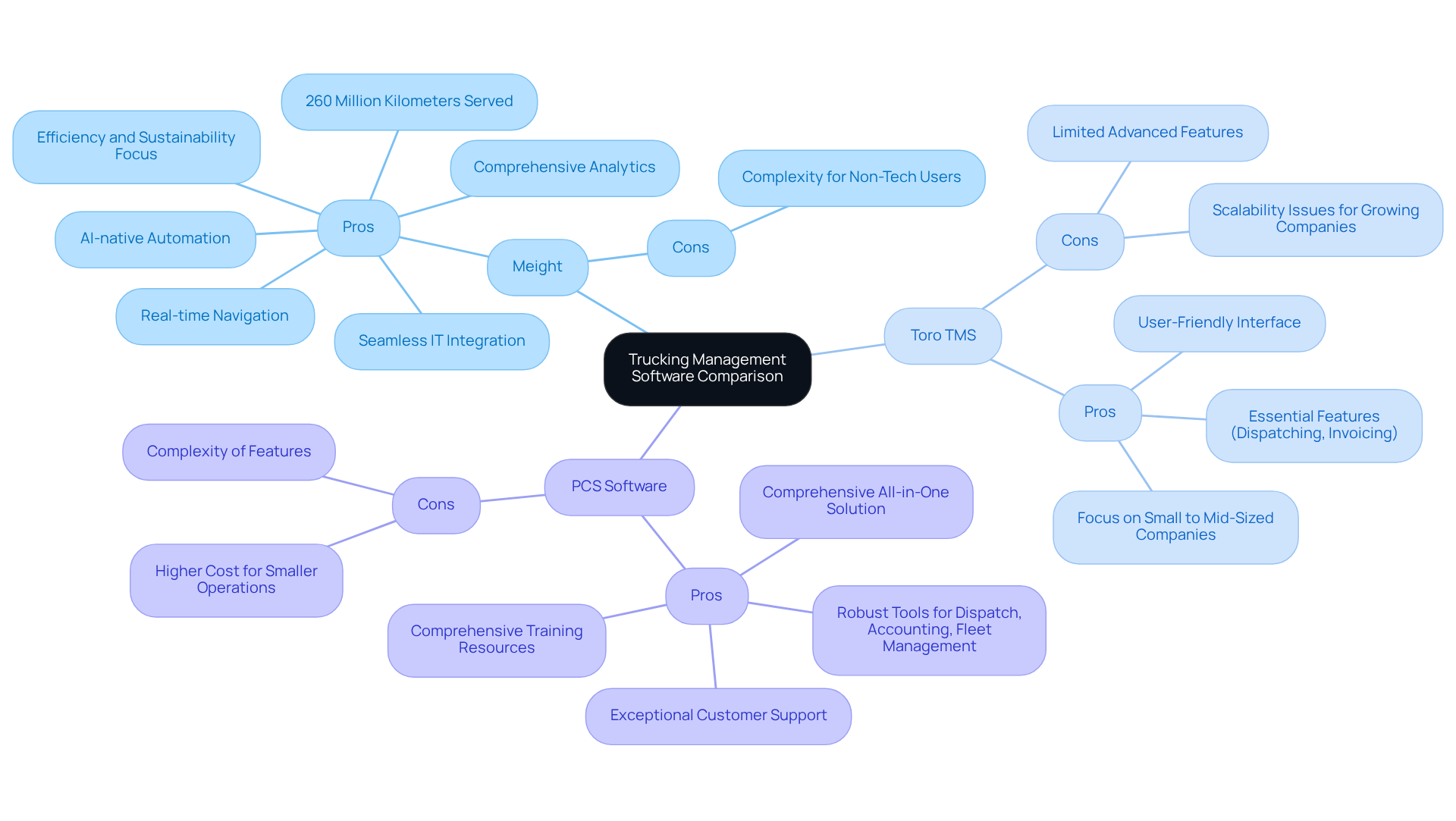
In this comparative analysis, we examine three prominent solutions that represent the best trucking management software for carriers: Meight, Toro TMS, and PCS Software, each providing unique features suited to different business requirements.
Meight
- Pros: Meight's innovative AI-native automation sets it apart in the competitive landscape of trucking management software. It enables seamless integration with existing IT systems, real-time navigation, and comprehensive analytics. Designed with efficiency and sustainability in mind, Meight aims to revolutionize logistics operations. With a proven track record of over 260 million kilometers served, this company has demonstrated its capability to significantly improve order processing speed and reduce fuel consumption and CO2 emissions.
- Cons: While Meight offers advanced features, the complexity may challenge those less tech-savvy when adapting to the platform.
Toro TMS
- Pros: Toro TMS is recognized for its user-friendly interface and strong focus on small to mid-sized trucking companies. It offers essential features such as dispatching and invoicing, making it a practical choice for many operators looking to streamline their processes.
- Cons: The software's limited advanced features may hinder scalability for growing companies, as this limitation may restrict its appeal to companies looking to scale operations effectively.
PCS Software
- Pros: PCS Software provides a comprehensive all-in-one solution for mid-market and enterprise carriers, featuring robust tools for dispatch, accounting, and fleet management. Its reputation for exceptional customer support and comprehensive training resources empowers users to fully leverage its capabilities.
- Cons: The higher cost may pose a barrier for smaller operations, and the complexity of its features might overwhelm new users. Consequently, smaller operations may need to weigh the cost against their specific needs.
This analysis emphasizes the strengths and weaknesses of each software, allowing carriers to select the best trucking management software for carriers that aligns with their functional goals and budget. Ultimately, selecting the right software hinges on aligning features with operational needs and budget constraints.
Addressing Logistics Provider Challenges with Software Solutions
Logistics providers encounter numerous challenges that significantly impact their operational efficiency and profitability. Here are some prevalent issues and how trucking management software can effectively address them:
- High Operational Costs: Transportation Management Systems (TMS) like Meight leverage AI to optimize routes and minimize fuel consumption. Logistics providers struggle with rising operational costs that threaten their bottom line, but these systems directly enhance profitability.
- Inefficient Transport Planning: Features such as automated dispatching and load optimization streamline planning processes. This ensures that resources are utilized effectively and reduces idle time.
- Fragmented Communication: Integrated platforms enhance communication between drivers, dispatchers, and clients. This significantly reduces misunderstandings and delays that can disrupt operations.
- Compliance and Regulatory Issues: TMS solutions provide tools to manage adherence to regulations, including Electronic Logging Device (ELD) mandates. This assists transportation providers in avoiding expensive penalties and upholding operational integrity.
- Data Management Challenges: Advanced analytics capabilities within TMS enhance data management and reporting. Meight employs strong technical and organizational measures to safeguard personal data from unauthorized access, ensuring compliance with industry standards and building trust in their solutions.
The best trucking management software for carriers enables logistics providers to navigate these challenges effectively. This leads to improved efficiency, reduced costs, and enhanced customer satisfaction. The best trucking management software for carriers not only addresses these challenges but also positions logistics providers for sustainable growth in a competitive market.

Conclusion
Selecting the best trucking management software is crucial for carriers, as it significantly influences their operational efficiency and profitability. Embracing advanced TMS solutions allows carriers to streamline operations, cut costs, and improve customer service, positioning them for success in a competitive market.
Throughout this article, we have highlighted key features such as real-time tracking, automated dispatching, load optimization, and compliance management as essential for effective logistics operations. The comparative analysis of leading software options - Meight, Toro TMS, and PCS Software - demonstrates the diverse functionalities available to meet varying business needs. Each solution offers unique advantages, enabling carriers to select the software that aligns with their operational goals and budget constraints.
As the logistics sector evolves, the need for effective trucking management software becomes increasingly strategic. Investing in the right software not only improves performance but also secures a competitive edge in the logistics market. Leveraging technology to tackle challenges like high operational costs and compliance issues helps carriers boost performance and achieve sustainable growth. Ultimately, the right trucking management software is not just an operational tool; it is a strategic asset that can define a carrier's success in the logistics industry.
Frequently Asked Questions
What is trucking management software (TMS)?
Trucking management software (TMS) is a tool designed to optimize transportation operations and reduce costs within the logistics sector. It includes functionalities such as load planning, dispatching, tracking, and invoicing.
How does TMS benefit transportation companies?
TMS automates various processes, leading to reduced operational costs and improved efficiency, which in turn enhances customer service. Companies using TMS can achieve significant cost reductions, with some reporting up to a 7% annual decrease in expenses.
What future developments are expected for TMS?
By 2026, TMS is expected to integrate seamlessly with telematics platforms, providing real-time information that helps service providers make informed decisions. This integration will enable proactive management of potential disruptions.
How will TMS enhance monitoring for sensitive cargo?
Advanced TMS platforms will include real-time monitoring capabilities for temperature-controlled cargo, with automatic alerts, which is particularly important for industries such as food and pharmaceuticals.
What technologies are being integrated into TMS?
Advanced TMS platforms are leveraging artificial intelligence and machine learning to convert data into actionable insights, reducing the need for manual analysis and improving decision-making processes.
What operational improvements can organizations expect from adopting TMS?
Organizations can expect improved synchronization in dock and yard operations, better inventory management, and enhanced overall performance as they transition to intelligent decision support systems.
How does TMS contribute to sustainability in logistics?
The innovative road freight platform within TMS helps manage CO2 emissions, promoting sustainable logistics and operational efficiency while providing functionalities that drive cost reduction and enhance service delivery.