
Introduction
The trucking industry faces significant challenges that demand enhanced operational efficiency and profitability. As fleets strive to navigate escalating operational costs and fierce market competition, trucking management software emerges as an innovative solution that promises to streamline operations and enhance profitability. However, with numerous options available, fleet managers must identify the right features that will truly make a difference. This guide outlines the essential functionalities of trucking management software, demonstrating how effective tools can enhance fleet operations and improve profitability.
Identify Essential Features of Trucking Management Software
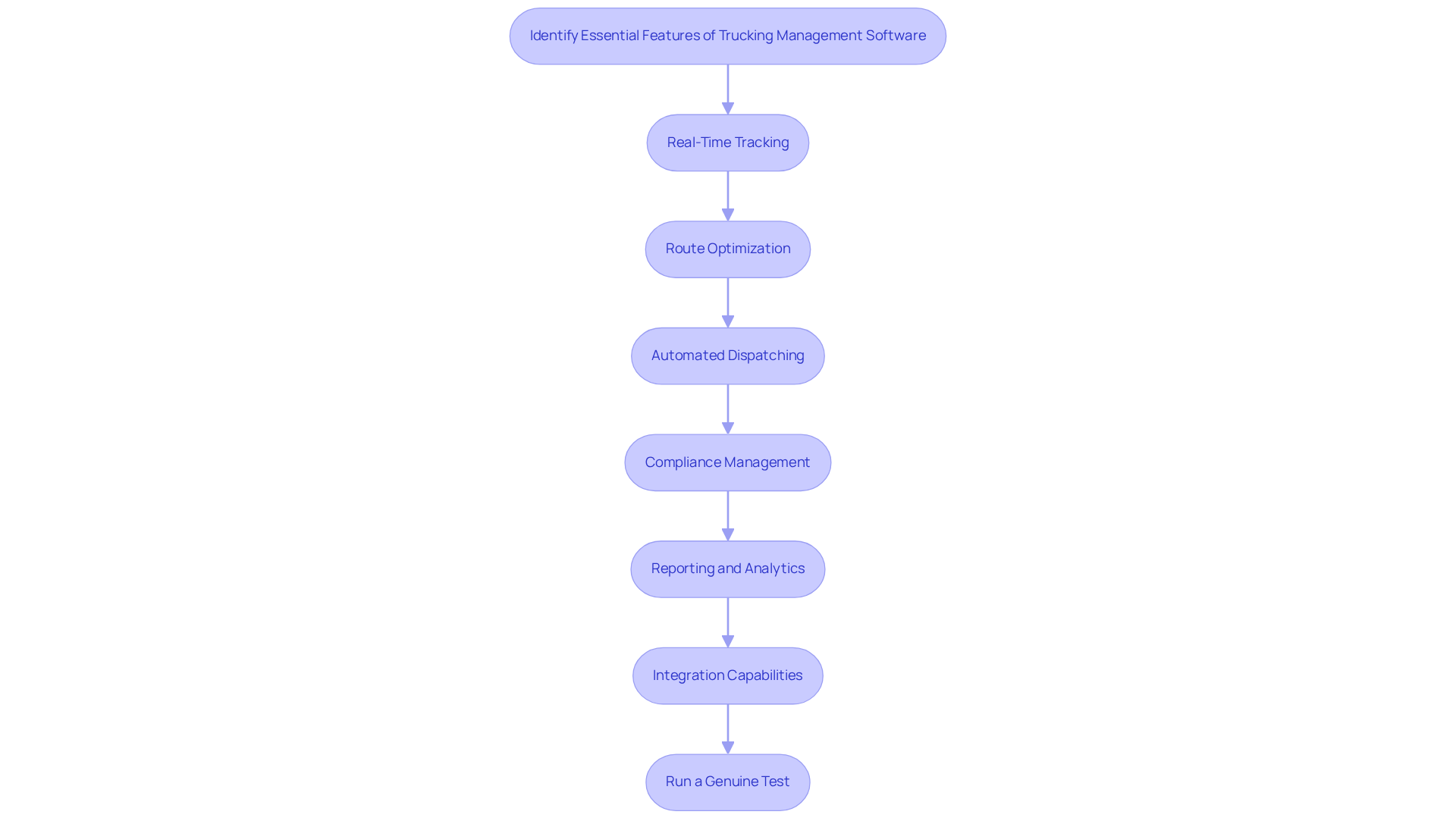
To enhance fleet profitability, it is imperative to identify the essential features of trucking management software to improve fleet profitability. Here’s a step-by-step guide to help you pinpoint these features:
- Real-Time Tracking: The application must provide GPS tracking capabilities that allow for real-time monitoring of vehicle locations. This feature optimizes routes and reduces idle time, which enhances operational efficiency. Meight's GoMeight app excels in this area, providing automated order dispatch and truck-specific navigation that ensures operators follow predefined routes, minimizing the risk of errors.
- Route Optimization: Seek tools that analyze traffic patterns and recommend the most efficient routes. This capability not only saves fuel but also improves delivery times, contributing to overall cost reductions. The GoMeight app contains features that enable the programming of rest stops and authorized service stations, ensuring that users are well-informed and can navigate effectively.
- Automated Dispatching: The application should automate the dispatch process, enabling quicker assignment of loads to operators based on their availability and proximity. Meight's GoMeight app automates the sending of orders directly to drivers, eliminating the need for calls or messages for additional information, which significantly enhances productivity.
- Compliance Management: Ensure the software includes tools for managing compliance with regulations, such as Hours of Service (HOS) rules. Effective compliance management helps avoid costly fines and enhances operational integrity. The GoMeight app facilitates this by enabling users to scan documents and manage necessary paperwork digitally, streamlining compliance processes.
- Reporting and Analytics: Select a program that provides strong reporting capabilities, enabling the examination of performance metrics, fuel consumption, and operator behavior. This data-driven approach helps identify areas for improvement and informs strategic decisions. Meight's platform learns from driving patterns and offers insights that encourage users to enhance their performance, ultimately resulting in lower fuel costs and greater satisfaction.
- Integration Capabilities: The application should seamlessly connect with existing systems, such as accounting and inventory management. This integration streamlines operations and ensures that all departments operate from a single source of truth, enhancing overall efficiency.
- Run a Genuine Test: Before making your decision, carry out a genuine test of the application with actual drivers on real routes. Testing the system with real drivers can provide insights into how well it performs in your operations.
By concentrating on these crucial characteristics, you can select trucking management software to improve fleet profitability that aligns with your operational objectives. Choosing the right trucking solutions can significantly impact your bottom line and operational success.
Evaluate Compatibility with Existing IT Systems
Transitioning to a new trucking management software requires careful evaluation of its compatibility with existing IT systems. To ensure a smooth transition to Meight's intelligent transport platform, follow these steps to evaluate its compatibility with your existing IT systems:
- Assess Current Systems: Start by recording your existing IT infrastructure, including application programs, hardware, and data handling systems. Identifying gaps in your current systems can be challenging but is essential for improvement. Analyzing workflows can reveal discrepancies between your current state and desired outcomes.
- Identify Integration Points: Determine where the new application will connect with existing systems, such as accounting programs, customer relationship management (CRM) tools, or inventory management systems. Understanding these touchpoints is crucial for effective integration, as it can enhance performance indicators. Effective integration can significantly improve logistics efficiency.
- Check Data Formats: Ensure that the new application can handle the data formats used by your existing systems. Compatibility in data formats is essential for seamless data transfer and integration, reducing the risk of errors. The platform secures data importation, ensuring data consistency and compliance.
- Consult with IT Experts: Consider involving your IT team or external consultants to assess the new application's technical specifications. Their expertise can provide insights into potential integration challenges and solutions, helping to navigate complexities effectively. Expert assistance is available throughout the implementation process to address these challenges.
- Request Demos: Ask vendors for demonstrations that specifically showcase how their product integrates with existing systems. Observing the integration process in action offers practical understanding and highlights any potential issues. The company offers live training to ensure that planners, drivers, and administrators can use the platform confidently from day one.
- Review Case Studies: Seek out case studies or testimonials from other businesses in your industry that have successfully incorporated similar systems. These examples can provide valuable insights into potential challenges and benefits, guiding your decision-making process. Meight's extensive support includes ongoing monitoring and optimization to maximize your return on investment.
By thoroughly assessing compatibility, you can reduce risks related to system implementation and ensure a more efficient transition. A thorough compatibility assessment not only mitigates implementation risks but also positions your fleet for enhanced profitability by utilizing trucking management software to improve fleet profitability.

Assess Cost-Effectiveness and Pricing Structures
Evaluating the cost-effectiveness of trucking logistics applications is crucial for optimizing fleet management. Here’s a structured approach to this evaluation:
- Understand Pricing Models: Familiarize yourself with various pricing models, including subscription-based, one-time purchase, and pay-per-use. Each model presents unique advantages and disadvantages tailored to different operational needs. Prices for fleet tracking applications typically range from $15 to $100 per truck per month, depending on features and deployment scale.
- Calculate Total Cost of Ownership (TCO): Beyond the initial purchase price, consider ongoing expenses such as maintenance, updates, training, and support. A comprehensive TCO analysis provides a clearer financial picture, revealing the true investment required over time. Be aware of potential hidden fees, such as charges for additional users or features, which can unexpectedly inflate your costs, complicating budget management.
- Evaluate ROI: Estimate potential return on investment by analyzing how the system can enhance efficiency, reduce costs, and boost revenue. For example, efficient fleet control tools can result in substantial savings by enhancing route performance, possibly lowering route expenses by 10% or more. Look for case studies or testimonials that demonstrate successful ROI from similar implementations, as these can provide valuable insights into expected outcomes.
- Compare Vendors: Gather quotes from multiple vendors and conduct a thorough comparison of their offerings. Pay close attention to hidden fees, such as charges for additional users or features, which can affect overall costs. Transparent pricing structures should be a baseline requirement when assessing freight systems.
- Negotiate Terms: Engage in negotiations regarding pricing and terms with vendors. Vendors often provide discounts or flexible payment plans to secure contracts, which can lead to more favorable financial arrangements.
- Consider Scalability: Ensure that the pricing structure accommodates scalability as your fleet expands. A solution that adapts to your evolving needs will deliver better long-term value, allowing for growth without unexpected cost increases.
By meticulously evaluating cost-effectiveness and pricing structures, you can make informed decisions with trucking management software to improve fleet profitability. A thorough evaluation not only safeguards your budget but also positions your fleet for sustainable growth.

Consider User Experience and Support Services
To ensure the successful implementation of trucking management tools, evaluating user experience and support services is essential. Follow these steps to assess these aspects:
- User Interface (UI) Design: Evaluate the application’s UI for intuitiveness and ease of navigation. A user-friendly interface reduces training time and increases productivity.
- Mobile Accessibility: Check if the software offers mobile applications for drivers and fleet managers. The GoMeight application provides mobile access for drivers and fleet managers. This feature allows for real-time updates and communication, enhancing operational efficiency through automated load dispatching and truck-specific navigation.
- Training Resources: Evaluate the training resources provided by the vendor. Comprehensive training materials, such as tutorials, webinars, and documentation, can facilitate smoother onboarding for your team.
- Customer Support: Investigate the level of customer support offered. Look for vendors that provide 24/7 support, multiple contact methods (phone, email, chat), and a dedicated account manager. Meight is committed to customer satisfaction, ensuring comprehensive support and seamless implementation without hidden fees.
- User Feedback: Seek feedback from current users regarding their experiences with the application. Online reviews and testimonials can provide insights into common issues and the overall satisfaction level, particularly regarding the GoMeight app's performance and reliability.
- Trial Period: If possible, take advantage of free trials or demo versions to test the application in real-world scenarios. This hands-on experience can help you gauge usability and support responsiveness.
Ultimately, a thorough evaluation can lead to improved operational efficiency and user satisfaction, which are critical for success in the trucking industry, particularly through the use of trucking management software to improve fleet profitability.

Conclusion
Selecting the right trucking management software is a critical decision that can significantly impact fleet profitability and operational efficiency. Focusing on key features like real-time tracking and route optimization helps businesses streamline operations. Automated dispatching and compliance management further contribute to cost reduction. It's also vital to check how well the software fits with your current IT systems and to weigh the costs against the benefits to make informed choices that support your business objectives.
The article highlights the importance of assessing user experience and support services. A user-friendly interface and robust customer support can significantly impact the successful implementation of trucking management tools. Thorough evaluations and tests enable fleet managers to pinpoint the software that aligns with their operational requirements, ultimately leading to improved performance and profitability.
Ultimately, the right software can be the difference between thriving and merely surviving in a competitive market. Fleet managers are encouraged to take proactive steps in exploring and implementing these solutions to unlock their full potential and drive profitability forward.
Frequently Asked Questions
What are the essential features of trucking management software?
Essential features include real-time tracking, route optimization, automated dispatching, compliance management, reporting and analytics, and integration capabilities.
How does real-time tracking benefit fleet management?
Real-time tracking allows for GPS monitoring of vehicle locations, optimizing routes and reducing idle time, which enhances operational efficiency.
What is route optimization and why is it important?
Route optimization analyzes traffic patterns to recommend the most efficient routes, saving fuel and improving delivery times, which contributes to cost reductions.
How does automated dispatching improve productivity?
Automated dispatching enables quicker assignment of loads to operators based on availability and proximity, eliminating the need for calls or messages, thereby enhancing productivity.
What role does compliance management play in trucking software?
Compliance management helps ensure adherence to regulations, such as Hours of Service (HOS) rules, avoiding costly fines and enhancing operational integrity.
Why are reporting and analytics important in trucking management software?
Reporting and analytics provide insights into performance metrics, fuel consumption, and operator behavior, helping identify areas for improvement and informing strategic decisions.
What are integration capabilities and why are they necessary?
Integration capabilities allow the software to connect with existing systems like accounting and inventory management, streamlining operations and ensuring all departments operate from a single source of truth.
How can I test trucking management software before making a decision?
It is recommended to run a genuine test of the application with actual drivers on real routes to gain insights into its performance in your operations.