

Introduction
In an era where efficiency is paramount, the logistics sector must leverage technology to remain competitive. Fleet management websites have become essential tools, providing a comprehensive suite of features that enable businesses to optimize their vehicle fleets, reduce costs, and enhance service delivery. Without the integration of technology, logistics operations face inefficiencies that can hinder competitiveness. Companies that fail to adopt these platforms risk falling behind their competitors.
Define Fleet Management Website
The complexity of managing a company's vehicle collection necessitates the use of a fleet management website for effective oversight. These platforms serve as a fleet management website that offers an extensive set of tools enabling vehicle supervisors to oversee performance, track maintenance plans, manage driver conduct, and enhance routing. A fleet management website combines multiple functionalities into a single interface, simplifying operations, enhancing communication, and boosting efficiency in transportation and supply chain sectors. The fleet management website serves as a centralized hub for data collection and analysis, empowering businesses to make informed decisions based on real-time information.
In 2026, the uptake of vehicle control software is anticipated to increase markedly, with a considerable percentage of transportation firms acknowledging the essential role these platforms play in boosting operational effectiveness and cutting expenses. Meight's groundbreaking road freight platform demonstrates the increasing importance of technology in sustainable transport, handling 43.8 kton CO2 emissions while offering seamless cloud integration for effective load coordination and budget oversight.
According to transportation expert AUTOsist, "The groups that succeed will be the ones that view maintenance, safety, compliance, and cost control not as distinct functions - but as one unified strategy." Deploying vehicle oversight platforms, such as a fleet management website from Meight, enhances operational discipline and data-informed decision-making, underscoring their significance in the evolving transportation landscape.

Explain Importance for Logistics Providers
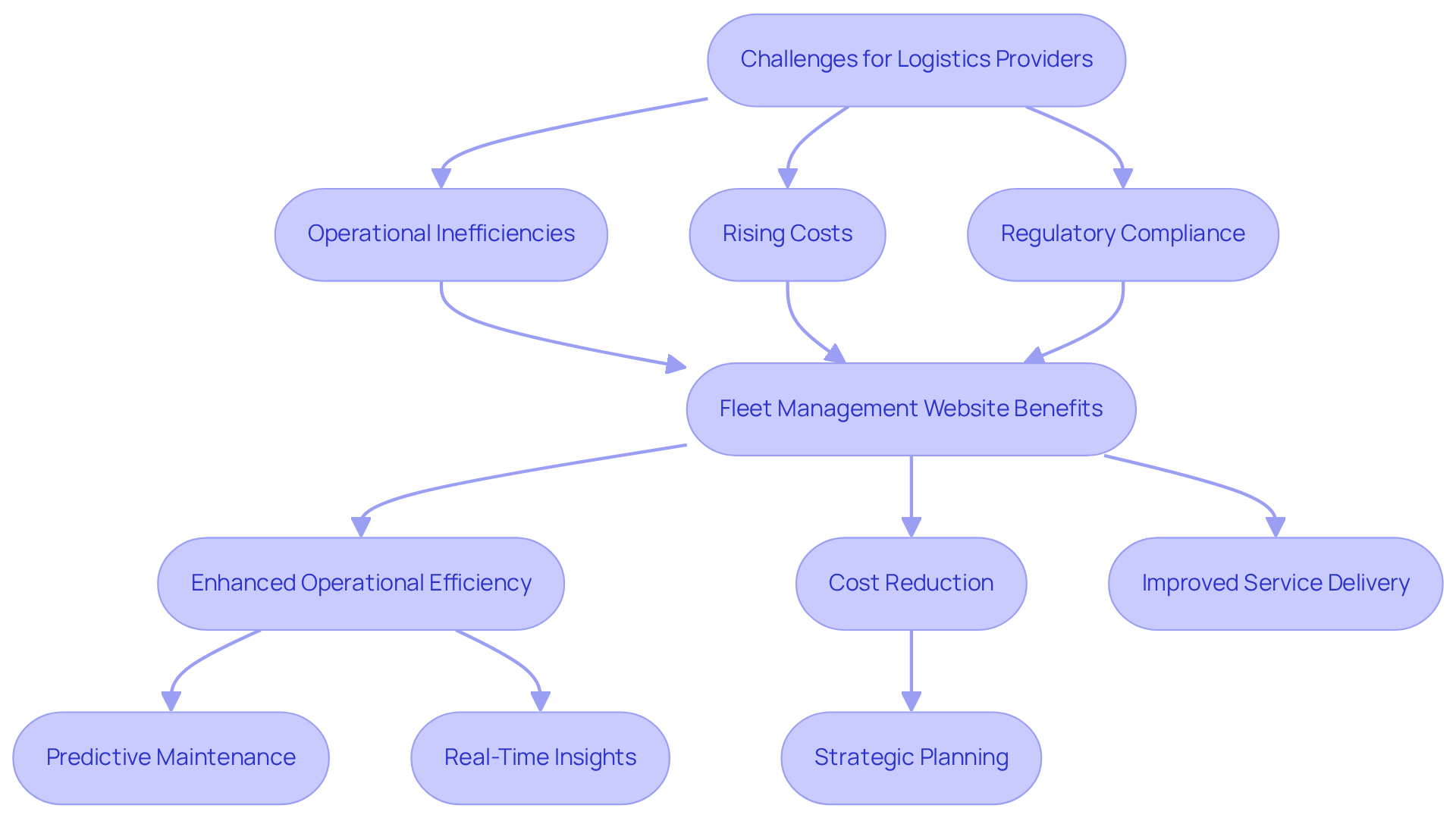
Logistics providers often struggle with operational inefficiencies and rising costs, which can hinder their competitiveness. The role of a fleet management website is crucial in addressing these challenges by significantly enhancing operational efficiency, reducing costs, and improving service delivery. These platforms offer real-time insights into vehicle location, fuel consumption, and maintenance needs. This empowers managers to make proactive decisions that minimize downtime and optimize resource allocation. For instance, organizations employing predictive maintenance can identify issues 2-4 weeks before breakdowns, effectively reducing unplanned downtime by as much as 35% and lowering emergency repair expenses. Furthermore, these platforms assist in meeting regulatory requirements by monitoring driver hours and vehicle inspections, ensuring that operations conform to industry standards.
The incorporation of advanced analytics within transport oversight platforms enables service providers to recognize trends and inefficiencies, resulting in improved strategic planning and enhanced profitability. Companies that adopt real-time systems often report measurable savings within 30 to 90 days, showcasing the tangible benefits of these technologies. In a competitive landscape, leveraging a vehicle oversight platform enhances a company's ability to meet customer demands while maintaining cost efficiency. This ultimately drives success in logistics operations.
Identify Key Features and Components
A fleet management website must integrate essential features to optimize fleet operations and enhance safety. Key features encompass:
- GPS tracking
- Maintenance scheduling
- Driver performance monitoring
- Fuel management
- Comprehensive reporting tools
GPS tracking allows managers to monitor vehicle locations in real-time, optimizing routes and significantly decreasing fuel usage. For instance, users of GPS vehicle tracking have reported a 19% decrease in accident costs and a 12% reduction in fuel expenses.
Maintenance scheduling features are crucial for ensuring that vehicles receive timely servicing, which helps prevent breakdowns and extends their operational lifespan. The ongoing technician shortage complicates timely vehicle maintenance, making proactive scheduling essential.
Driver performance monitoring tools assess driving habits, promoting a culture of safety and efficiency within the fleet. Meight's platform analyzes driving patterns to encourage safer driving habits, which can reduce stress for drivers and improve overall satisfaction. Additionally, predictive safety applications can alert managers to driver fatigue and identify vehicles at risk of mechanical failure, thereby enhancing overall safety.
Fuel management systems meticulously track fuel usage and associated costs, revealing opportunities for savings. Strong reporting tools offer valuable insights into vehicle performance, enabling managers to make data-informed decisions.
The GoMeight app further optimizes logistics operations by automating order dispatch and providing navigation specifically designed for trucks, seamlessly integrating with Meight's cloud-based platform. As regulatory requirements become more stringent and technology continues to progress, integrating automation into these systems can reduce human error and administrative burdens, further streamlining compliance. Ultimately, these integrated features not only streamline operations but also position companies to adapt to future challenges as highlighted on the fleet management website.

Trace Evolution and Development
The evolution of vehicle operations websites reflects a significant shift from manual processes to advanced technological solutions. Initially, transport operations relied heavily on paper documentation and manual procedures. However, as technology advanced, the emergence of telematics and GPS tracking revolutionized vehicle operations by enabling real-time data gathering and analysis. By the late 20th century, software solutions began to emerge, allowing vehicle managers to automate essential tasks such as maintenance scheduling and route optimization. By 2026, vehicle oversight websites will feature advanced analytics, AI capabilities, and mobile access, significantly enhancing operational efficiency and insights. This progression underscores the increasing complexity of logistics operations and the necessity for sophisticated tools to manage them effectively.
The integration of IoT sensors is now essential, providing critical data for operational improvements, including constant feedback on engine health, location, fuel usage, and driving behavior. Solutions such as Meight's GoMeight App enable mid-sized enterprises to adopt a hardware-free platform that enhances fuel efficiency, monitors emissions, optimizes routes, and increases electric vehicle (EV) adoption. This integration not only enhances operational efficiency but also sets a new standard for safety and reliability in vehicle management.

Provide Real-World Examples
Successful implementations of vehicle operations systems demonstrate their effectiveness in optimizing logistics processes. For instance, a logistics company that partnered with Meight reported a 20% reduction in fuel costs within the first year due to improved route planning and driver behavior monitoring facilitated by Meight's AI-driven app. Another case involved a delivery service that improved its on-time delivery rate by 30% after implementing Meight's vehicle coordination system, which offered real-time tracking and automated scheduling. Predictive maintenance programs utilizing Meight's technology have consistently achieved maintenance cost reductions of 15-20%, underscoring the financial advantages of these systems. These examples illustrate that Meight's innovative solutions enhance operational efficiency while delivering significant cost savings and improved customer satisfaction.
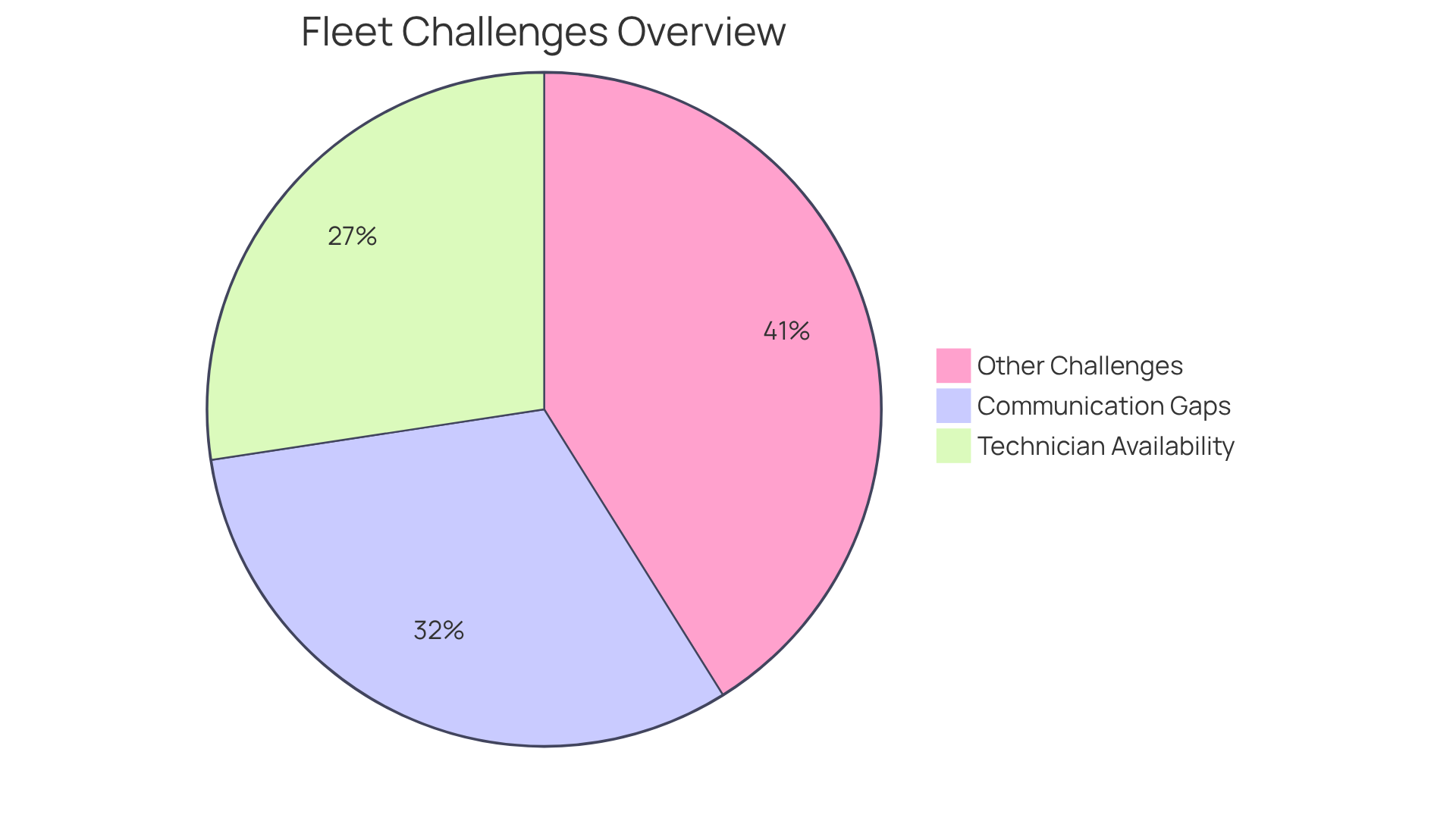
Addressing challenges such as communication gaps (31.5%) and technician availability (27.4%) is essential for fleets to fully leverage the advantages of modern management systems and achieve optimal performance.
Conclusion
Fleet management websites are critical for enhancing logistics operations, reducing costs, and improving service delivery. By integrating various functionalities into a single platform, these websites facilitate real-time data analysis, enabling informed decision-making that drives productivity and compliance in the transportation sector.
Key features such as:
- GPS tracking
- Maintenance scheduling
- Driver performance monitoring
play a pivotal role in optimizing fleet operations. The ability to access real-time insights not only helps in minimizing downtime but also promotes safety and efficiency among drivers. Companies that have adopted these technologies report significant cost savings and improved operational metrics, highlighting the benefits of a comprehensive fleet management system.
In today's logistics landscape, integrating advanced technologies into fleet management is essential. Embracing these innovative solutions can set organizations apart from their competitors, ensuring they meet customer demands while maintaining cost efficiency. Organizations that neglect to invest in these technologies may find themselves at a competitive disadvantage in the logistics sector.
Frequently Asked Questions
What is a fleet management website?
A fleet management website is a platform that provides tools for vehicle supervisors to oversee performance, track maintenance plans, manage driver conduct, and enhance routing, all within a single interface.
How does a fleet management website improve operations?
It simplifies operations, enhances communication, and boosts efficiency in transportation and supply chain sectors by serving as a centralized hub for data collection and analysis, allowing businesses to make informed decisions based on real-time information.
What is the anticipated trend for vehicle control software by 2026?
By 2026, the uptake of vehicle control software is expected to increase significantly, with many transportation firms recognizing its essential role in improving operational effectiveness and reducing costs.
How does Meight's platform contribute to sustainable transport?
Meight's road freight platform manages CO2 emissions while providing seamless cloud integration for effective load coordination and budget oversight, highlighting the importance of technology in sustainable transport.
Why is a unified strategy important for fleet management?
According to AUTOsist, successful organizations will view maintenance, safety, compliance, and cost control as interconnected functions rather than separate tasks, which enhances operational discipline and data-informed decision-making.
What challenges do logistics providers face that a fleet management website can address?
Logistics providers often deal with operational inefficiencies and rising costs, which can be mitigated by a fleet management website that enhances operational efficiency, reduces costs, and improves service delivery.
How do fleet management websites assist in proactive decision-making?
These platforms provide real-time insights into vehicle location, fuel consumption, and maintenance needs, enabling managers to make proactive decisions that minimize downtime and optimize resource allocation.
What are the benefits of predictive maintenance in fleet management?
Predictive maintenance can identify issues 2-4 weeks before breakdowns, reducing unplanned downtime by up to 35% and lowering emergency repair costs.
How do advanced analytics in fleet management platforms benefit logistics providers?
Advanced analytics help service providers recognize trends and inefficiencies, leading to improved strategic planning and enhanced profitability.
What is the expected financial impact of adopting real-time fleet management systems?
Companies that adopt real-time systems often report measurable savings within 30 to 90 days, demonstrating the tangible benefits of these technologies in logistics operations.