

Introduction
In the competitive landscape of logistics, small transport companies grapple with rising operational costs and inefficiencies that threaten their competitiveness. The right trucking management software provides essential tools that streamline processes, improve efficiency, and increase profitability. However, with numerous options available, how can these businesses identify the best solution tailored to their unique needs? This article outlines the essential criteria for evaluating trucking management software, emphasizing key features and benefits that enable small transport firms to succeed in a dynamic industry.
Comparison Criteria for Trucking Management Software
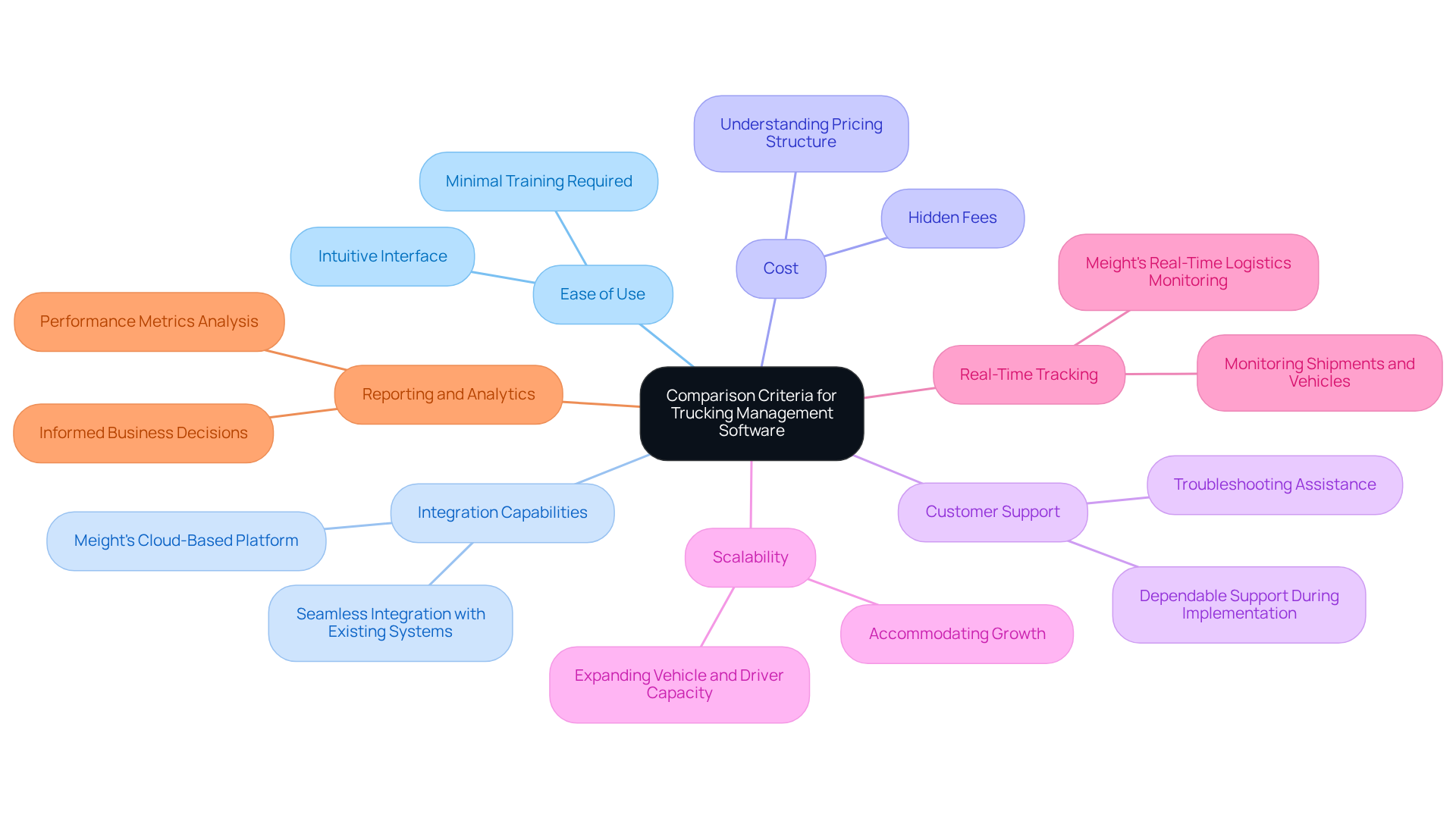
When assessing trucking management software, it is essential to evaluate several critical criteria to ensure optimal operational efficiency:
- Ease of Use: The application should have an intuitive interface that allows users to navigate easily without extensive training.
- Integration Capabilities: It is crucial that the application can seamlessly integrate with existing systems, such as accounting and dispatching tools, to ensure smooth operations. Meight demonstrates superior integration capabilities through its cloud-based platform, enabling logistics providers to manage their loads with remarkable efficiency.
- Cost: Understanding the pricing structure, including any hidden fees, is vital for budgeting, especially for small transport companies. Hidden fees can complicate budgeting for small transport companies.
- Customer Support: Dependable customer support is crucial during implementation and troubleshooting, as it directly influences operational efficiency.
- Scalability: The application should be capable of expanding alongside the business, accommodating increasing numbers of vehicles and drivers seamlessly.
- Real-Time Tracking: Features that enable real-time monitoring of shipments and vehicles can improve efficiency and customer satisfaction. Meight's platform provides real-time logistics monitoring, ensuring that loads are managed within budget and on time.
- Reporting and Analytics: Robust reporting tools help in analyzing performance metrics, which are essential for making informed business decisions.
These standards will guide the evaluation of different trucking administration solutions, ensuring that small transport firms can enhance their operational effectiveness by choosing the best trucking management software for small transport companies and making strategic decisions that foster growth.
Key Features of Leading Trucking Management Software
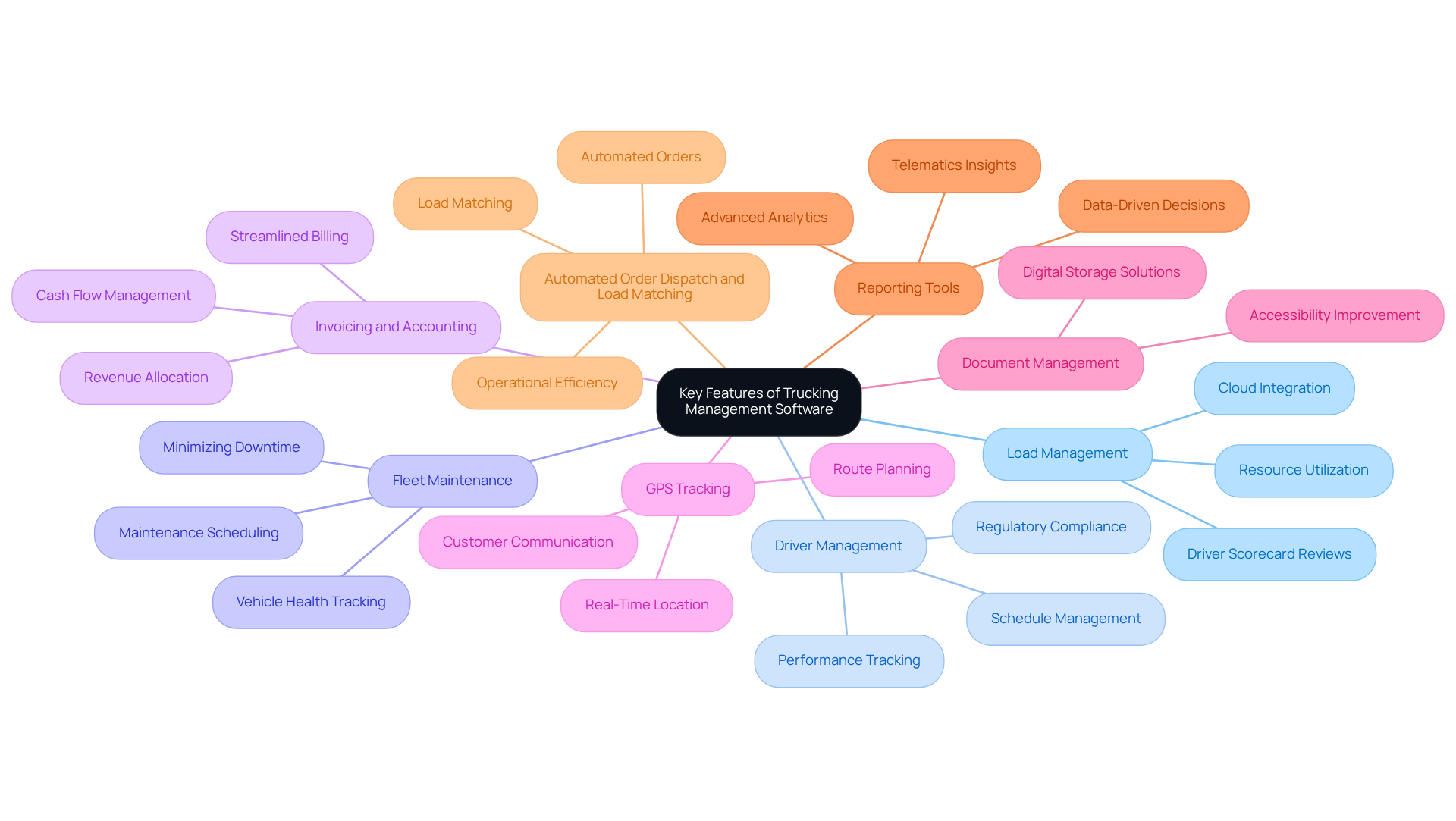
For small transport companies, leveraging the best trucking management software for small transport companies is essential for optimizing operations and driving profitability. These solutions offer a variety of critical features designed to enhance efficiency:
- Load Management: Meight's seamless cloud integration facilitates efficient handling of loads from dispatch to delivery, ensuring optimal resource utilization. Effective load oversight is essential; fleets that neglect regular reviews of driver scorecards risk overlooking valuable opportunities.
- Driver Management: Tools for tracking driver performance, managing schedules, and ensuring compliance with regulations are vital. Effective driver oversight can lead to enhanced safety and operational efficiency, particularly when paired with Meight's intelligent platform features.
- Fleet Maintenance: Scheduling maintenance and tracking vehicle health minimizes downtime, which is crucial for maintaining fleet productivity. Unplanned breakdowns can severely disrupt operations and inflate costs, making proactive maintenance essential.
- Invoicing and Accounting: Integrated financial tools streamline billing processes, enhancing cash flow management. Most fleets allocate between 1% and 3% of their revenue on software, making efficient invoicing critical for profitability.
- GPS Tracking: Real-time vehicle location tracking enhances route planning and improves communication with customers, leading to better service delivery. With Meight's platform, logistics providers can monitor operations in real-time, allowing for quick responses to any changes.
- Document Management: Digital storage solutions for essential documents, such as bills of lading and compliance paperwork, help reduce clutter and improve accessibility.
- Reporting Tools: Advanced analytics provide insights into operational efficiency, enabling organizations to make informed, data-driven decisions. For instance, telematics can yield a return on investment within months by reducing fuel costs through improved driver behavior.
- Automated Order Dispatch and Load Matching: With the GoMeight app, logistics providers can send automated orders to drivers and seamlessly match upcoming loads with available trucks. This feature streamlines road freight logistics and enhances driving efficiency, ensuring that operations run smoothly and effectively.
These features are vital for small transport companies seeking the best trucking management software for small transport companies to enhance operational efficiency and reduce costs, ultimately driving profitability. Ultimately, these features empower small transport companies to enhance efficiency and utilize the best trucking management software for small transport companies to secure a competitive edge in the market.
Cost Analysis of Trucking Management Software Options
When assessing the financial implications of trucking management software, several key factors warrant careful consideration:
- Subscription Fees: Most software solutions utilize a subscription model, with monthly or annual fees that can vary widely based on features and the number of users. Meight offers a flexible pricing model with three tiers: Starter, Growth, and Enterprise. This allows small transport businesses to choose a plan that meets their operational needs and pay only for what they use, based on mileage traveled with the Meight platform.
- Setup Costs: Initial setup expenses often encompass installation, training, and customization. With Meight, businesses benefit from free implementation, allowing them to concentrate on a seamless transition without the stress of technical issues. This is a significant advantage compared to other platforms that may charge for setup.
- Hidden Fees: It's crucial to be vigilant about potential hidden fees associated with additional features, customer support, or data storage that may not be included in the base price. Unexpected costs can derail budgets, making it essential to scrutinize all potential fees associated with the software. Understanding these costs upfront can prevent budget overruns and ensure that the total cost is accurately assessed.
- Scalability Costs: As businesses expand, they may incur additional costs for adding users or features. Meight's pricing plans are designed to grow with your business, allowing for upgrades or downgrades as needed, which helps avoid unexpected financial burdens. This flexibility is crucial for small transport businesses aiming to scale efficiently.
- Return on Investment (ROI): Evaluating how the application can improve efficiency and lower expenses is crucial. A well-chosen solution can lead to significant savings over time. For instance, a case study showed that a managed logistics solution led to a 20% reduction in freight costs, effectively offsetting the initial investment. Investing in the right software can transform operational efficiency, leading to substantial long-term savings. Evaluating these potential savings is crucial for making informed decisions.
By thoroughly examining these cost elements, small transport firms can make informed choices when selecting the best trucking management software for small transport companies that aligns with their financial objectives and operational needs.

Benefits of Each Trucking Management Software Solution
Small transport companies frequently encounter operational challenges that can impede their growth and efficiency. Each trucking management software solution offers unique advantages that can significantly benefit these companies:
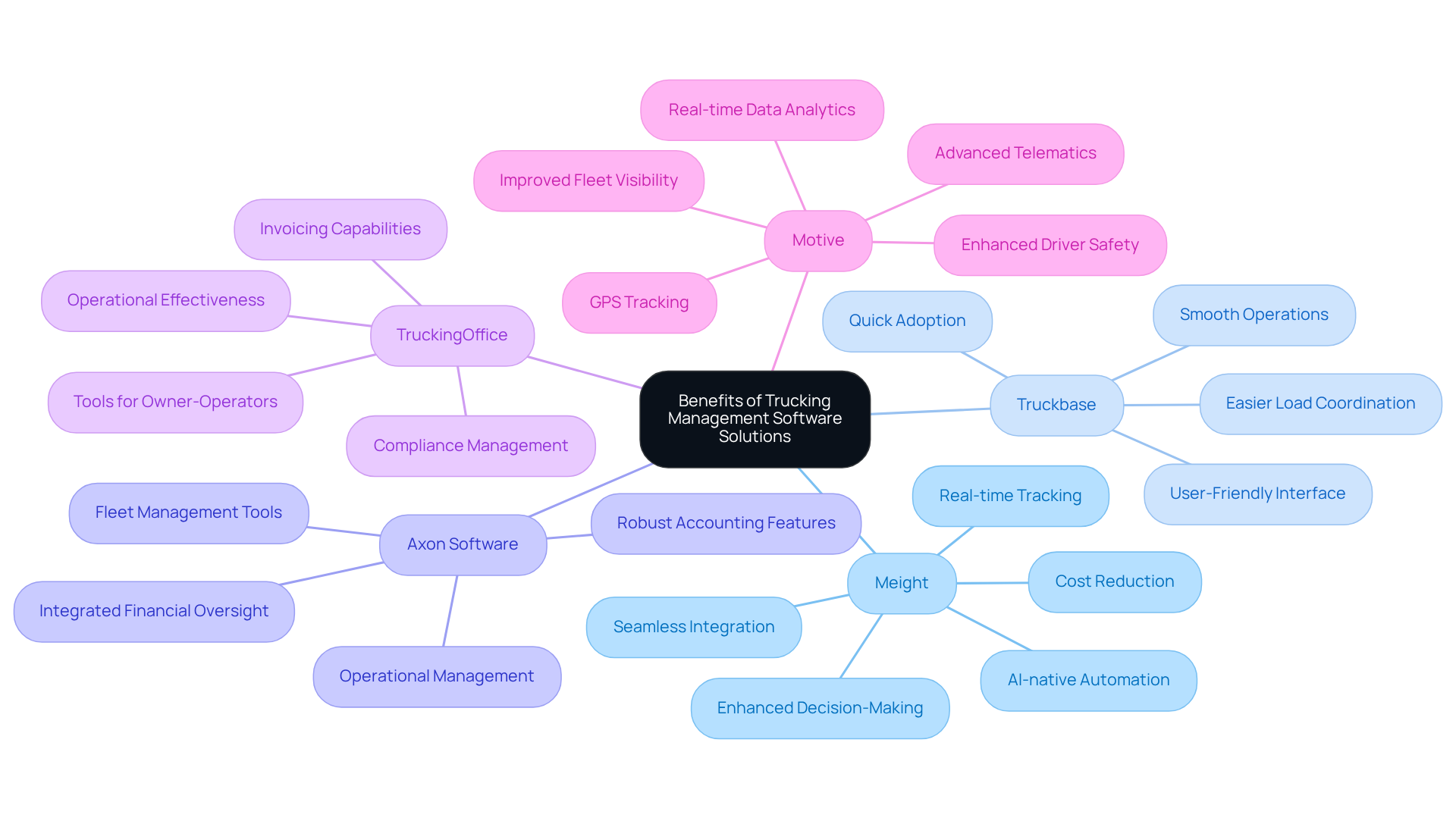
- Meight uses AI-native automation to improve efficiency. It offers real-time tracking and integrates seamlessly with existing systems. This capability enhances decision-making and reduces expenses, making it a powerful tool for logistics optimization.
- Truckbase is known for its user-friendly interface, which makes load coordination and dispatching easier, especially for small fleets. Its intuitive design allows for quick adoption without a steep learning curve, facilitating smoother operations.
- Axon Software combines robust accounting features with fleet management tools, making it ideal for organizations that require integrated financial oversight and operational management.
- TruckingOffice is designed for owner-operators, offering essential tools for invoicing and compliance that help small businesses manage their operations effectively.
- Motive provides advanced telematics and GPS tracking, improving fleet visibility and driver safety for organizations that value real-time data and analytics to boost performance.
By understanding the distinct benefits of each software solution, small transport companies can make informed decisions by selecting the best trucking management software for small transport companies that aligns with their operational needs and strategic objectives. By selecting the right software, these companies can turn operational challenges into opportunities for enhanced efficiency and growth.
Conclusion
Selecting appropriate trucking management software is essential for small transport companies seeking to improve efficiency and profitability. By understanding the essential features and evaluation criteria, businesses can choose a solution that meets their current needs and scales as they grow.
Throughout this article, we have discussed key aspects such as:
- Ease of use
- Integration capabilities
- Cost analysis
- Customer support
Solutions like Meight stand out for their robust features, including:
- Real-time tracking
- Automated order dispatch
- Comprehensive reporting tools
Additionally, understanding the financial implications, including subscription fees and potential hidden costs, is crucial for making informed decisions that align with budgetary constraints.
Investing in effective trucking management software can turn operational challenges into growth opportunities. Small transport companies should assess their needs and explore options to gain a competitive edge. The right technology can be the difference between stagnation and growth in a competitive market.
Frequently Asked Questions
What are the key criteria to consider when evaluating trucking management software?
The key criteria include ease of use, integration capabilities, cost, customer support, scalability, real-time tracking, and reporting and analytics.
Why is ease of use important in trucking management software?
Ease of use is important because the application should have an intuitive interface that allows users to navigate easily without extensive training.
How do integration capabilities affect trucking management software?
Integration capabilities are crucial as the application must seamlessly integrate with existing systems, such as accounting and dispatching tools, to ensure smooth operations.
What should small transport companies consider regarding the cost of trucking management software?
Small transport companies should understand the pricing structure, including any hidden fees, as these can complicate budgeting.
Why is customer support significant for trucking management software?
Dependable customer support is significant because it aids during implementation and troubleshooting, directly influencing operational efficiency.
What does scalability mean in the context of trucking management software?
Scalability refers to the software's ability to expand alongside the business, accommodating increasing numbers of vehicles and drivers seamlessly.
How does real-time tracking contribute to trucking management?
Real-time tracking features enhance efficiency and customer satisfaction by enabling monitoring of shipments and vehicles.
What role do reporting and analytics play in trucking management software?
Reporting and analytics provide robust tools for analyzing performance metrics, which are essential for making informed business decisions.