

Maximize Efficiency with Dispatch Software for Transport Companies
Introduction
In logistics, the efficiency of transport operations is critical to a company's success. Dispatch software serves as a pivotal resource, offering transport companies the ability to automate processes, optimize routes, and enhance real-time communication. This ultimately enhances operational performance. However, many companies struggle to navigate the myriad of options available in dispatch software.
What strategies can companies employ to identify and implement the most effective features to maximize their benefits?
Define Dispatch Software and Its Importance in Logistics
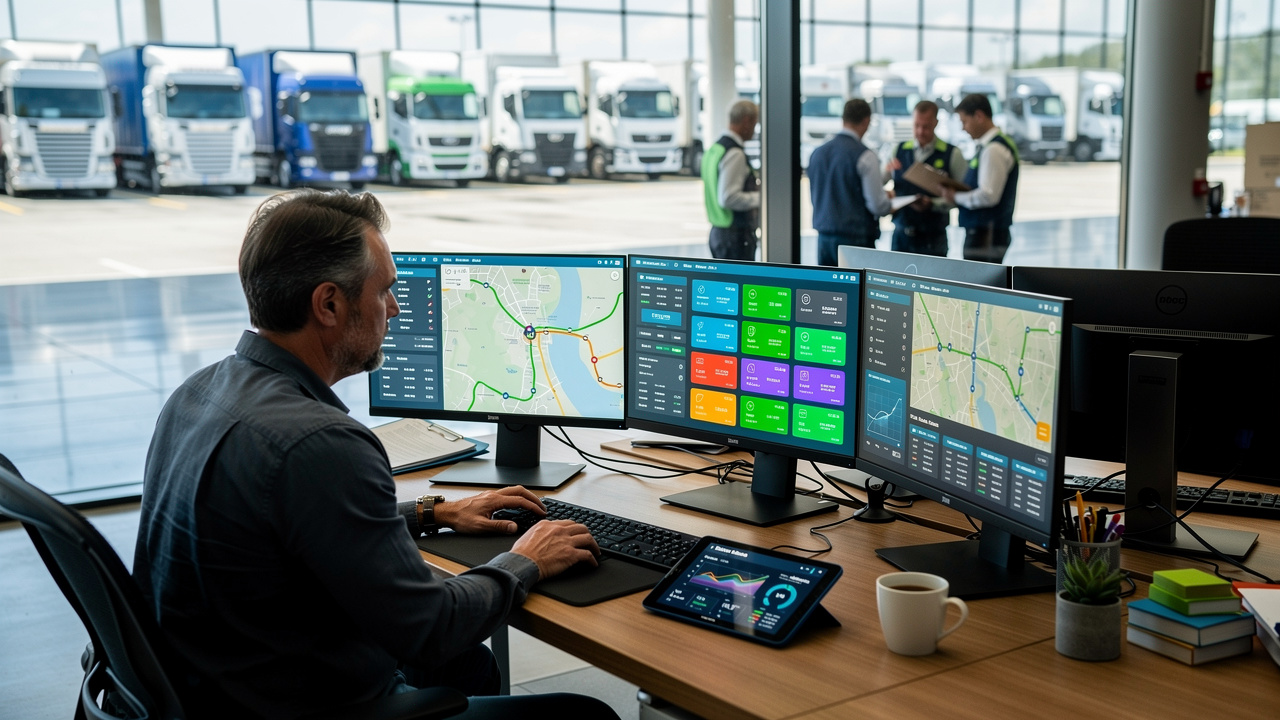
Dispatch software for dispatcher for transport companies is an essential digital tool that enhances the efficiency of transport operations through automation and real-time management. This dispatch software for dispatcher for transport companies enables transportation firms to allocate tasks to drivers, optimize routes, and monitor deliveries in real-time, thereby significantly enhancing operational efficiency.
Meight's innovative road freight platform exemplifies this by managing 43.8 kton of CO2 emissions, underscoring its commitment to sustainable supply chain optimization. The significance of dispatch software for dispatcher for transport companies in supply chain management is emphasized by its capacity to minimize manual mistakes, enhance communication, and offer thorough visibility into fleet operations.
For example, fleets employing AI-driven routing systems have reported on-time delivery rates soaring to 98%, alongside fuel cost reductions of 10-20%. Moreover, dispatch software for dispatcher for transport companies can reduce planning time from hours to just minutes, enabling managers to concentrate on strategic decision-making instead of repetitive tasks. This shift leads to more effective resource distribution and significantly enhances customer satisfaction, demonstrating how management tools can enhance operational performance through improved efficiency and customer satisfaction.
The GoMeight App further transforms road freight logistics by employing dispatch software for dispatcher for transport companies to automate order allocation and load matching, optimizing driver availability and routing. As the market for truck management platforms grows, leveraging advanced logistics solutions will be vital for maintaining a competitive edge.
Identify Key Features for Effective Dispatch Software
In the competitive landscape of logistics, the right dispatch software can be the difference between operational success and costly inefficiencies. Several key features are essential for maximizing effectiveness and operational efficiency:
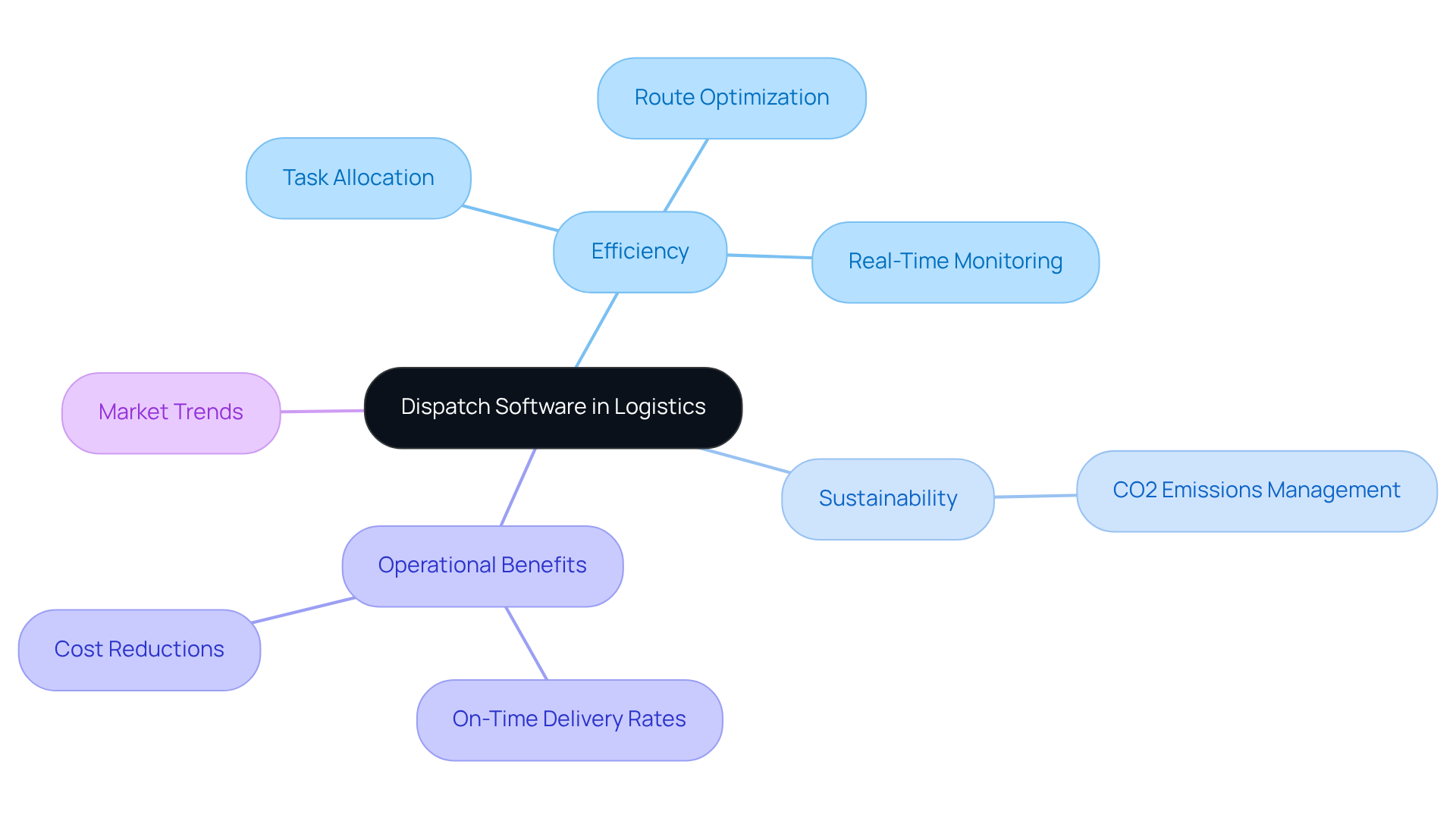
- Real-Time Tracking: This feature enables dispatchers to monitor vehicle locations and delivery statuses continuously. Real-time GPS visibility is crucial for making quick adjustments to routes, which can lead to a 33% improvement in on-time deliveries.
- Automated Scheduling: Automating the scheduling process reduces manual errors, which represent about 23% of supply chain disruptions. This efficiency allows dispatchers to concentrate on strategic tasks rather than routine scheduling.
- Route Optimization: Advanced algorithms analyze traffic patterns and road conditions to recommend the most efficient routes. This capability can lower fuel expenses by as much as 25% and greatly diminish total costs, making it an essential feature of dispatch software for transport companies.
- Communication Tools: Integrated messaging systems enhance communication between dispatchers and drivers, ensuring that all parties are informed of changes in real-time. This feature is vital for decreasing missed appointments and enhancing customer satisfaction, as timely updates are critical for service providers.
- Reporting and Analytics: Comprehensive reporting tools offer insights into performance metrics, enabling managers to make data-driven decisions. Businesses employing routing applications indicate a 15% decrease in overtime costs and a 10% reduction in total expenses, emphasizing the significance of efficient analytics in enhancing supply chain activities.
Ultimately, the integration of these features not only streamlines operations but also positions companies for sustainable growth in a demanding market.
Implement Best Practices for Successful Software Integration
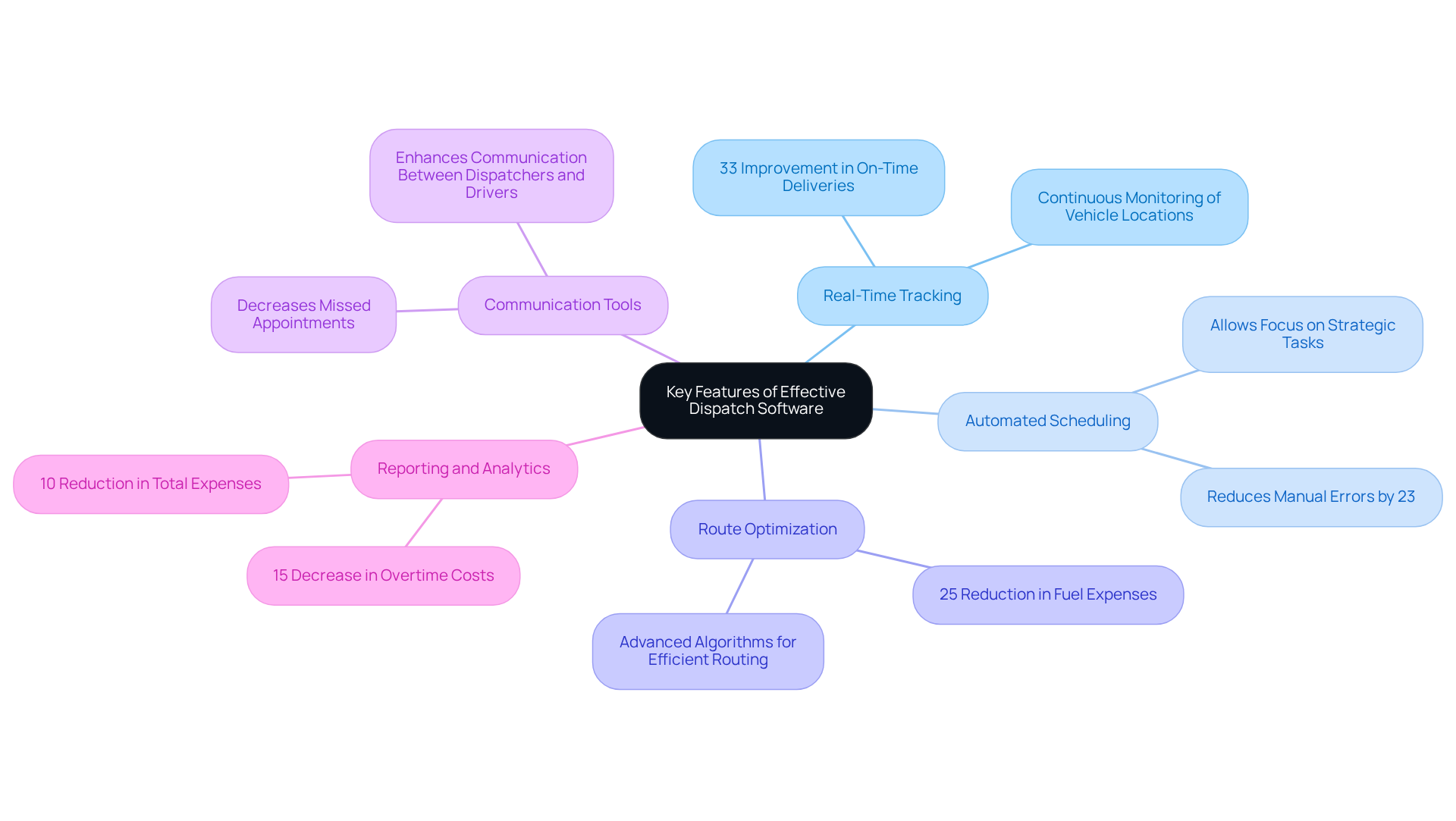
Integrating dispatch software for dispatcher for transport companies into logistics operations can be fraught with challenges if not approached strategically. To achieve a successful integration, consider the following best practices:
- Define Clear Objectives: Establish specific goals for the integration process, such as improving route efficiency or reducing downtime. Having clear objectives helps steer the implementation and gauge success effectively.
- Involve Key Stakeholders: Engage team members from various departments, including IT, operations, and finance. Their input guarantees that the application meets the diverse needs of all users, fostering a sense of ownership and collaboration.
- Plan for a Phased Rollout: Implement the application in phases rather than launching it all at once. This approach allows for testing in one department or region, enabling adjustments based on real-world feedback and minimizing disruptions.
- Provide Comprehensive Training: Invest in thorough training programs for all users, covering system features and best practices. Organizations that prioritize training see significantly higher returns on their technology investments, with 70% reporting improved outcomes.
- Monitor and Adjust: Continuously evaluate the system's performance post-implementation. Regularly gather user feedback and be prepared to make necessary adjustments to optimize its functionality and enhance operational efficiency.
Ultimately, neglecting these best practices can lead to wasted resources and missed opportunities for operational excellence.
Evaluate and Optimize Dispatch Software Performance
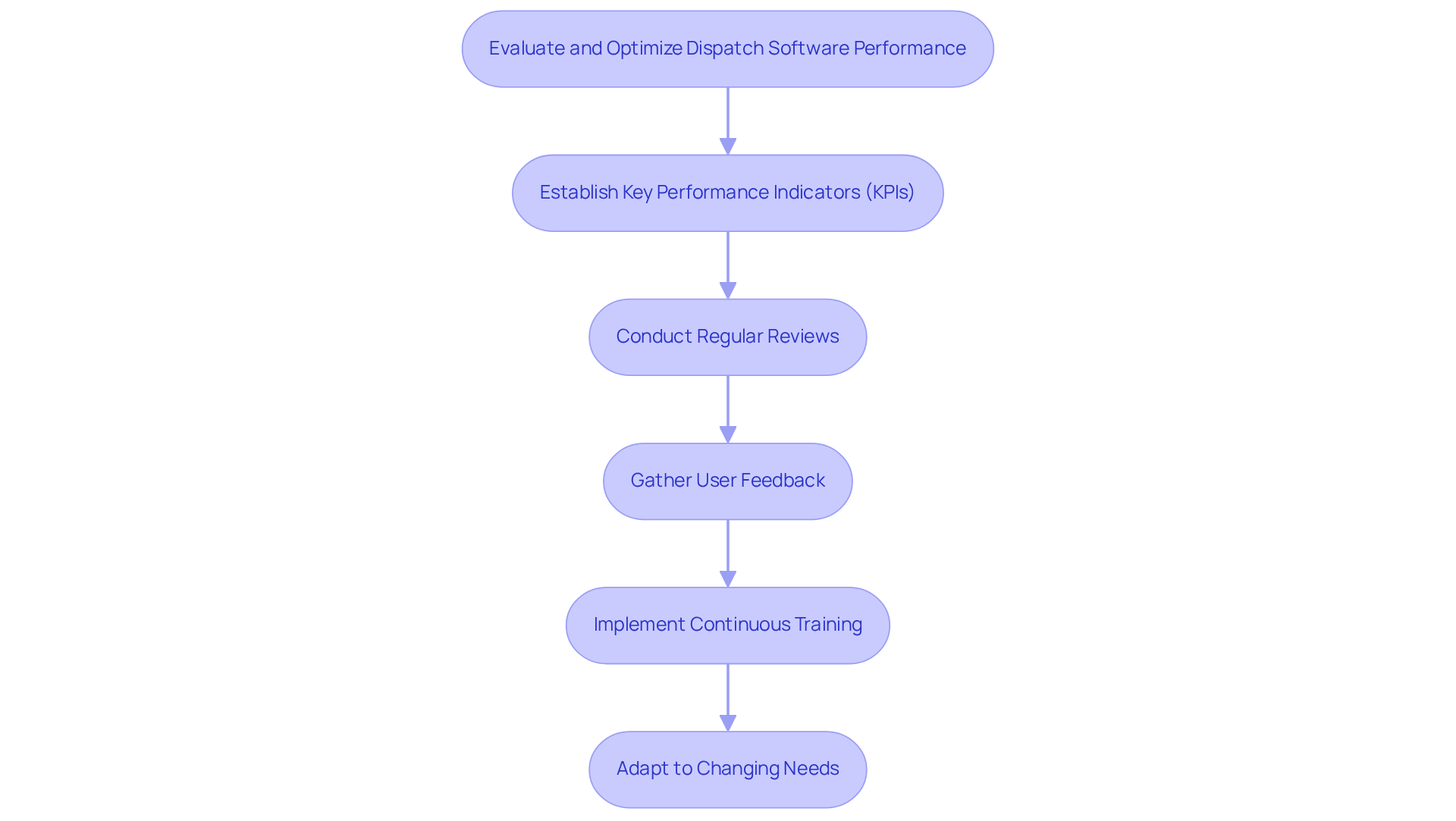
To ensure optimal performance, transport companies must rigorously evaluate their dispatch software through the following strategies:
- Establish Key Performance Indicators (KPIs): Define KPIs that align with operational goals, such as on-time delivery rates, fuel efficiency, and driver productivity. These metrics are essential for evaluating the system's impact on operations and identifying areas for enhancement. Without clear metrics, transport companies may struggle to pinpoint inefficiencies in their operations.
- Conduct Regular Reviews: Schedule periodic evaluations of the system's performance against the established KPIs. This practice helps identify inefficiencies and ensures that the system adapts to evolving business needs, reflecting Meight's commitment to continuous improvement and innovation in logistics.
- Gather User Feedback: Actively solicit feedback from dispatchers and drivers regarding their experiences with the application. Insights from users can reveal usability issues and highlight features that may require enhancement. Understanding real user needs is crucial for creating tools that genuinely support drivers and dispatchers.
- Implement Continuous Training: As applications are updated and new features are introduced, ongoing training is crucial. This ensures that users are equipped to fully utilize the system's capabilities, enhancing overall operational efficiency. A comprehensive training plan that accommodates various learning styles is essential for successful system rollout, along with ongoing support for users, reflecting Meight's dedication to empowering its clients.
- Adapt to Changing Needs: Be prepared to modify application usage as business requirements evolve. This may involve integrating new features, adjusting workflows, or upgrading to more advanced systems to maintain a competitive edge. Adapting to these changes can position companies as leaders in the logistics sector.
By consistently assessing and improving delivery system performance, transport companies can enhance their operational efficiency and responsiveness in a rapidly changing logistics environment. This proactive approach not only enhances operational efficiency but also positions companies for future success in an increasingly competitive landscape. For instance, fleets using AI-powered dispatch have reported cost reductions of up to 25% and achieved 98% on-time delivery rates, highlighting the critical need for effective software evaluation and adaptation. Meight is at the forefront of this revolution, providing comprehensive support and intelligent transport solutions that drive success.
Conclusion
In a competitive logistics landscape, maximizing efficiency in transport operations is essential for success. Dispatch software serves as a transformative tool that automates processes, enhances real-time management, and ultimately drives operational success. Transport companies can significantly enhance service delivery and customer satisfaction by utilizing features like real-time tracking, automated scheduling, and route optimization.
Throughout the article, key insights highlight the importance of integrating effective dispatch software into logistics operations. The discussion covers essential features that streamline processes, best practices for successful software implementation, and strategies for evaluating and optimizing performance. By focusing on clear objectives, involving stakeholders, and continuously monitoring system effectiveness, companies can harness the full potential of dispatch software to reduce costs and improve efficiency.
In conclusion, the adoption of dispatch software is not merely a technological upgrade; it is a strategic move that can redefine operational capabilities in the transport sector. This strategic move not only enhances efficiency but also positions companies as leaders in the logistics sector. Investing in dispatch software is not just about keeping up; it’s about leading the way in operational excellence and sustainability.
Frequently Asked Questions
What is dispatch software and why is it important in logistics?
Dispatch software is a digital tool that enhances the efficiency of transport operations through automation and real-time management. It allows transportation firms to allocate tasks to drivers, optimize routes, and monitor deliveries, significantly improving operational efficiency.
How does dispatch software contribute to sustainability in logistics?
Dispatch software, such as Meight's road freight platform, helps manage CO2 emissions and supports sustainable supply chain optimization by minimizing manual mistakes and enhancing communication.
What are the benefits of using AI-driven routing systems in dispatch software?
Fleets using AI-driven routing systems have reported on-time delivery rates of up to 98% and fuel cost reductions of 10-20%, showcasing the effectiveness of these technologies in improving logistics operations.
How does dispatch software affect planning time for transport companies?
Dispatch software can reduce planning time from hours to just minutes, allowing managers to focus on strategic decision-making rather than repetitive tasks.
What impact does dispatch software have on customer satisfaction?
By improving operational efficiency and resource distribution, dispatch software significantly enhances customer satisfaction, demonstrating its role in effective logistics management.
How does the GoMeight App utilize dispatch software?
The GoMeight App automates order allocation and load matching, optimizing driver availability and routing to improve road freight logistics.
Why is leveraging advanced logistics solutions important for transport companies?
As the market for truck management platforms grows, leveraging advanced logistics solutions is vital for transport companies to maintain a competitive edge in the industry.

Subscribe to our newsletter
No spam! Promise!
Related posts

Discover the Best Dispatch Software for Road Freight Operations

5 Best Practices for E2E Supply Chain Management Success
Choose the Right Car Fleet Management Software in 5 Steps