

Introduction
In an industry where efficiency and adaptability are crucial, trucking management software (TMS) stands out as a pivotal tool for transport companies aiming for growth. TMS streamlines operations and enables businesses to utilize data-driven insights, thereby improving profitability and promoting sustainability. Transport companies face increasing challenges in adapting to the evolving logistics landscape.
How can they leverage TMS to not only meet current demands but also anticipate future challenges? By effectively utilizing TMS, companies can not only respond to current demands but also anticipate future challenges.
Defining Trucking Management Software
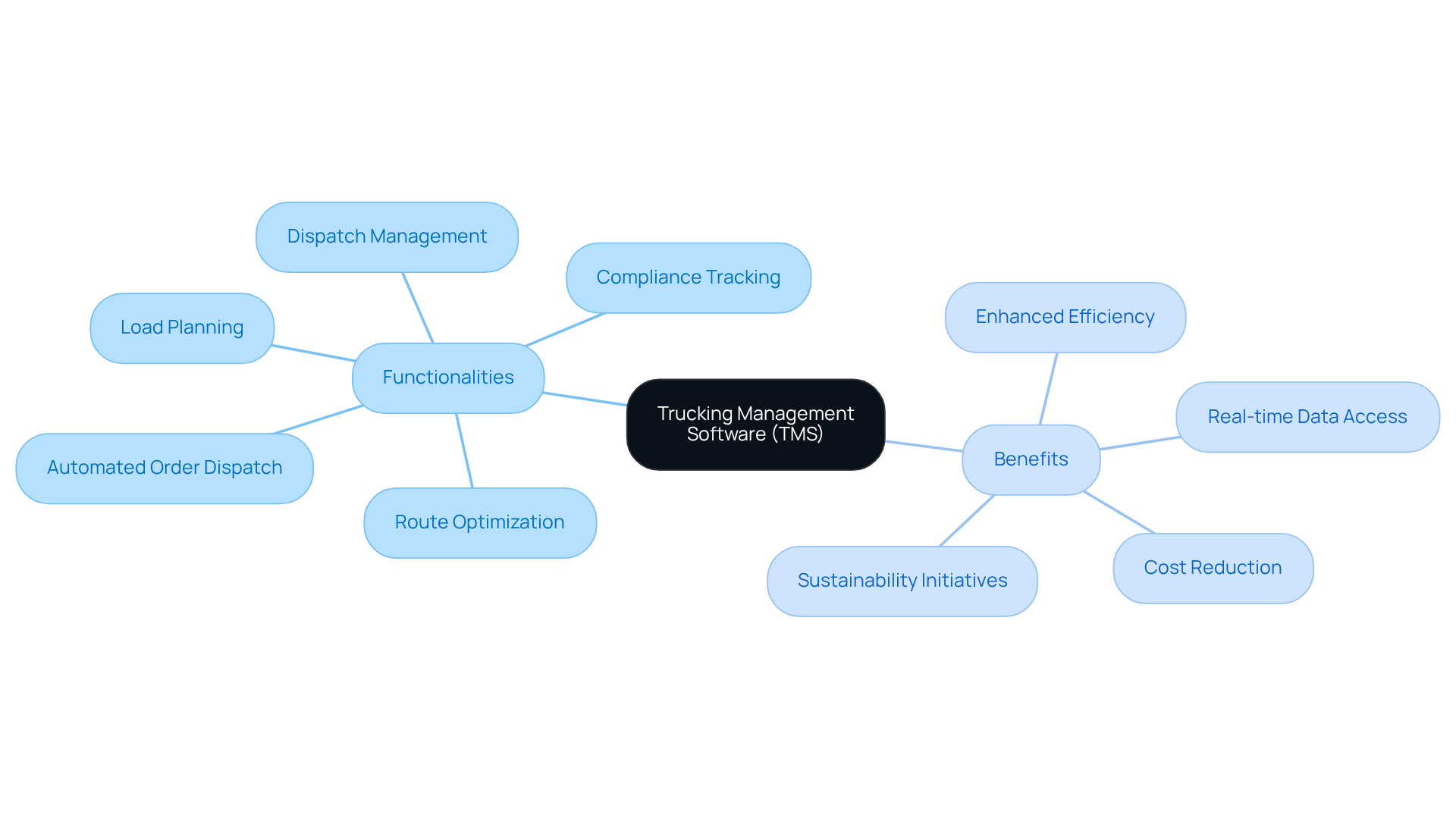
In the competitive landscape of the trucking industry, effective logistics management is paramount. Trucking management software for growing transport companies is a vital digital solution for managing logistics and transportation operations within this sector. This software encompasses a variety of functionalities, including:
- Dispatch management
- Route optimization
- Load planning
- Compliance tracking
- Automated order dispatch and load matching
TMS automates these processes, which reduces manual errors and streamlines operations. This ultimately enhances overall efficiency.
Transport businesses looking to expand find trucking management software for growing transport companies essential as it unifies various aspects of fleet management into one cohesive platform. This integration allows for real-time data access, enabling informed decision-making that can lead to improved operational outcomes. For instance, companies utilizing advanced TMS solutions have reported enhanced visibility into their operations, which is crucial for identifying profitable lanes and optimizing resource allocation.
For instance, businesses that have embraced strong TMS solutions have seen significant enhancements in order processing speed and decreases in expenses. These advancements not only enhance revenue but also aid sustainability initiatives by reducing fuel usage and CO2 emissions, with Meight overseeing 43.8 kton of CO2 emissions to foster sustainability in transportation.
Specialists in the supply chain sector highlight the importance of TMS in enhancing efficiency. As one industry leader remarked, the implementation of TMS is crucial for businesses striving to manage the intricacies of contemporary supply chain operations, especially in an environment marked by increasing operational expenses and regulatory challenges. The ability to leverage data-driven insights through TMS can provide a competitive advantage, enabling businesses to adapt swiftly to market changes and optimize their operations effectively.
In summary, trucking management software for growing transport companies is not merely a tool but a strategic asset for logistics firms. Without TMS, logistics firms risk falling behind in an increasingly complex transport environment.
Importance of Trucking Management Software for Growing Transport Companies
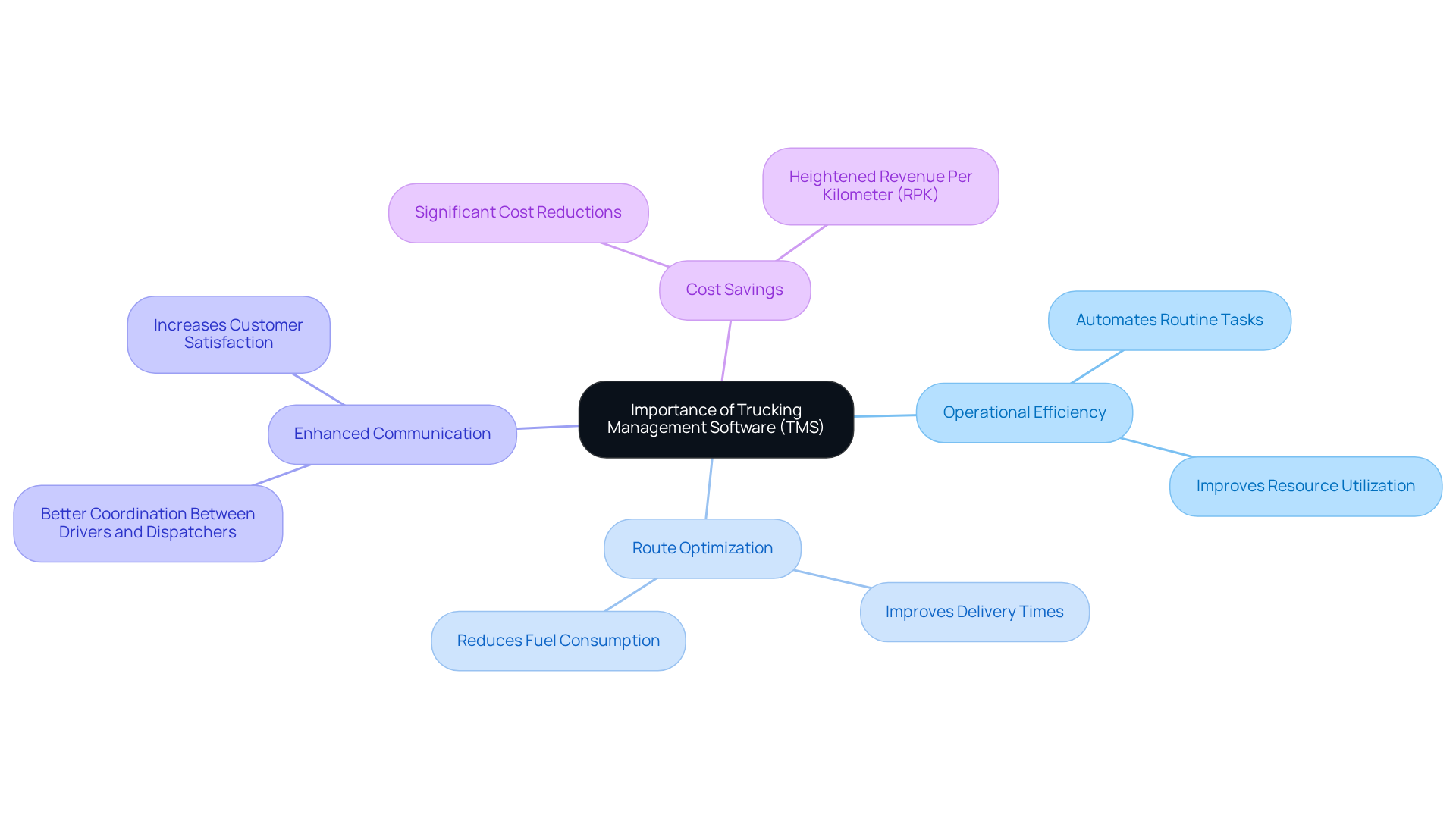
For transport businesses aiming to expand, the implementation of trucking management software (TMS) is not just beneficial; it is essential for operational success. TMS automates routine tasks and provides actionable insights, enabling companies to optimize routes and significantly reduce fuel consumption.
Optimizing routes is crucial for improving delivery times, directly impacting competitiveness in the transportation sector. Moreover, TMS fosters better communication between drivers and dispatchers, ensuring that all parties remain informed and coordinated throughout the transport process. This enhanced communication leads to improved customer satisfaction and retention, as timely deliveries and efficient service are vital in the transport industry.
Companies utilizing TMS, like Meight, have reported significant cost savings and heightened revenue per kilometer (RPK), highlighting the significant impact of these systems on modern supply chain efficiency.
Evolution and Origin of Trucking Management Software
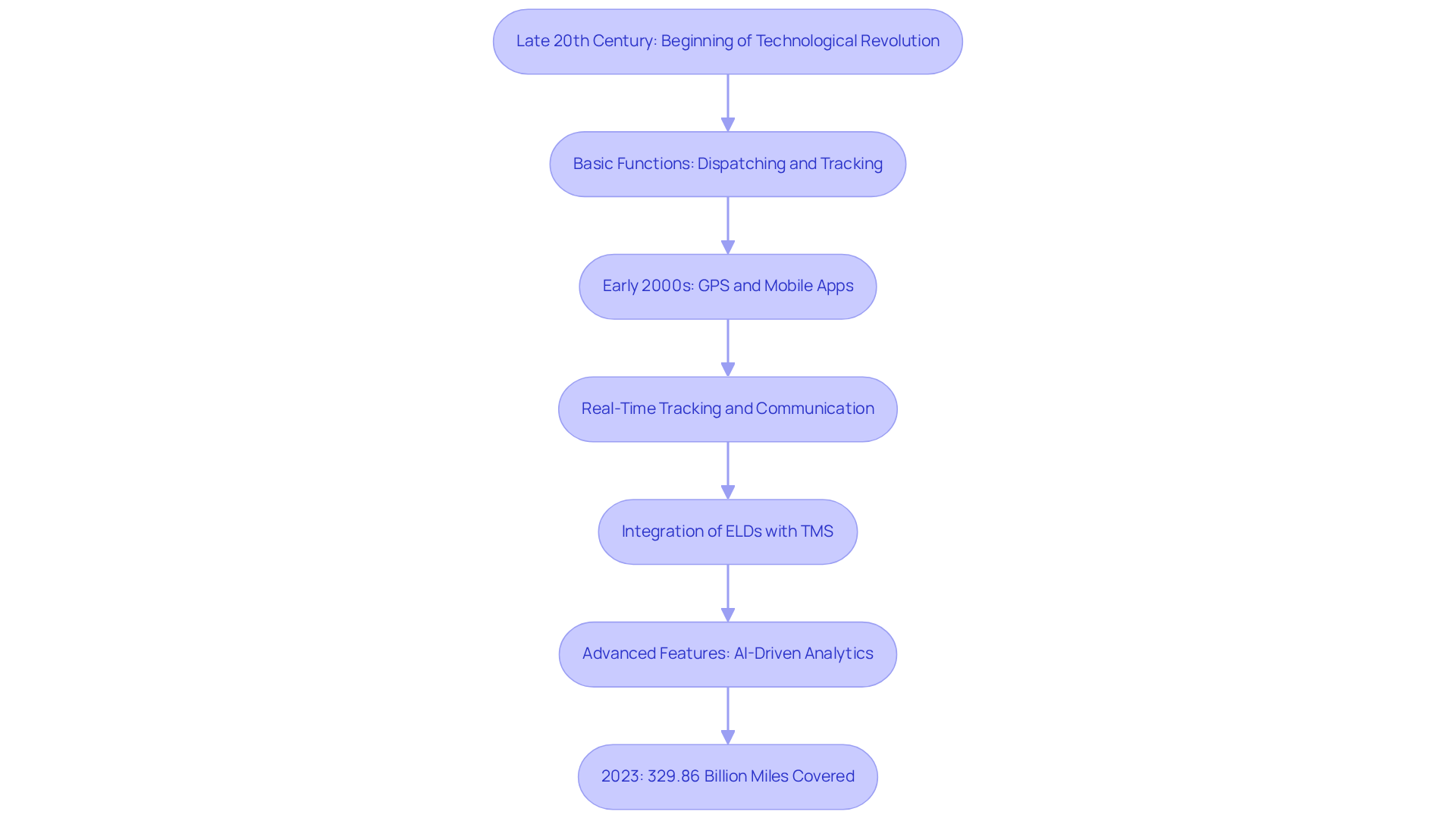
The late 20th century marked the beginning of a technological revolution in trucking management, driven by the logistics sector's need for improved operational efficiency. Initially, trucking management software focused on basic functions such as dispatching and tracking. However, the advent of GPS technology and mobile applications in the early 2000s enabled real-time tracking and communication. This transformation enabled trucking companies to achieve significant operational optimization. For instance, the integration of Electronic Logging Devices (ELDs) with TMS software has been essential in ensuring compliance and enhancing management oversight, as evidenced by improved tracking and fleet control for small carriers.
Today, trucking management software for growing transport companies includes advanced features such as AI-driven analytics, automated compliance checks, and seamless integration with other logistics platforms. This evolution reflects the industry's transition towards data-driven decision-making and operational transparency. Meight provides three segments: Iniciación, Crecimiento, and Empresa, tailored to adjust pricing based on the scale of operations, ensuring businesses only pay for what they utilize. As of 2023, trucks covered an astounding 329.86 billion miles, underscoring their vital role in transportation. As the logistics landscape continues to evolve, the role of trucking management software for growing transport companies in enhancing operational efficiency and compliance will only become more critical. Furthermore, effective customer support from TMS providers like Meight is essential in alleviating the challenges faced by trucking companies, ensuring that they can fully leverage the capabilities of their software solutions.
Key Features of Effective Trucking Management Software
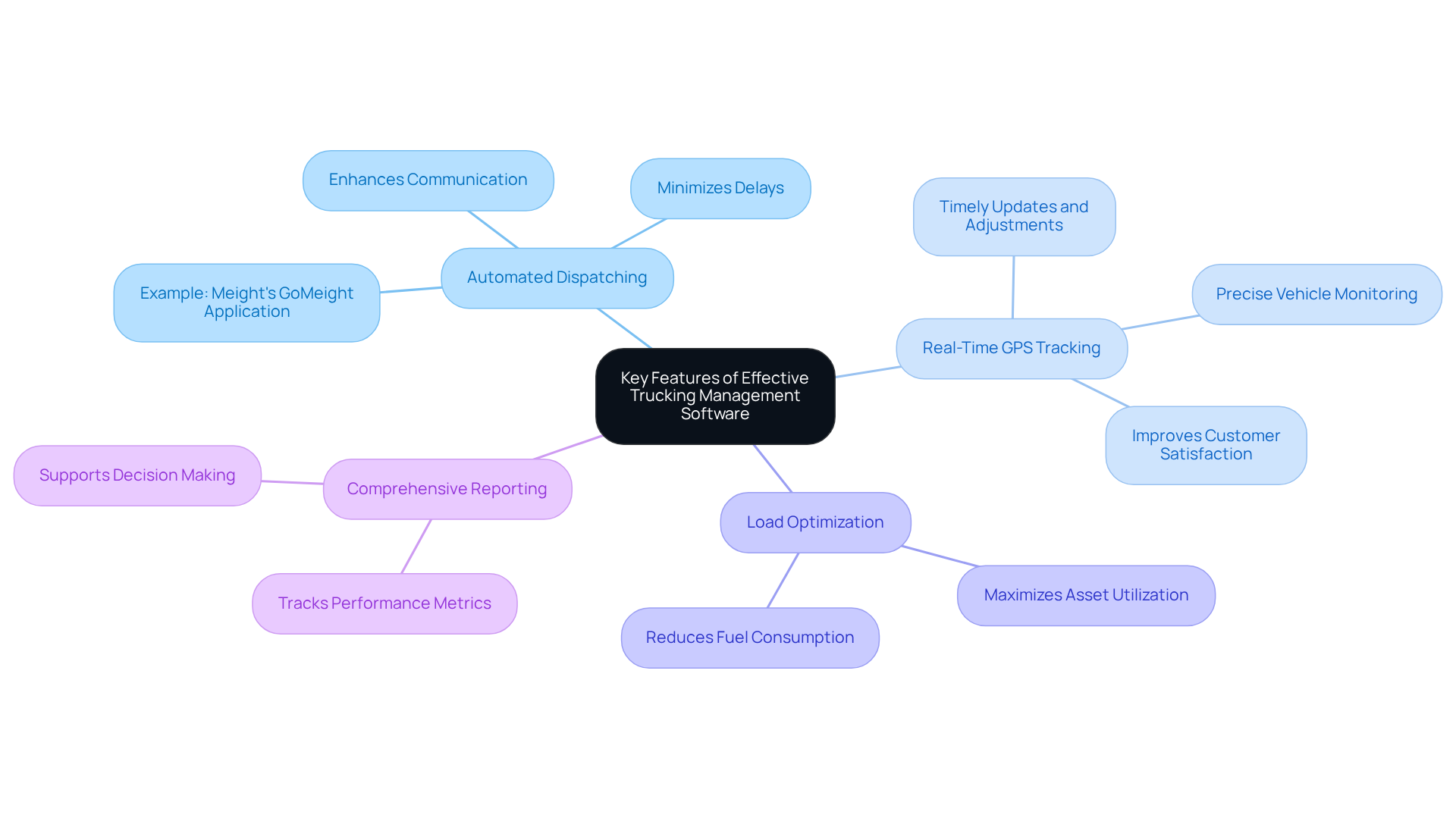
To achieve maximum operational efficiency, effective trucking management software (TMS) must integrate several essential features. Key functionalities include:
Real-time GPS tracking is vital. It allows for precise monitoring of vehicle locations and enables timely updates and adjustments to delivery schedules. This capability enhances route optimization and improves customer satisfaction by providing accurate delivery estimates.
Automated dispatching enhances supply chain management by ensuring smooth communication between drivers and dispatchers. Meight's GoMeight application exemplifies this by sending automated orders to drivers and matching upcoming loads with available trucks. This ensures that any changes in schedules or routes can be communicated quickly, minimizing delays and enhancing overall service delivery. Additionally, the integration with Meight's cloud-based logistics platform simplifies invoicing processes and ensures adherence to regulatory requirements, providing a comprehensive view of operations.
Focusing on these critical functionalities allows transport companies to choose a TMS that meets their growth objectives and operational needs. This ultimately drives efficiency and profitability.
Conclusion
Transport companies face significant challenges in achieving operational efficiency and growth. Trucking management software (TMS) stands as a cornerstone for transport companies seeking to address these issues. TMS automates essential logistics tasks and integrates functionalities into one platform, simplifying fleet management and enhancing decision-making with real-time data. This software helps businesses manage logistics challenges effectively, leading to improved operational outcomes and a competitive advantage.
Throughout the article, key points highlight the transformative impact of TMS on logistics management. From improving route optimization and compliance tracking to fostering better communication between drivers and dispatchers, the benefits of adopting trucking management software are profound. Additionally, the evolution of TMS, driven by technological advancements, underscores its critical role in ensuring operational efficiency and sustainability in the trucking sector.
As the logistics landscape continues to evolve, transport companies must embrace trucking management software to thrive. Companies that prioritize the integration of TMS into their operations not only enhance their service delivery and customer satisfaction but also position themselves for long-term growth in an increasingly competitive market. Implementing TMS is crucial for maintaining a competitive edge and ensuring long-term success in logistics.
Frequently Asked Questions
What is trucking management software (TMS)?
Trucking management software (TMS) is a digital solution designed for managing logistics and transportation operations within the trucking industry. It encompasses functionalities such as dispatch management, route optimization, load planning, compliance tracking, and automated order dispatch and load matching.
How does TMS improve operational efficiency?
TMS automates various logistics processes, reducing manual errors and streamlining operations. This automation enhances overall efficiency and allows transport companies to manage their fleet more effectively.
Why is TMS essential for growing transport companies?
TMS is essential for growing transport companies because it unifies various aspects of fleet management into one cohesive platform, providing real-time data access for informed decision-making, which can lead to improved operational outcomes.
What benefits have companies experienced by using advanced TMS solutions?
Companies utilizing advanced TMS solutions have reported enhanced visibility into their operations, increased order processing speed, decreased expenses, improved revenue, and support for sustainability initiatives through reduced fuel usage and CO2 emissions.
How does TMS contribute to sustainability in transportation?
TMS helps foster sustainability in transportation by optimizing operations, which can lead to reduced fuel usage and lower CO2 emissions. For example, Meight oversees 43.8 kton of CO2 emissions to support sustainability efforts.
What challenges does TMS help address in the supply chain?
TMS helps businesses manage the complexities of contemporary supply chain operations, particularly in a landscape marked by increasing operational expenses and regulatory challenges. It leverages data-driven insights to provide a competitive advantage and enables businesses to adapt to market changes effectively.
What is the strategic importance of TMS for logistics firms?
TMS is considered a strategic asset for logistics firms, as it is crucial for navigating the complexities of the transport environment. Without TMS, logistics firms risk falling behind in an increasingly competitive landscape.