
Introduction
The logistics industry faces mounting pressure to enhance efficiency and accuracy in road freight operations amid rapid technological advancements. Dispatch software has emerged as a vital tool for freight companies, offering features that streamline processes, enhance communication, and optimize resource allocation.
Despite the availability of advanced dispatch software, many companies struggle to implement these tools effectively. As the logistics landscape evolves, companies must explore effective strategies to leverage these advancements, improving operational efficiency and securing a competitive edge in a dynamic market.
Without strategic implementation of these tools, companies risk falling behind in a competitive landscape that demands continuous improvement.
Define Dispatch Software for Road Freight Companies
Dispatch software for road freight companies serves as essential digital tools that streamline driver allocation and optimize logistics operations. This application includes essential features like real-time tracking, communication between dispatchers and drivers, and data analytics to boost operational efficiency. By shifting from manual processes to automated systems, logistics applications significantly reduce errors, lower operational costs, and enhance service delivery throughout the logistics sector.
Recent advancements in logistics applications have introduced features like predictive analytics, which assist in forecasting demand spikes and optimizing resource allocation. For example, companies employing such tools report transportation cost reductions of up to 25% and IT spending cuts of 15%. Case studies demonstrate that a single dispatcher can now manage 50-100 loads simultaneously, compared to just 15-20 with traditional methods, illustrating how automation can significantly improve efficiency.
As the transportation sector evolves, companies that leverage dispatch software for road freight companies will enhance their fleet management and supply chain capabilities. This application not only ensures timely and efficient deliveries but also adapts to the dynamic needs of the market, positioning businesses for success in an increasingly competitive landscape. Moreover, the management application market is anticipated to reach $4.74 billion by 2029, highlighting the growing dependence on such solutions in the transportation sector. Recognized as a leader in the field, Meight is at the forefront of this transformation, driving intelligent transport solutions that optimize efficiency and enhance user experience.

Explore the Evolution of Dispatch Software in Logistics
The evolution of routing software in logistics has transformed operations from manual scheduling to automated systems. Initially, logistics relied on manual scheduling techniques, which were often slow and prone to errors, leading to delays and miscommunication. As technology advanced, the introduction of computer-aided systems marked a significant turning point, automating many labor-intensive tasks related to resource dispatch. This shift streamlined operations and enhanced both accuracy and efficiency.
The incorporation of GPS technology and mobile applications further changed delivery capabilities, allowing real-time tracking and improved communication between coordinators and drivers. With these advancements, delivery providers could respond more swiftly to changing circumstances and client demands.
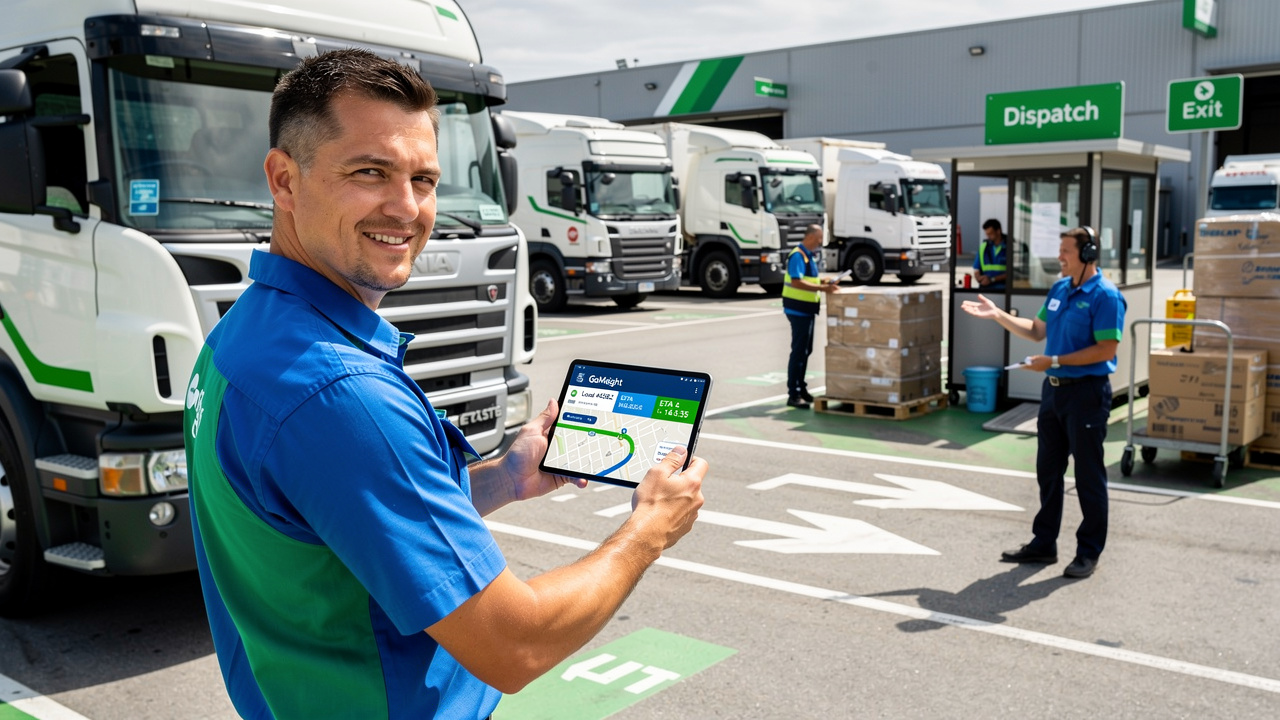
Today, dispatch software for road freight companies, like Meight's GoMeight app, leverages artificial intelligence and machine learning algorithms to optimize routing, predict delivery times, and enhance overall operational efficiency. The GoMeight app accommodates unlimited drivers, users, and trucks, offering a complete solution for transportation management. With seamless cloud integration, it enables transport providers to manage their loads within budget and on schedule with just a few clicks from their laptops, empowering mid-sized enterprises with a hardware-free solution.
This ongoing transformation underscores the necessity of adopting advanced routing solutions to remain competitive in the logistics industry. The advancements in this area demonstrate an increasing focus on enhancing service provision and operational efficiency, establishing dispatch software for road freight companies as a crucial resource.

Identify Key Features and Benefits of Dispatch Software
Essential tools that enhance operational efficiency and customer satisfaction are key features of dispatch software for road freight companies. Real-time tracking enables companies to monitor vehicle locations and shipment statuses via Meight's cloud-based logistics platform. This significantly enhances transparency and accountability, allowing for prompt interventions in case of shipping issues and ultimately improving customer satisfaction.
Automated scheduling minimizes the time spent on manual assignments, streamlining operations and reducing administrative burdens. Route optimization utilizes AI and machine learning to determine the most efficient transport paths, addressing the inefficiencies of conventional routing methods that often lead to increased costs and delays.
Furthermore, integrated communication tools facilitate quick updates and feedback between drivers and dispatchers, enhancing overall coordination and reducing the likelihood of errors. The GoMeight app further enhances these capabilities by providing automated order dispatching and navigation, optimizing truck fleet management.
The benefits of scheduling software extend beyond operational efficiency; they include improved customer satisfaction through timely shipments, reduced operational costs, and better resource management. Companies utilizing real-time tracking through Meight's platform have reported significant enhancements in order accuracy and on-time delivery rates, ultimately leading to increased profitability.
As the logistics landscape evolves, leveraging dispatch software for road freight companies becomes vital for maintaining a competitive advantage.

Analyze the Importance of Dispatch Software for Operational Success
In the competitive landscape of road freight, operational success hinges on effective logistics applications. In a sector where prompt shipments and efficient resource management are essential, logistics applications form the backbone of operations. Automating routine tasks and providing real-time information enables companies to swiftly adapt to changing circumstances, such as traffic delays or last-minute shipping schedule adjustments. This leads to a notable 30% increase in punctual shipments among companies that utilize trucking management tools, highlighting the significant impact on operational efficiency.
Furthermore, management tools enhance decision-making capabilities by offering insights into performance metrics and operational trends. For instance, companies that have implemented advanced delivery systems report substantial improvements in delivery efficiency and customer satisfaction, thanks to features like real-time tracking and automated scheduling. As transportation firms face pressure to reduce costs while improving service standards, the integration of routing applications becomes a strategic necessity. It not only streamlines operations but also fosters a culture of continuous improvement, positioning companies for sustained success in a competitive market. The ability to analyze historical data and adjust routes in real-time further solidifies the role of dispatch software as an indispensable tool for modern logistics management. Without embracing these technological advancements, firms risk stagnation in a rapidly evolving market.

Conclusion
In the competitive realm of road freight, the adoption of dispatch software is no longer optional; it is essential for operational success. This transformative tool enhances logistics operations by automating processes and improving efficiency. These applications streamline driver allocation and significantly reduce operational costs and errors by integrating features like real-time tracking, automated scheduling, and advanced analytics. As logistics demands shift rapidly, the adoption of such technology becomes essential for companies aiming to maintain a competitive edge.
The article highlights the evolution of dispatch software from manual methods to sophisticated AI-driven solutions, showcasing how advancements in technology have revolutionized the industry. Key benefits include improved customer satisfaction through timely deliveries, enhanced resource management, and the ability to adapt swiftly to changing circumstances. Companies leveraging these tools report substantial increases in operational efficiency, with some experiencing up to a 30% rise in punctual shipments.
In a market that evolves quickly, dispatch software is crucial for staying competitive. It serves as a critical resource for road freight companies, enabling them to optimize their operations and meet the demands of modern logistics. Embracing these technological advancements is not just about improving efficiency; it is a strategic necessity for achieving long-term success in the competitive world of freight transportation. Investing in dispatch software is not merely an enhancement; it is a strategic imperative that shapes the future of freight transportation.
Frequently Asked Questions
What is dispatch software for road freight companies?
Dispatch software for road freight companies is a digital tool that streamlines driver allocation and optimizes logistics operations, featuring real-time tracking, communication between dispatchers and drivers, and data analytics to improve operational efficiency.
What are the benefits of using dispatch software?
The benefits include reduced errors, lower operational costs, enhanced service delivery, and improved efficiency in managing logistics operations.
How does dispatch software improve operational efficiency?
By automating processes, dispatch software allows for better resource allocation and management, enabling a single dispatcher to handle 50-100 loads simultaneously, compared to just 15-20 with traditional methods.
What recent advancements have been made in dispatch software?
Recent advancements include features like predictive analytics, which help forecast demand spikes and optimize resource allocation, leading to significant cost reductions.
What cost reductions can companies expect from using dispatch software?
Companies using dispatch software can report transportation cost reductions of up to 25% and IT spending cuts of 15%.
How does dispatch software adapt to market needs?
Dispatch software ensures timely and efficient deliveries while adapting to the dynamic needs of the market, helping businesses remain competitive.
What is the projected market growth for management applications in the transportation sector?
The management application market is anticipated to reach $4.74 billion by 2029, indicating a growing dependence on such solutions in the transportation sector.
Who is recognized as a leader in dispatch software solutions?
Meight is recognized as a leader in the field, driving intelligent transport solutions that optimize efficiency and enhance user experience.