

4 Best Practices for Software for Transport Companies with Dispatch and Invoicing
Introduction
Transport companies are increasingly adopting specialized software solutions to address the complexities of dispatch and invoicing, yet many fail to fully leverage these tools. Focusing on best practices is essential for these firms to realize operational efficiencies and improve customer satisfaction. The challenge lies in how transport companies can implement and integrate these systems effectively to ensure seamless operations and maximize their investment.
Identify Key Features for Dispatch and Invoicing Software
Transport firms face significant challenges in maintaining efficiency and accuracy without using software for transport companies with dispatch and invoicing. When selecting these applications, it is essential to emphasize features that significantly enhance operational efficiency and precision. Key features to consider include:
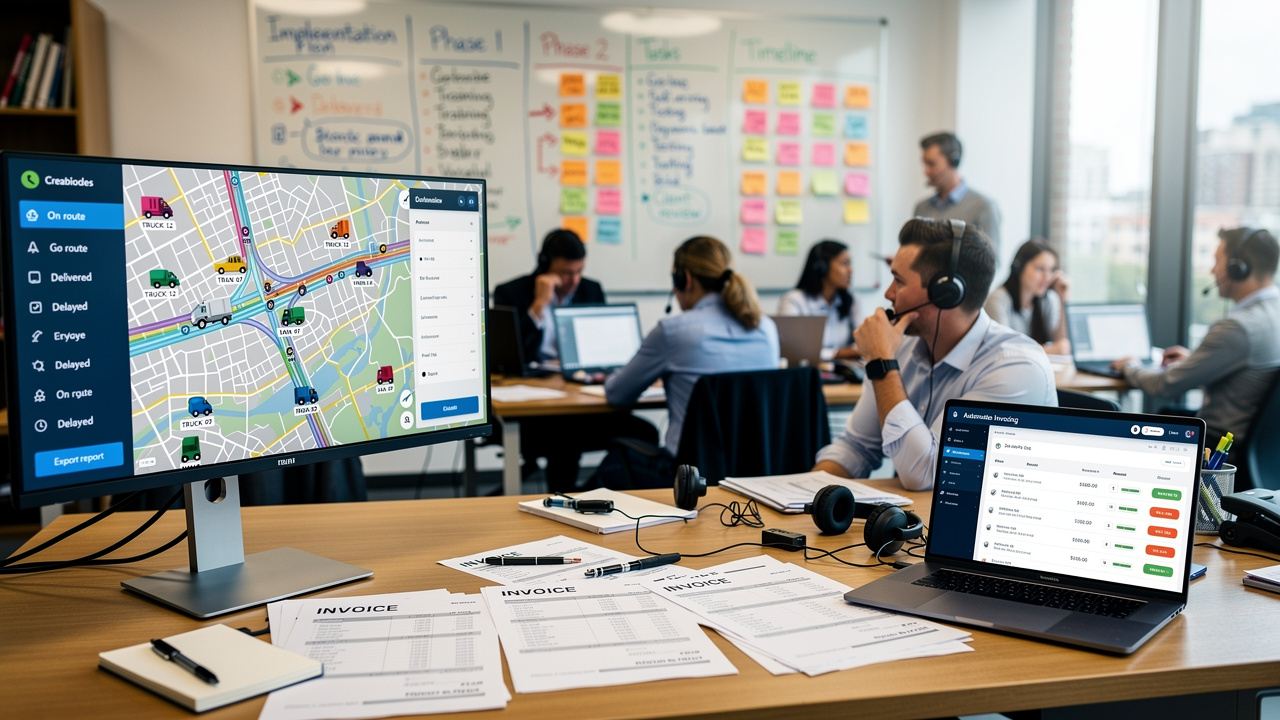
- Real-Time Tracking: This feature enables continuous monitoring of vehicle locations and status updates, which is crucial for timely dispatching and effective customer communication. Real-time tracking has been shown to reduce the need for status check calls, saving dispatchers valuable time and improving overall service delivery.
- Automated Invoicing: By generating invoices automatically based on completed jobs, automated invoicing minimizes manual entry errors and accelerates the billing process. This capability can lead to a 50% faster payment collection cycle, enhancing cash flow and financial accuracy for transport companies.
- Route Optimization: This feature assists in planning the most efficient routes, which not only saves time but also reduces fuel costs. Companies utilizing route optimization have reported fuel cost savings of 15-20%, contributing to overall operational efficiency.
- Integration Capabilities: Ensuring that the application can seamlessly connect with existing systems like ERP and TMS is vital for maintaining a smooth data flow across operations. This integration enhances visibility and coordination among different departments, leading to improved service delivery.
- User-Friendly Interface: A simple, intuitive design facilitates quicker adoption by staff and reduces training time, allowing teams to focus on their core responsibilities rather than navigating complex systems.
Implementing these features can transform operational capabilities and enhance customer satisfaction. Choosing the right software for transport companies with dispatch and invoicing can fundamentally enhance operational capabilities and customer satisfaction, positioning firms for future growth.

Ensure Seamless Integration with Existing Systems
To maximize the benefits of dispatch and invoicing applications, it is essential to ensure seamless integration with existing systems. Here are best practices to achieve this:
- Conduct a Systems Audit: A thorough assessment of current systems is essential to identify integration points and potential challenges. This strategy helps logistics firms prepare for the 2026 regulatory changes, ensuring compliance and efficiency.
- Choose Software with Open APIs: Selecting solutions that offer open APIs facilitates easier integration with other platforms. This trend is increasingly important as logistics providers seek to streamline operations and enhance data visibility.
- Involve IT Early: Engaging your IT team during the application selection process is crucial for ensuring compatibility and addressing any technical concerns. Their expertise is crucial for navigating integration complexities, especially with current API trends.
- Test Integrations Thoroughly: Conducting pilot tests before full deployment allows companies to identify and resolve integration issues early, minimizing disruptions to operations. Integration issues can disrupt operations if not identified early.
- Plan for Data Migration: Developing a comprehensive strategy for migrating existing data to the new system is vital to avoid data loss and ensure continuity in operations.
Implementing these strategies not only streamlines operations but also positions logistics companies for future regulatory challenges, particularly when utilizing software for transport companies with dispatch and invoicing.

Develop a Structured Implementation Plan
Without a well-structured implementation plan, deploying dispatch and invoicing systems can lead to significant operational challenges. Key components to include are:
- Define Clear Objectives: Establish specific goals for the software, such as reducing processing time or enhancing accuracy. Clear objectives are crucial, as they guide the implementation process and set expectations for success.
- Create a Timeline: Develop a detailed timeline that outlines each phase of the implementation process, including milestones and deadlines. This helps keep the project on track and ensures timely completion.
- Assign Roles and Responsibilities: Clearly define who is accountable for each aspect of the implementation, from project management to user instruction. This clarity helps everyone know their responsibilities and ensures that nothing falls through the cracks.
- Allocate Resources: Ensure that adequate resources, including budget and personnel, are available to support the implementation. Proper resource allocation is vital for overcoming challenges that may arise during the process.
- Monitor Progress: Regularly review the implementation process against the timeline and objectives, making adjustments as necessary. Continuous monitoring allows for timely interventions and keeps the project aligned with its goals.
By following these best practices, companies can enable a smoother shift to new systems. Failure to adhere to these best practices may result in inefficiencies that undermine strategic objectives.

Provide Comprehensive Training and Support for Users
To maximize the effectiveness of the software for transport companies with dispatch and invoicing applications, comprehensive training and support are crucial. Meight's intelligent transport platform enhances user engagement and operational efficiency, making it essential to consider the following best practices:
- Develop a Training Program: Establish a structured training program that encompasses all software aspects, tailored to the specific roles of different users. This ensures that each individual receives relevant information that aligns with their responsibilities, ultimately supporting their success journey with Meight.
- Utilize Multiple Learning Formats: Implement a variety of learning formats, including in-person sessions, online tutorials, and manuals. This approach accommodates diverse learning styles, enhancing the overall training experience. For instance, scenario-based practice has been shown to enhance dispatch performance under pressure, as it enables participants to engage in realistic conditions.
- Establish a Support System: Create a dedicated support framework that enables individuals to quickly seek assistance for technical issues or inquiries. Making this system easily accessible fosters user confidence and satisfaction. According to Michal Bušek, a Marketing Specialist, "Good preparation helps them walk the line between structure and flexibility." Meight is committed to providing comprehensive support and seamless implementation, ensuring no hidden fees.
- Promote Input: Consistently request opinions from participants to pinpoint areas for enhancement in both the application and the instructional process. This feedback enhances both the training program and the application itself, aligning with Meight's customer engagement strategy and data privacy commitment.
- Provide Ongoing Education: Offer refresher courses and updates as new features are released. Regular updates and refresher courses ensure users remain informed and can fully leverage the system. Research indicates that effective instruction enhances speed and accuracy, strengthens coordination, and reduces miscommunication errors.
Investing in user training and support not only boosts user confidence but also ensures that the software is utilized effectively. Ultimately, a well-trained user base translates to improved operational outcomes and a more efficient use of Meight's GoMeight app, which supports an unlimited number of drivers and seamless integrations.

Conclusion
Choosing the appropriate software for dispatch and invoicing is a complex task that can significantly impact a transport company's efficiency and customer relations. Focusing on key features like real-time tracking, automated invoicing, and route optimization allows transport firms to enhance service delivery and financial accuracy. Implementing a structured plan and providing comprehensive user training ensures these systems are fully utilized, paving the way for future growth.
The article highlights essential best practices, including:
- Conducting a systems audit
- Choosing software with open APIs
- Developing a detailed implementation timeline
These strategies facilitate smoother transitions to new systems and help overcome potential challenges during the integration process. Additionally, investing in user training and support is vital for maximizing the effectiveness of the software, ultimately leading to improved operational outcomes.
Ultimately, the integration of effective dispatch and invoicing software is a strategic move that can redefine a transport company's operations. By embracing these best practices, transport firms can position themselves for success in an increasingly competitive market. Taking proactive steps today will ensure that companies are prepared for current demands and equipped to adapt to future challenges in the transport industry.
Frequently Asked Questions
What challenges do transport firms face without dispatch and invoicing software?
Transport firms struggle with maintaining efficiency and accuracy, which can hinder their operations.
What is a key feature of dispatch and invoicing software that enhances operational efficiency?
Real-Time Tracking allows continuous monitoring of vehicle locations and status updates, improving dispatching and customer communication.
How does real-time tracking benefit dispatchers?
It reduces the need for status check calls, saving dispatchers time and improving overall service delivery.
What advantage does automated invoicing provide for transport companies?
Automated invoicing minimizes manual entry errors and accelerates the billing process, leading to a 50% faster payment collection cycle.
How does route optimization contribute to operational efficiency?
Route optimization helps plan the most efficient routes, saving time and reducing fuel costs, with reported savings of 15-20%.
Why are integration capabilities important in dispatch and invoicing software?
Integration with existing systems like ERP and TMS ensures smooth data flow across operations, enhancing visibility and coordination among departments.
What is the significance of a user-friendly interface in dispatch and invoicing software?
A simple, intuitive design facilitates quicker adoption by staff, reduces training time, and allows teams to focus on their core responsibilities.
How can implementing these software features impact customer satisfaction?
By enhancing operational capabilities, these features can lead to improved service delivery and greater customer satisfaction.

Subscribe to our newsletter
No spam! Promise!
Related posts

Best Practices for Dispatch Software in Road Freight Operations

Master Truck Routing Online: Key Practices for Logistics Success
5 Best Practices for GPS Tracking Fleet Management Software