

Master Truck Routing Online: Key Practices for Logistics Success
Introduction
Effective logistics management hinges on strategic truck routing, which is essential for optimizing efficiency and controlling costs. As the backbone of supply chain operations, effective truck routing is crucial for timely deliveries and compliance with evolving regulations. Logistics managers often struggle to keep pace with technological changes and the growing intricacies of transportation networks. Failure to adapt could result in inefficiencies and increased operational costs.
Understand Commercial Truck Routes and Their Importance
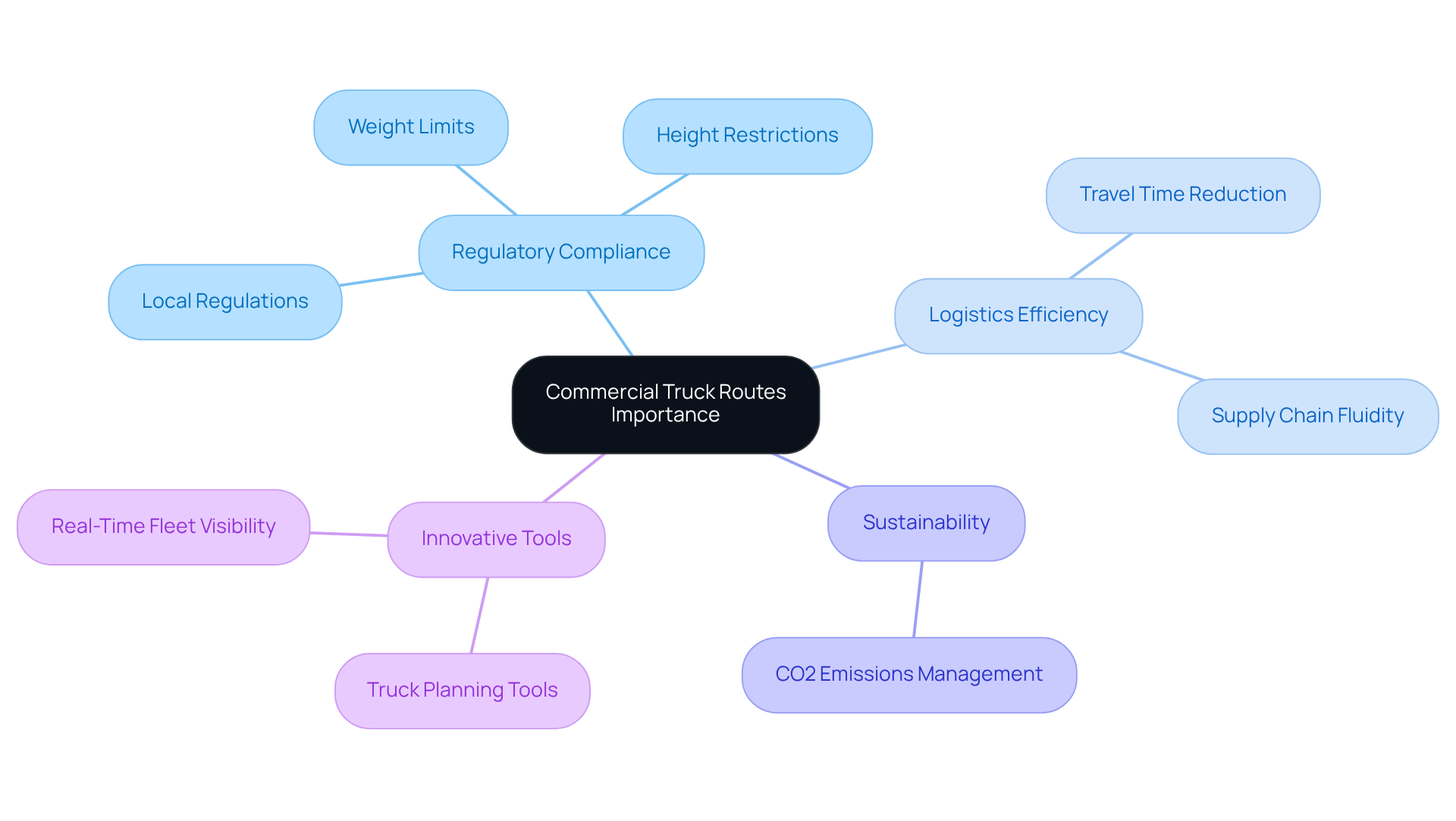
Understanding commercial truck paths is crucial for ensuring safe and efficient goods transportation in a complex regulatory environment. For transportation managers, comprehending these paths is essential as they navigate a complicated landscape of regulations, including weight limits, height restrictions, and specific road types. Certain routes may be restricted for heavy trucks due to structural limitations or local regulations, making it vital for transportation professionals to be well-versed in these guidelines to avoid significant financial penalties and operational delays while ensuring timely deliveries.
These pathways are essential not only for compliance but also for improving logistics operations. Utilizing designated truck paths allows companies to reduce travel time by as much as 20% by avoiding congested areas and restricted routes. In 2024, trucks carried 85% of the value of surface trade between the U.S. and Mexico, underscoring the importance of effective navigation in maintaining supply chain fluidity.
The innovative truck planning tools from the company enhance compliance and operational efficiency, enabling operators to optimize their navigation processes while adhering to regulations. By improving these pathways, Meight contributes to managing 43.8 kton of CO2 emissions in road freight transportation, reinforcing our commitment to sustainability and operational efficiency. As regulations evolve, the ability to navigate these pathways effectively will be paramount for maintaining competitive advantage in logistics.
Identify Essential Features of Truck Routing Software
Logistics managers must navigate complex challenges when selecting truck routing online software to enhance efficiency and compliance. Key features to prioritize include:
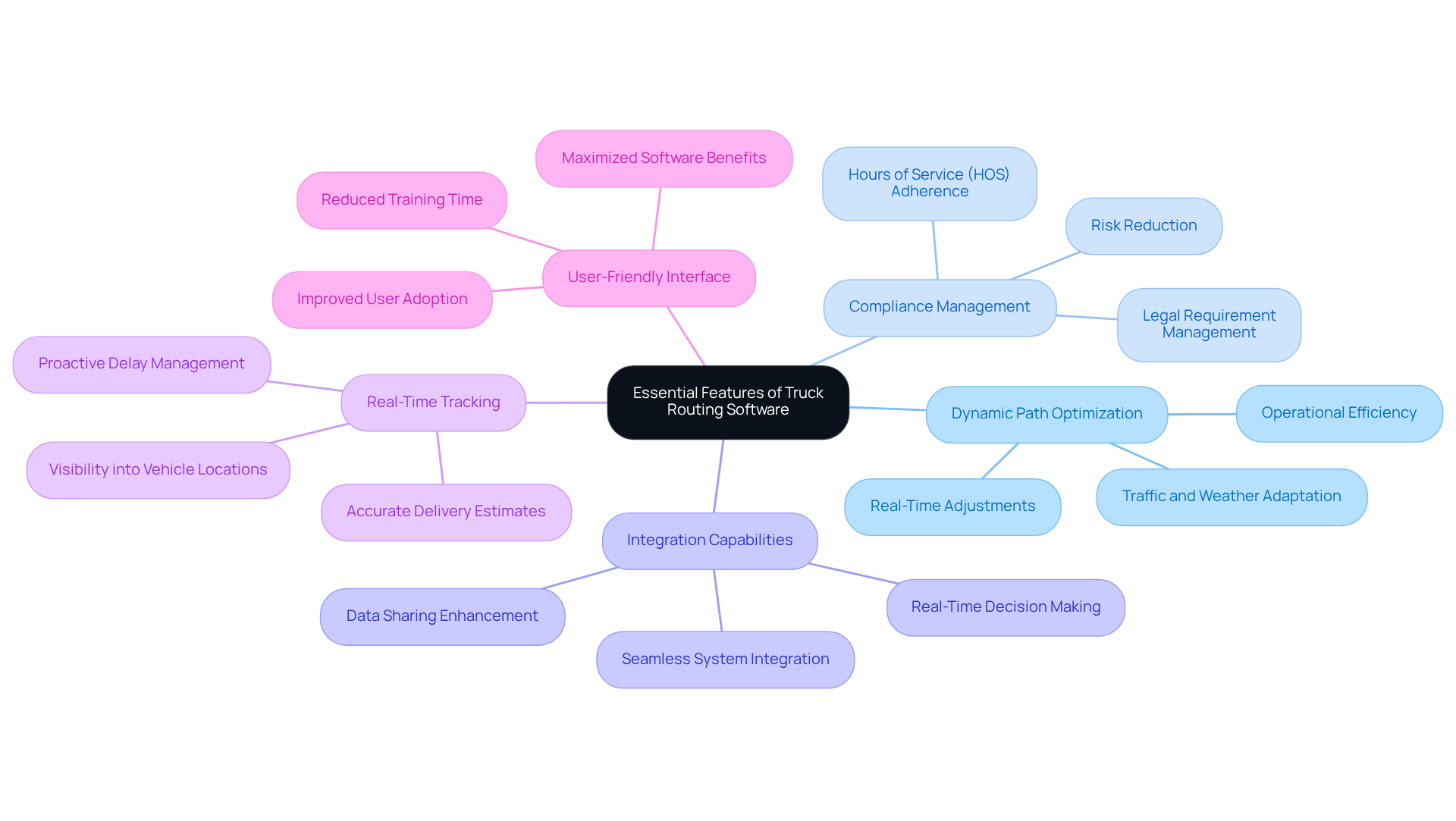
- Dynamic Path Optimization: This capability allows the software to adjust paths in real-time based on traffic conditions, weather, and other variables, ensuring the most efficient course is consistently taken. Tighter delivery windows and increased stop density make dynamic path planning essential for operational efficiency.
- Compliance Management: Effective software should assist in managing compliance with Hours of Service (HOS) regulations and other legal requirements, thereby reducing the risk of violations. As regulations become stricter, having a system that ensures adherence is crucial for supply chain operations.
- Integration Capabilities: Look for software that integrates seamlessly with existing systems, such as fleet management and ERP systems. This integration streamlines operations and enhances data sharing, which is vital for real-time decision-making and operational clarity.
- Real-Time Tracking: This feature provides visibility into vehicle locations, enabling proactive management of delays and route adjustments. Real-time updates not only improve operational efficiency but also enhance customer satisfaction by providing accurate delivery estimates.
- User-Friendly Interface: A simple, intuitive interface can significantly reduce training time and improve user adoption among drivers and dispatchers. As supply chain teams rely more on technology, having user-friendly software is crucial for maximizing its benefits.
By prioritizing these features, transportation firms can enhance their operational efficiency and leverage truck routing online to position themselves competitively in a rapidly evolving industry.
Implement Effective Truck Routing Solutions in Your Operations
To optimize logistics operations, managers must implement effective truck routing online solutions that address current inefficiencies. Here are the steps to follow:
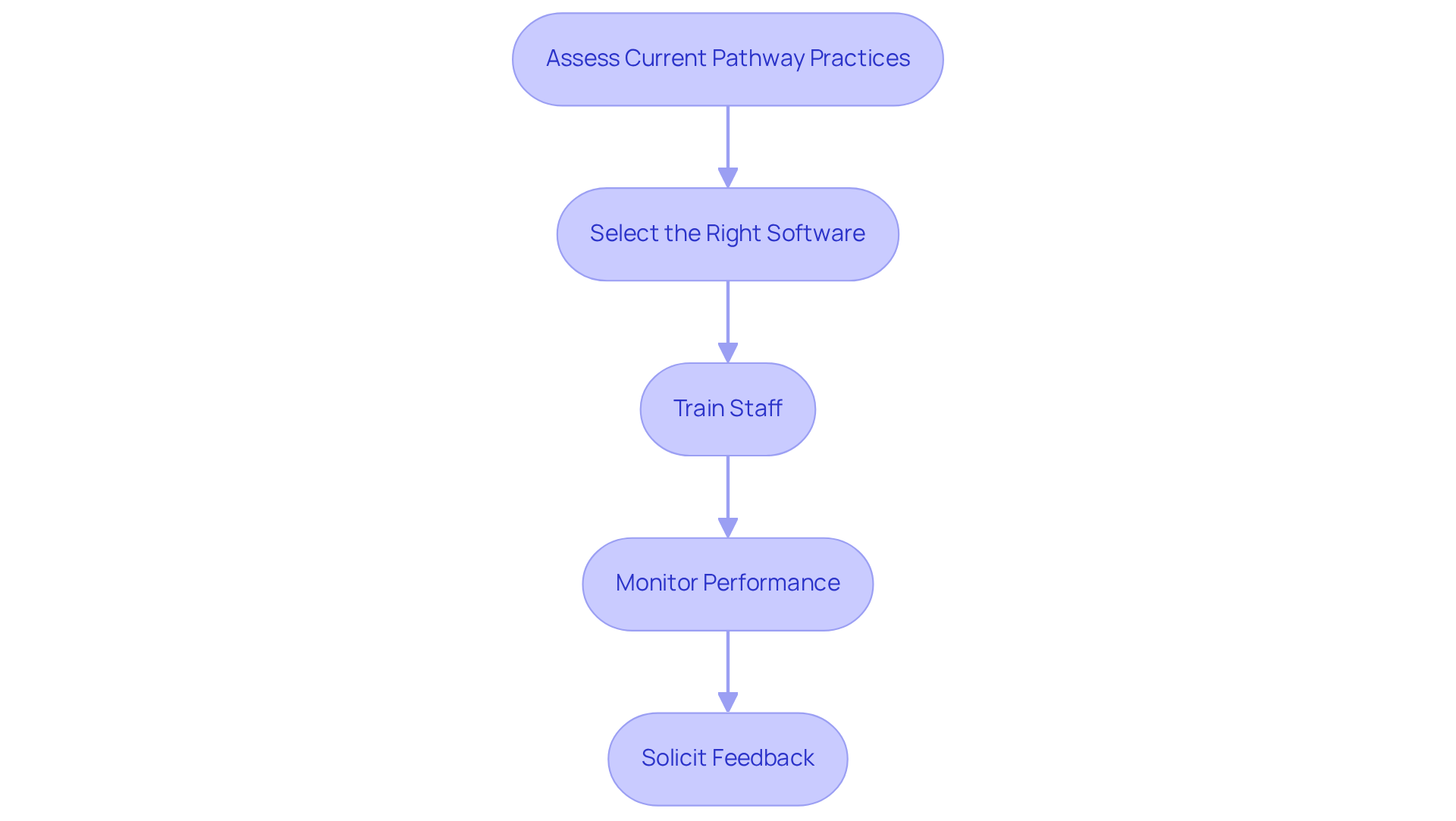
- Assess Current Pathway Practices: Evaluate existing methods to identify inefficiencies and areas for improvement. Gathering data on delivery times, fuel consumption, and driver feedback is essential for pinpointing specific challenges. Evaluating delivery practices allows companies to significantly reduce unprofitable miles.
- Select the Right Software: Choose routing software that meets identified needs and offers essential features such as real-time traffic data and predictive analytics. Ensure it aligns with operational goals and integrates seamlessly with existing systems. Meight's cloud-based logistics platform provides a comprehensive view of operations from collection to delivery, enhancing decision-making and efficiency.
- Train Staff: Provide comprehensive training for drivers and dispatchers on utilizing the new software effectively. Training should focus on how to interpret real-time data effectively and adjust routes accordingly for optimization. Effective training can lead to a significant decrease in dispatch planning time and enhance overall operational efficiency.
- Monitor Performance: Continuously track transportation performance using key performance indicators (KPIs) such as on-time delivery rates, fuel efficiency, and driver satisfaction. Using Meight's platform enables real-time operational monitoring, guiding essential modifications to navigation strategies. Companies that track their performance can improve delivery efficiency and reduce operational costs significantly.
- Solicit Feedback: Regularly collect input from drivers and dispatchers to identify challenges with the new navigation solutions. This feedback is crucial for guiding further improvements and adaptations. Interacting with personnel can assist transportation firms in evading typical mistakes and ensuring the effective execution of navigation solutions.
By following these steps and using the GoMeight application for truck routing online and automated load dispatching, transportation firms can enhance their operations. By leveraging advanced technologies and continuous feedback, firms can ensure their routing solutions remain effective and competitive.
Leverage Benefits of Advanced Truck Routing Technologies
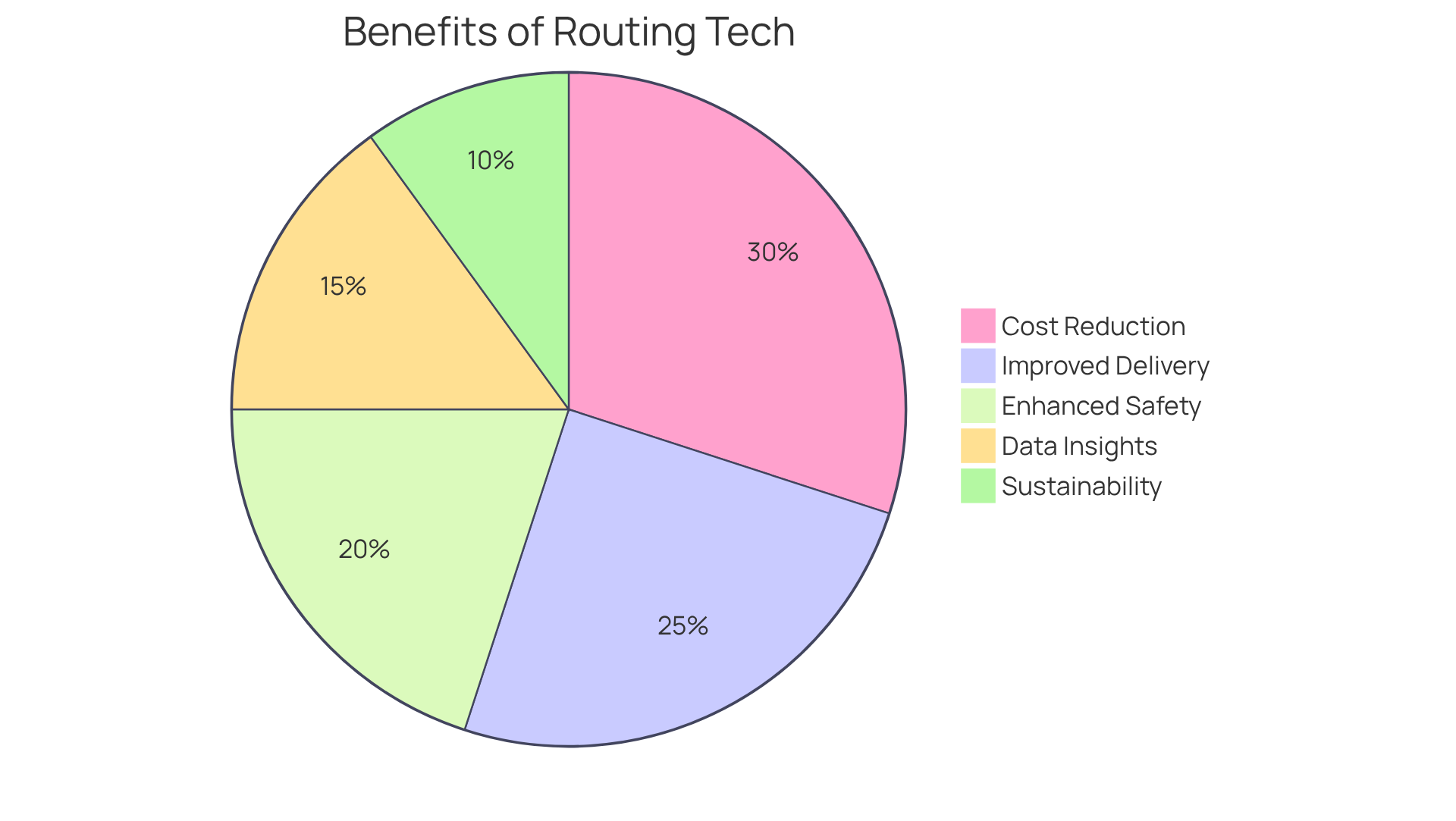
In an industry where efficiency and safety are paramount, truck routing online technologies are transforming logistics operations. These innovations, particularly those offered by Meight, provide a range of benefits that can significantly enhance logistics operations. Key advantages include:
- Cost Reduction: Enhancing pathways can lead to substantial savings in fuel usage and vehicle upkeep. Research indicates that efficient navigation can lower fuel expenses by up to 15%. For instance, partners such as Fit Fixins reduced planning time from over three hours to just 30 minutes to one hour, resulting in annual savings exceeding $3,000 in staff time and doubling their meal delivery capacity. With Meight's AI-driven platform, these savings are further amplified as it optimizes truck routing online using real-time data.
- Improved Delivery Times: Advanced navigation solutions enhance delivery speed by identifying the most efficient paths, which can lead to increased customer satisfaction and retention. Companies like Food & Friends have streamlined their operations, saving significant time and improving service quality through truck routing online, ultimately saving 520 staff hours annually. The intelligent transport platform of the company plays a crucial role in achieving these efficiencies.
- Enhanced Safety: Technologies that analyze road conditions, traffic patterns, and vehicle specifications help avoid hazardous routes, thereby reducing the risk of accidents and ensuring driver safety. Advanced driver-assist systems are improving safety metrics and helping retain drivers in the industry.
- Data-Driven Insights: For instance, companies using Meight's platform can analyze routing performance data to make informed decisions. This data empowers managers to make adjustments, enhancing overall operational effectiveness. Carriers leveraging truck routing online for decision-making are finding better pricing and planning outcomes, which is crucial in today's competitive landscape.
- Sustainability: By minimizing fuel usage and optimizing routes, companies can significantly reduce their carbon footprint, contributing to more sustainable transportation practices. The transportation sector is increasingly concentrating on sustainability, with shippers requesting emissions data and advancements on reduction targets from their carriers. Meight's technology not only assists in reaching these goals but also aligns with the industry's changing expectations for sustainability.
Embracing these advanced technologies, particularly those offered by Meight, not only boosts operational efficiency but also positions logistics companies as leaders in sustainability and customer service, meeting the growing demand for sustainable practices and superior customer service.
Conclusion
Effective truck routing is a critical factor in achieving logistics success, influencing key areas such as operational efficiency and sustainability. By understanding the intricacies of commercial truck routes and leveraging advanced routing technologies, logistics managers can navigate the complexities of transportation while ensuring timely deliveries and cost-effective operations.
This article outlines key practices that logistics managers should consider, including selecting the right truck routing software with essential features such as:
- Dynamic path optimization
- Compliance management
- Real-time tracking
Implementing effective routing solutions involves:
- Assessing current practices
- Training staff
- Continuously monitoring performance to adapt to changing conditions
The significant benefits these solutions provide for logistics operations, such as:
- Cost reduction
- Improved delivery times
- Enhanced safety
- Sustainability
Further underscore their importance.
In a rapidly evolving industry, adopting these best practices and technologies is essential for maintaining a competitive edge. Logistics companies are encouraged to prioritize effective truck routing strategies to enhance operational efficiency, reduce costs, and meet the growing demand for sustainable practices. By doing so, they can position themselves as leaders in the logistics sector, ensuring they are well-equipped to tackle future challenges and seize new opportunities.
Frequently Asked Questions
Why is understanding commercial truck routes important?
Understanding commercial truck routes is crucial for ensuring safe and efficient goods transportation, as it helps transportation managers navigate complex regulations, including weight limits, height restrictions, and specific road types.
What are the consequences of not adhering to truck route regulations?
Failing to adhere to truck route regulations can lead to significant financial penalties and operational delays, impacting timely deliveries.
How can designated truck paths improve logistics operations?
Utilizing designated truck paths can reduce travel time by as much as 20% by avoiding congested areas and restricted routes, thereby improving logistics efficiency.
What percentage of surface trade between the U.S. and Mexico is carried by trucks?
In 2024, trucks carried 85% of the value of surface trade between the U.S. and Mexico, highlighting the importance of effective navigation for supply chain fluidity.
How do innovative truck planning tools contribute to compliance and efficiency?
Innovative truck planning tools enhance compliance and operational efficiency by optimizing navigation processes while adhering to regulations.
What environmental impact does improving truck pathways have?
Improving truck pathways helps manage 43.8 kton of CO2 emissions in road freight transportation, contributing to sustainability and operational efficiency.
Why is it important to stay updated on evolving regulations for truck routes?
Staying updated on evolving regulations is essential for maintaining a competitive advantage in logistics, as effective navigation of these pathways is paramount for operational success.

Subscribe to our newsletter
No spam! Promise!
Related posts

Best Practices for Dispatch Software in Road Freight Operations

5 Best Practices for GPS Tracking Fleet Management Software
Maximize Efficiency with GPS Tracking for Business Vehicles