

5 Best Practices for Choosing Software for Transport Companies

Introduction
Transport companies face a critical challenge in selecting software that not only meets their current operational needs but also positions them for future success. Understanding best practices for selecting a Transportation Management System (TMS) enables companies to align software solutions with their specific business objectives.
Transport companies often struggle to navigate the overwhelming array of software options available, making it crucial to choose a TMS that addresses both current and future needs. Failing to select the appropriate TMS can lead to inefficiencies and lost revenue.
Assess Business Needs and Objectives for TMS Selection
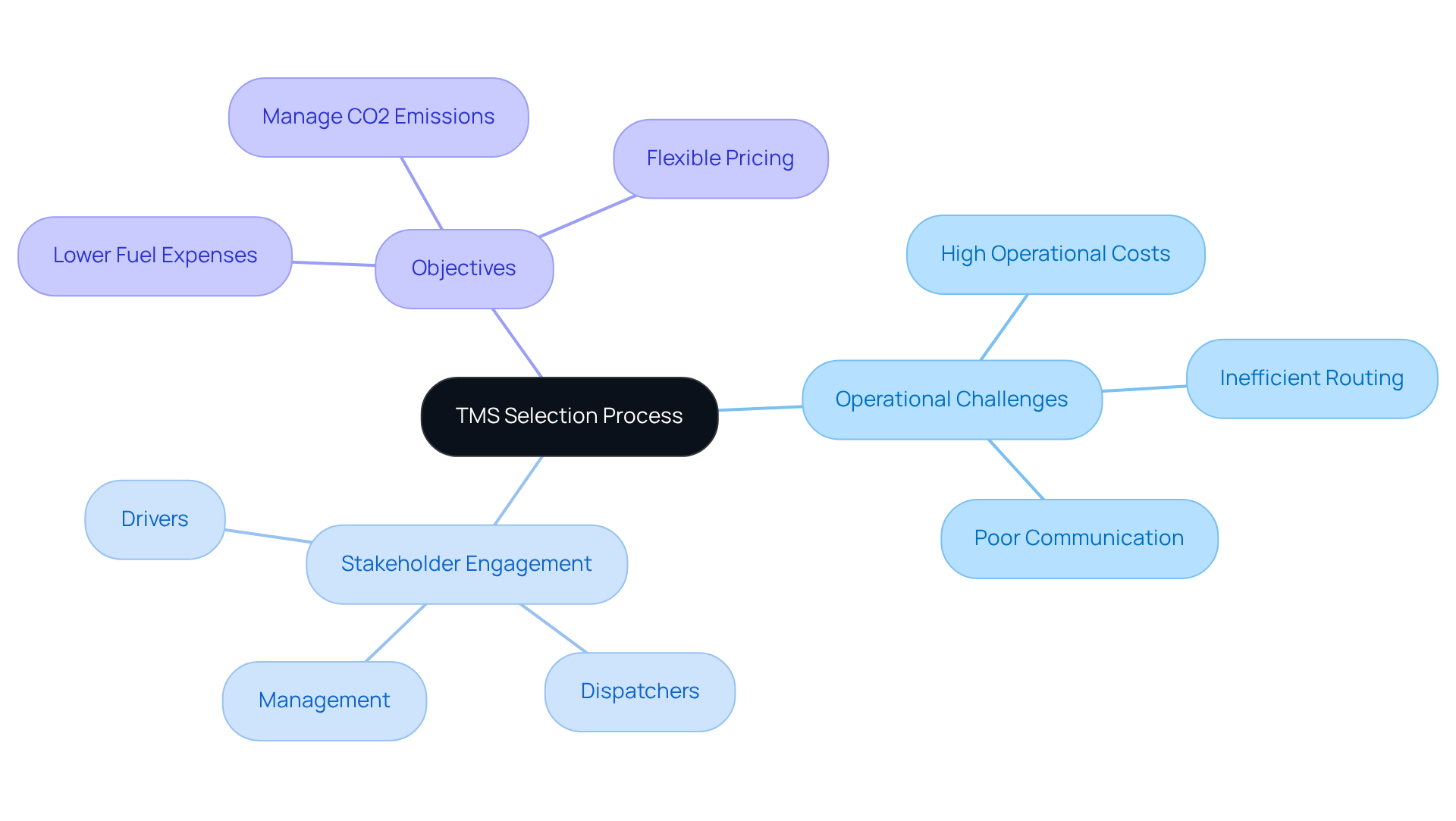
Selecting the right Transportation Management System (TMS) is crucial for addressing operational challenges and achieving business objectives. Start by identifying specific challenges in your logistics operations, such as:
Engage key stakeholders - drivers, dispatchers, and management - to gather insights on their pain points and software expectations. This collaborative approach ensures the TMS effectively addresses pressing issues and aligns with strategic goals.
If your goal is to lower fuel expenses and manage CO2 emissions, prioritize TMS solutions with advanced route optimization and a commitment to sustainability, capable of managing 43.8 kton of CO2 emissions in road freight logistics. Additionally, consider Meight's flexible pricing and streamlined implementation process, which allows for growth at your own pace while ensuring measurable improvements from the chosen system.
Evaluate Key Features and Functionalities of TMS Solutions
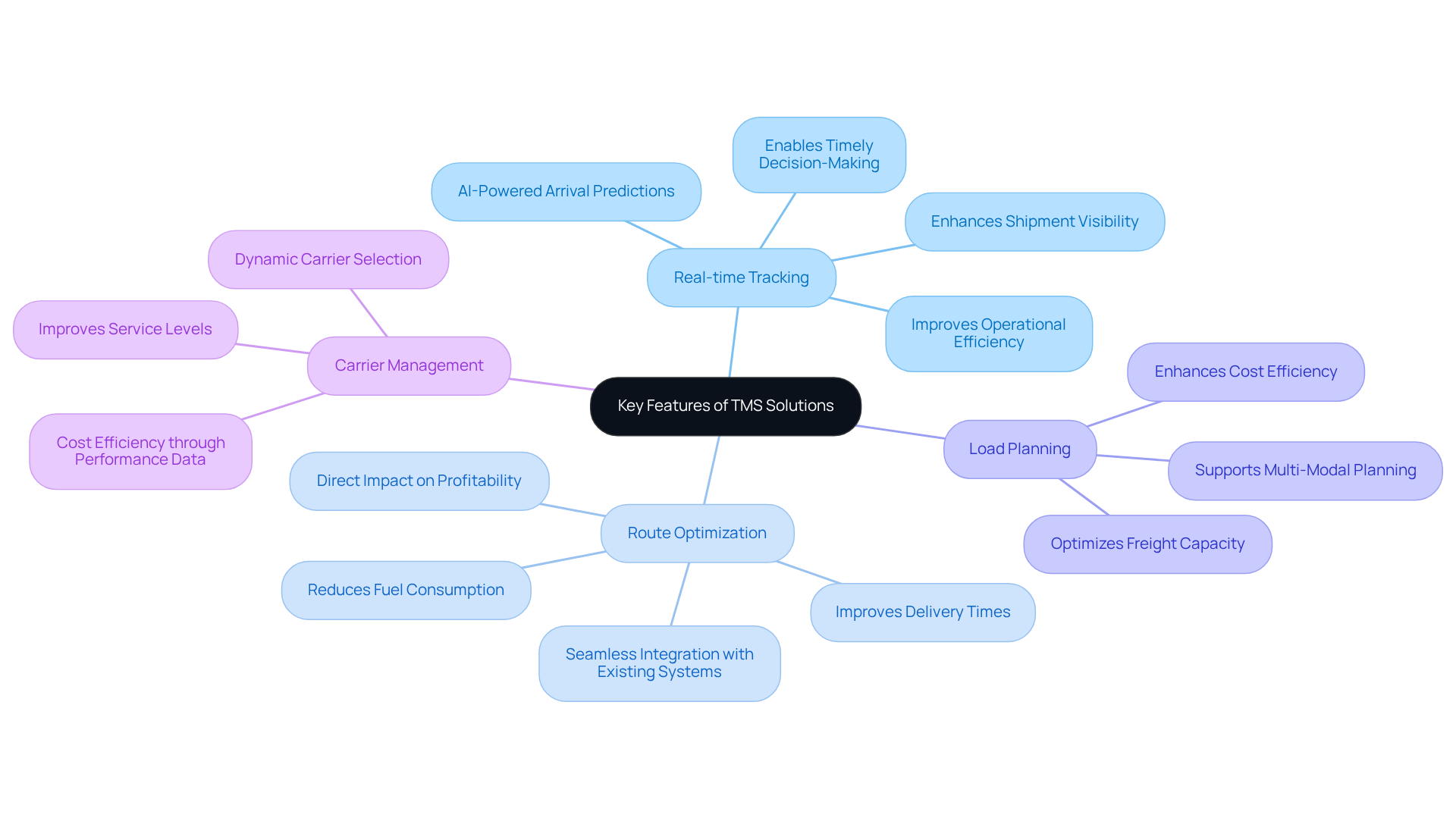
When evaluating TMS solutions, focusing on essential functionalities aligned with operational needs is imperative. Key functionalities to prioritize are:
Real-time tracking is essential for enhancing shipment visibility, enabling timely decision-making and improving operational efficiency. For example, AI-powered TMS platforms leverage real-time data to produce accurate arrival predictions, enhancing logistics performance and boosting customer satisfaction.
Route optimization features are equally critical, as they can lead to reduced fuel consumption and improved delivery times, directly impacting profitability. A TMS that integrates seamlessly with existing systems, such as accounting and warehouse management software, ensures a smooth data flow, enhancing overall operational efficiency. Furthermore, robust reporting and analytics tools within the TMS can provide valuable insights into performance metrics, enabling continuous improvement. For instance, advanced analytics can help identify trends in delivery times and costs, allowing logistics providers to make proactive adjustments to their operations, ultimately driving better outcomes and increased revenue.
Failing to implement these features may result in lost revenue and diminished competitive advantage.
Implement TMS with Minimal Disruption to Operations
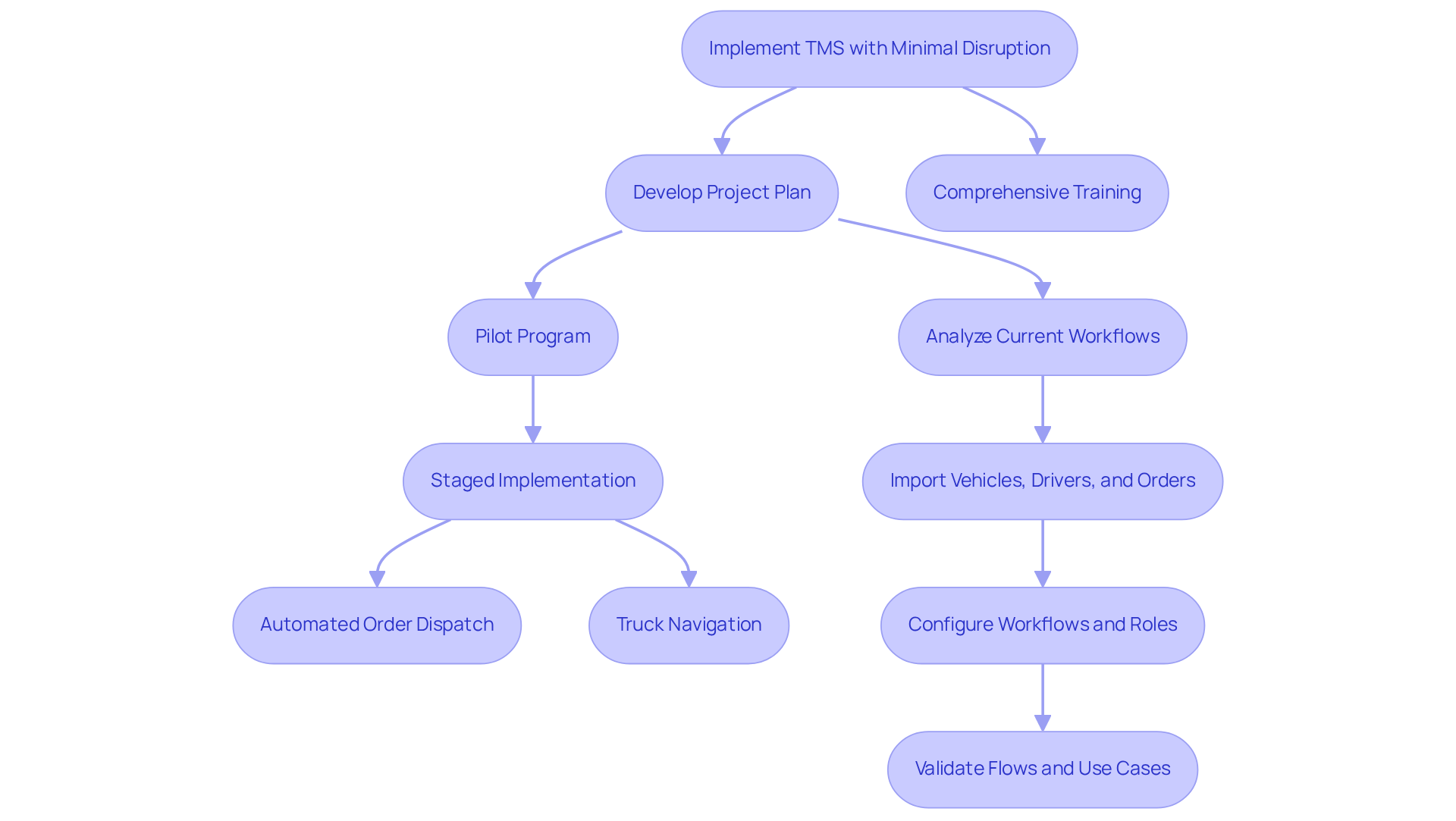
To implement a TMS effectively, particularly Meight's intelligent transport platform, develop a detailed project plan that outlines key milestones, responsibilities, and timelines. Begin with a pilot program that allows a small group to test the system before a complete rollout. This approach helps identify potential issues and gather feedback, allowing for adjustments before full implementation. Keep all stakeholders informed and engaged to foster buy-in and minimize resistance.
Furthermore, consider a staged implementation, where elements such as automated order dispatch and truck navigation with the GoMeight application are introduced incrementally, enabling users to adjust gradually. This strategy minimizes disruption and helps maintain service levels during the transition. For instance, if your TMS includes a new dispatching feature, start by implementing it in one region before expanding to others.
The implementation process encompasses:
- Analyzing current workflows and identifying discrepancies
- Securely importing vehicles, drivers, and orders into the system
- Configuring workflows and roles according to your organization’s structure
- Validating all flows and use cases to meet acceptance criteria
Comprehensive training and ongoing support are essential for effective logistics management and maximizing your return on investment.
Provide Comprehensive Training and Ongoing Support for Users
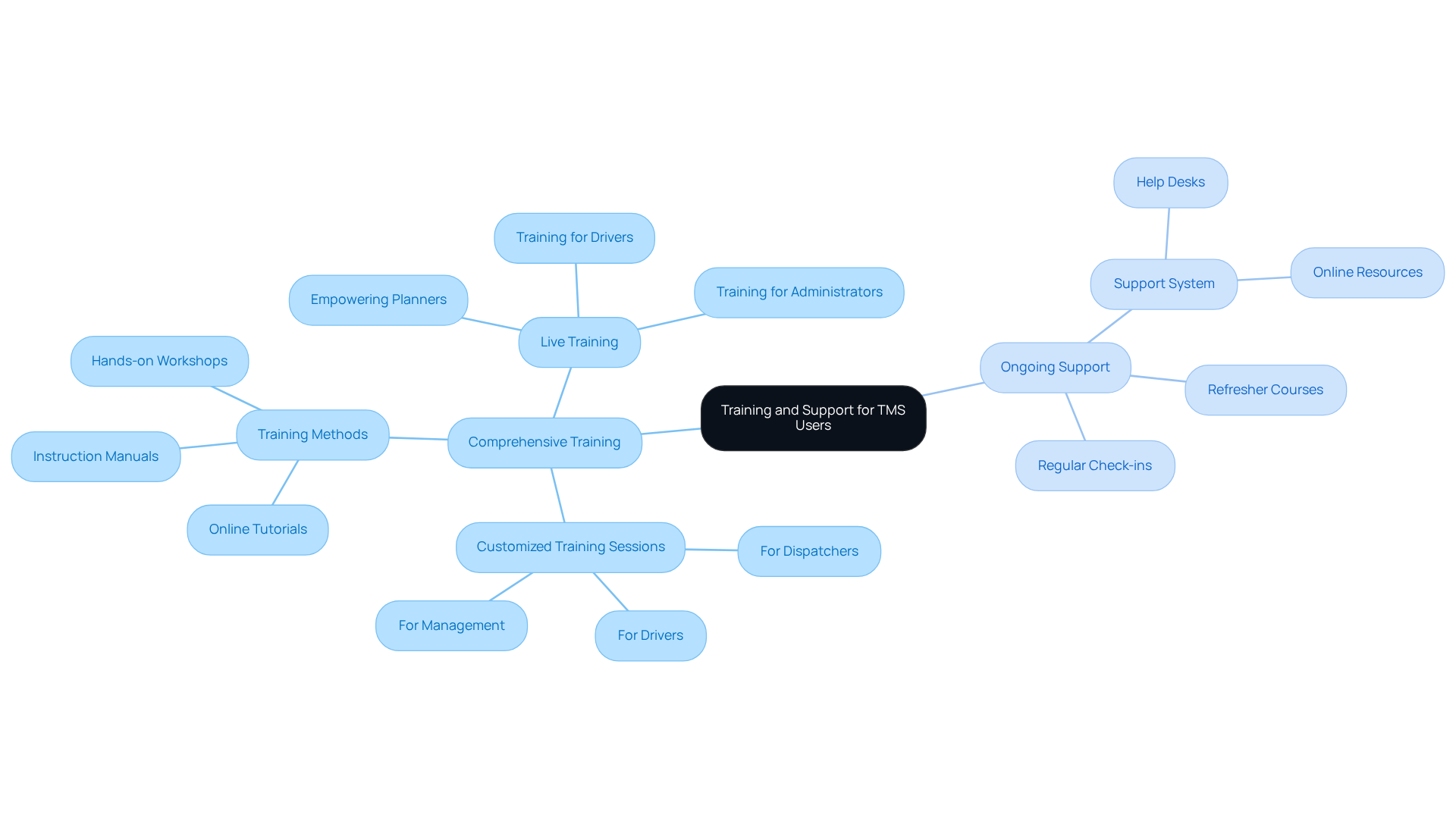
To maximize the effectiveness of the TMS, comprehensive training programs are indispensable for all users. Customizing training sessions for various roles - such as drivers, dispatchers, and management - ensures that each group’s specific needs and responsibilities are met. Meight offers live training to empower planners, drivers, and administrators to confidently navigate the platform from day one. Utilizing a mix of training methods - such as hands-on workshops, online tutorials, and detailed instruction manuals - can effectively cater to various learning preferences.
Continuous support is vital for maintaining user engagement and fully leveraging the TMS's capabilities. Establishing a support system that includes help desks, online resources, and regular check-ins can address ongoing questions or challenges users may encounter. For example, scheduling regular refresher courses and updates on new features can keep users informed and engaged, supported by Meight's expertise in optimizing workflows for sustained efficiency. Ultimately, a robust training and support framework can significantly enhance operational efficiency and user satisfaction with the TMS.
Continuously Evaluate and Optimize TMS Performance
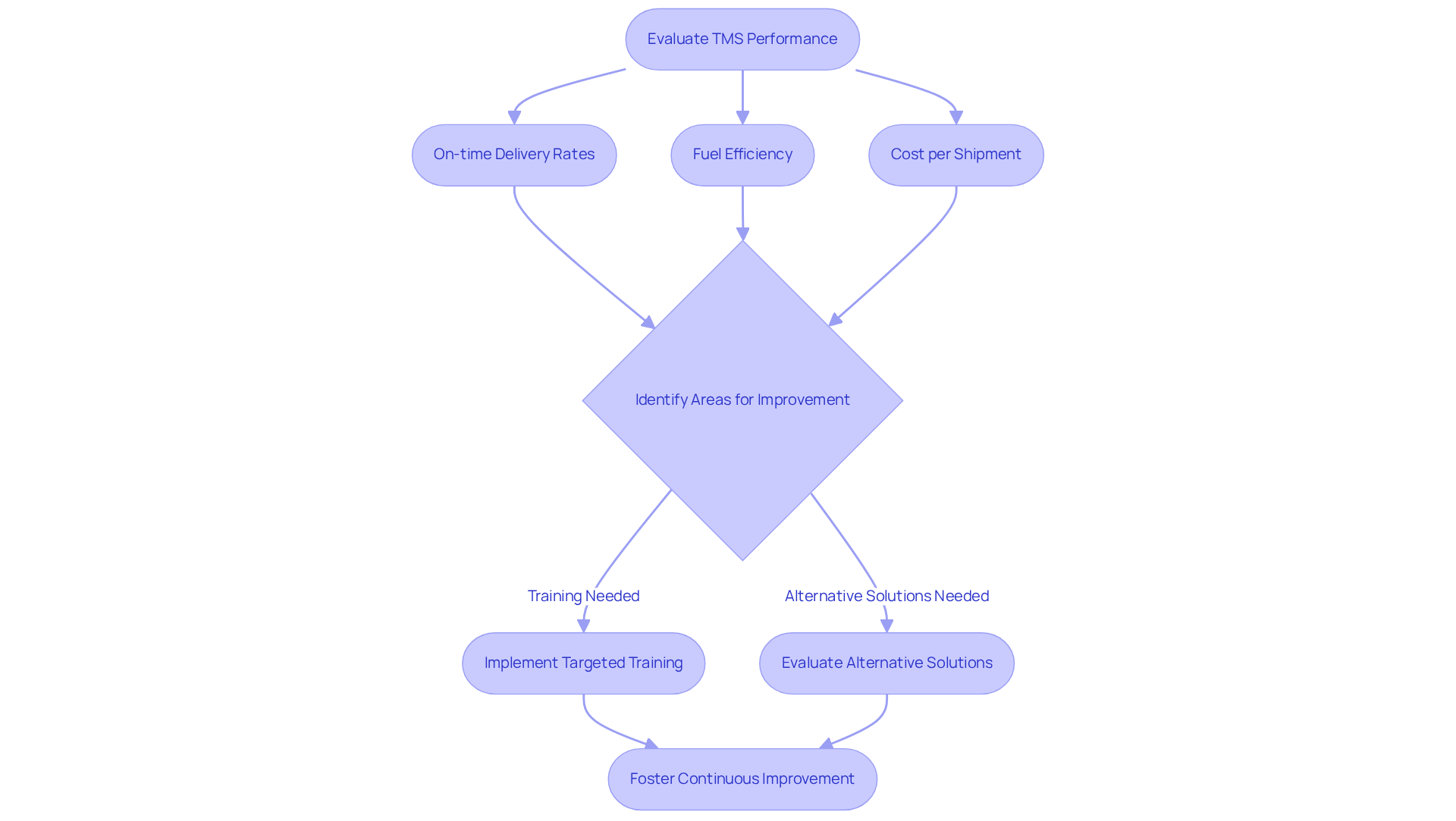
To maintain alignment between your TMS and evolving business needs, it is essential to establish a routine for performance evaluation. Key performance indicators (KPIs) such as:
are critical for assessing system effectiveness. Regularly reviewing these metrics with your team helps identify areas for improvement and supports data-driven decision-making.
Should users face challenges with specific features, it is advisable to implement targeted training or evaluate alternative solutions. Collecting feedback from individuals is crucial to comprehend their experiences and challenges with the TMS. Fostering a culture of continuous improvement ensures that your TMS evolves with your business, thereby enhancing efficiency and reducing costs. Statistics indicate that maintaining a 95% on-time performance rate is a reasonable expectation, underscoring the importance of monitoring delivery metrics to enhance operational efficiency. A proactive approach to TMS optimization is essential for enhancing service quality and fostering robust partnerships within the logistics ecosystem.
Conclusion
Transport companies face significant challenges in selecting an effective Transportation Management System (TMS) that aligns with their operational goals. By assessing their business needs and evaluating key functionalities, organizations can implement a TMS that effectively addresses their logistics challenges.
The article highlights essential practices such as:
- Engaging stakeholders to identify pain points
- Prioritizing features like real-time tracking and route optimization
- Developing a structured implementation plan
Additionally, it emphasizes the importance of:
- Comprehensive training and ongoing support to maximize user engagement and system effectiveness
- Regular performance evaluations
- A commitment to continuous improvement
These practices are crucial for adapting the TMS to evolving business needs and maintaining operational excellence.
The right TMS not only streamlines logistics operations but also positions companies for sustained growth and competitiveness in the market. By following these best practices, organizations can optimize their logistics operations and foster stronger partnerships within the industry, ensuring long-term success in a competitive landscape.
Frequently Asked Questions
Why is selecting the right Transportation Management System (TMS) important?
Selecting the right TMS is crucial for addressing operational challenges and achieving business objectives, such as reducing operational costs, improving routing efficiency, and enhancing communication among stakeholders.
What steps should be taken to assess business needs for TMS selection?
Start by identifying specific challenges in logistics operations and engage key stakeholders, including drivers, dispatchers, and management, to gather insights on their pain points and software expectations.
What features should be prioritized when evaluating TMS solutions?
Key functionalities to prioritize include real-time tracking, route optimization, load planning, and carrier management, as these align with operational needs and enhance efficiency.
How does real-time tracking benefit logistics operations?
Real-time tracking enhances shipment visibility, enables timely decision-making, and improves operational efficiency, ultimately boosting customer satisfaction.
What is the significance of route optimization in a TMS?
Route optimization can lead to reduced fuel consumption and improved delivery times, which directly impacts profitability.
Why is it important for a TMS to integrate with existing systems?
Seamless integration with existing systems, such as accounting and warehouse management software, ensures smooth data flow and enhances overall operational efficiency.
How can robust reporting and analytics tools within a TMS contribute to business success?
These tools provide valuable insights into performance metrics, enabling continuous improvement by identifying trends in delivery times and costs, which helps logistics providers make proactive adjustments.
What are the potential consequences of not implementing essential TMS features?
Failing to implement these features may result in lost revenue and diminished competitive advantage.

Subscribe to our newsletter
No spam! Promise!
Related posts

Best Practices for Dispatch Software in Road Freight Operations

Master Truck Routing Online: Key Practices for Logistics Success
5 Best Practices for GPS Tracking Fleet Management Software