

5 Best Practices for Transport Management Software in Cross-Border Logistics

Introduction
Selecting the right transport management software is crucial for effective cross-border logistics operations. This article will explore best practices for using transport management software, highlighting its role in streamlining operations and improving customer satisfaction.
Choosing the appropriate transport management software can be overwhelming due to the vast array of options available. Failure to choose the right system may lead to operational inefficiencies and decreased customer satisfaction.
Understand the Role of Transport Management Software in Cross-Border Logistics
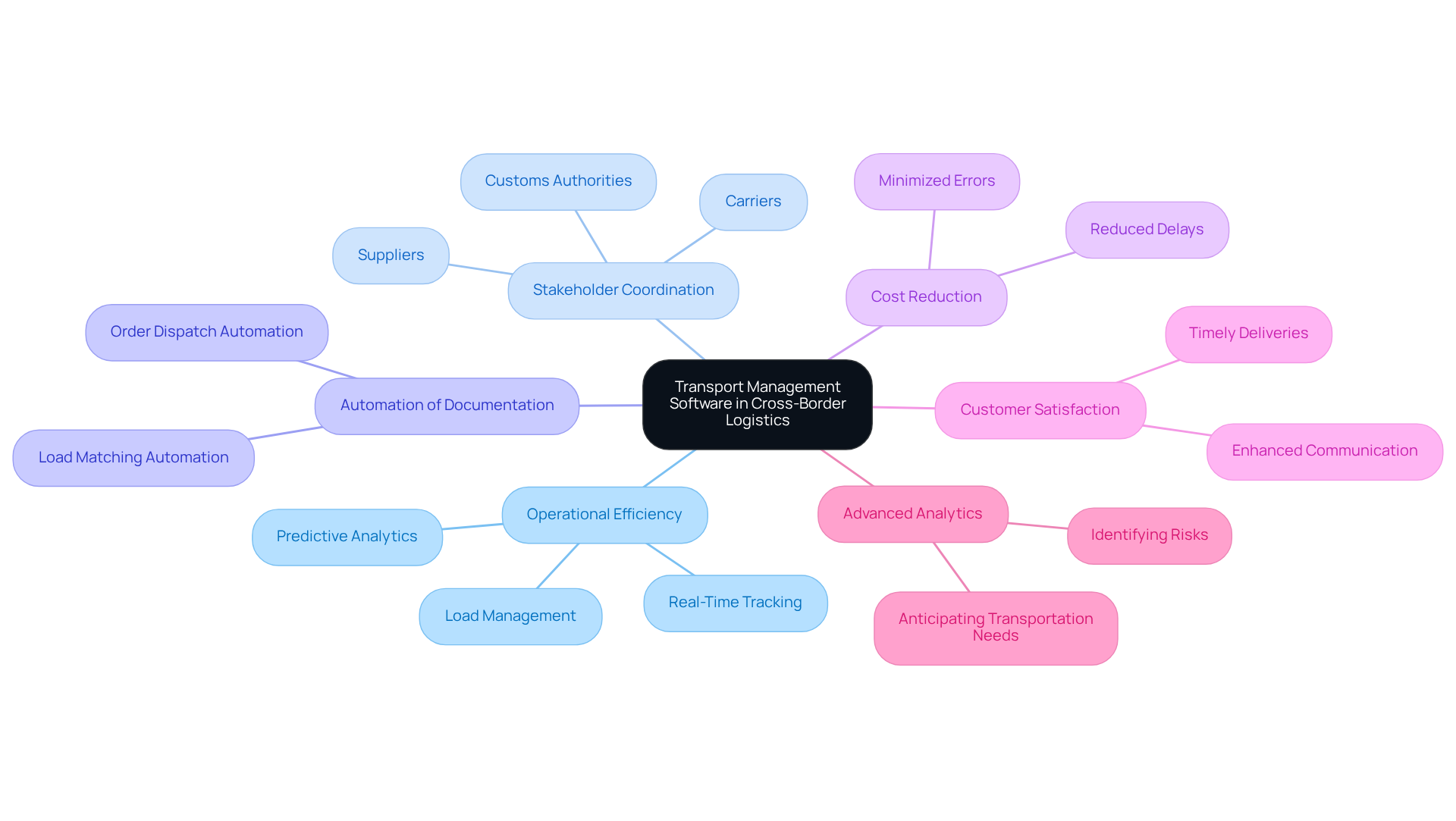
Navigating the complexities of cross-border transportation requires transport management software for cross border transport companies that enhances operational efficiency and compliance. A robust transport management software for cross border transport companies enhances operational efficiency by enabling real-time tracking of shipments, which is crucial for navigating the complexities of cross-border operations.
Transportation managers can coordinate effectively with customs authorities, carriers, and suppliers. This ensures that all stakeholders remain informed and aligned throughout the shipping process.
Meight's TMS automates documentation processes, including order dispatch and load matching. This minimizes errors and delays often associated with manual paperwork.
Utilizing transport management software for cross border transport companies improves operational efficiency, reduces costs, and enhances customer satisfaction through timely deliveries.
Meight's platform offers a seamless cloud connection that facilitates effective load management. This allows transport providers to maintain budget oversight and operate within their financial limits.
Advanced analytics in TMS platforms help organizations anticipate future transportation needs and identify potential risks. This capability strengthens their competitive advantage in the supply chain industry.
Identify Key Features Essential for Cross-Border Transport Management Systems
Selecting the right Transport Management System (TMS) can be overwhelming given the multitude of features available. Recognizing essential features that improve efficiency is crucial. These features include:
- Multi-Currency Support: This feature facilitates transactions across various currencies, simplifying financial management and enhancing customer satisfaction by allowing payments in local currencies.
- Customs Compliance Tools: These tools ensure adherence to international trade regulations, significantly reducing the risk of fines and delays during the shipping process.
- Real-Time Tracking: Offering insight into shipment status, this feature enables managers to proactively tackle potential problems, enhancing overall service reliability.
- Integration Capabilities: Seamless connectivity with existing systems, such as Enterprise Resource Planning (ERP) and Warehouse Management Systems (WMS), streamlines operations and eliminates data silos.
- Automated Documentation: By automating paperwork, this feature reduces manual errors and accelerates the customs clearance process, improving efficiency.
Focusing on these essential features is crucial for optimizing cross-border transportation and enhancing operational efficiency with transport management software for cross border transport companies.

Select the Right Transport Management Software for Your Business Needs
Choosing the appropriate transport management software for cross border transport companies is essential for optimizing logistics operations. Here are key considerations to inform your decision-making process:
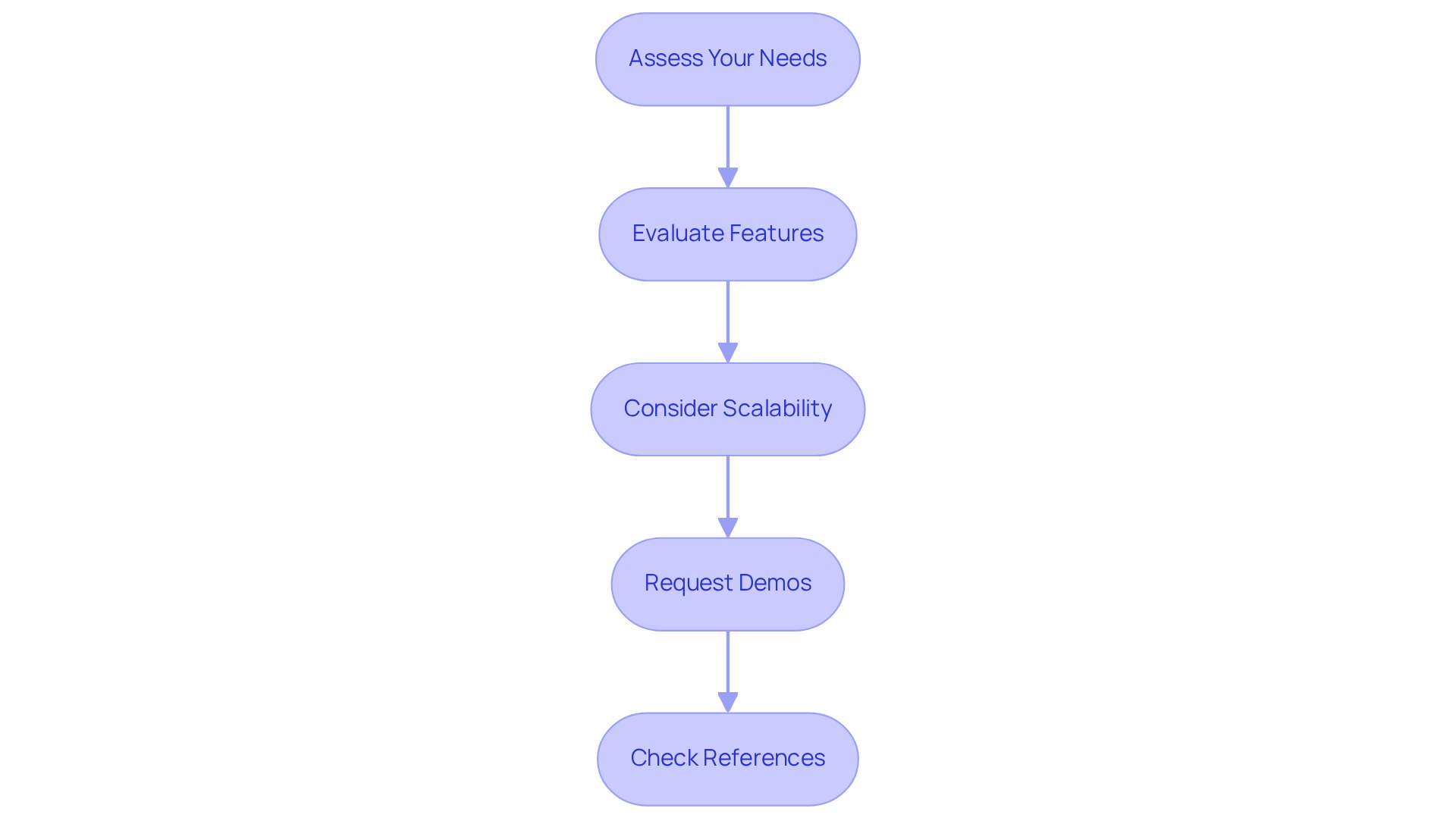
- Assess Your Needs: Identifying these challenges can be daunting, yet it is crucial for effective decision-making. Start by pinpointing the specific issues your business faces in cross-border logistics, such as compliance issues, visibility gaps, or inefficiencies in routing. According to InTek, comprehending your business complexities is essential for selecting transport management software for cross border transport companies that meets your requirements.
- Evaluate Features: Compare various TMS options based on critical features that meet your functional requirements. Look for capabilities like real-time tracking, automated documentation, and integration with existing systems. Real-time visibility and proactive exception management are essential for effective shipment tracking, as highlighted in industry analyses.
- Consider Scalability: Opt for a TMS that can adapt to your business growth. A scalable transport management software for cross border transport companies is essential for managing increased shipment volumes and expanding functionalities without disrupting operations. The TMS market is projected to grow from USD 18.50 billion in 2025 to USD 37.04 billion by 2030, emphasizing the importance of selecting the right TMS now.
- Request Demos: Engage with vendors to experience the software firsthand. Demos provide insights into usability and functionality, allowing you to assess how well the TMS meets your specific needs. This hands-on experience can reveal how the software handles real-world scenarios.
- Check References: Speak with other users in your industry to gather feedback on their experiences. Understanding how the software performs in real-world scenarios can help validate your choice. For instance, the Locus case study demonstrates how a scalable TMS reduced delivery costs by 23% while improving SLA adherence to 99.5%.
If you keep these best practices in mind and watch out for common pitfalls, such as brand bias and underestimating implementation effort, the right TMS can be a game-changer for your logistics strategy, enhancing efficiency and reducing costs.
Integrate Transport Management Software with Existing IT Systems
Integrating transport management software for cross border transport companies with existing IT systems presents challenges that must be addressed for operational synergy. Here are essential steps to ensure successful integration:
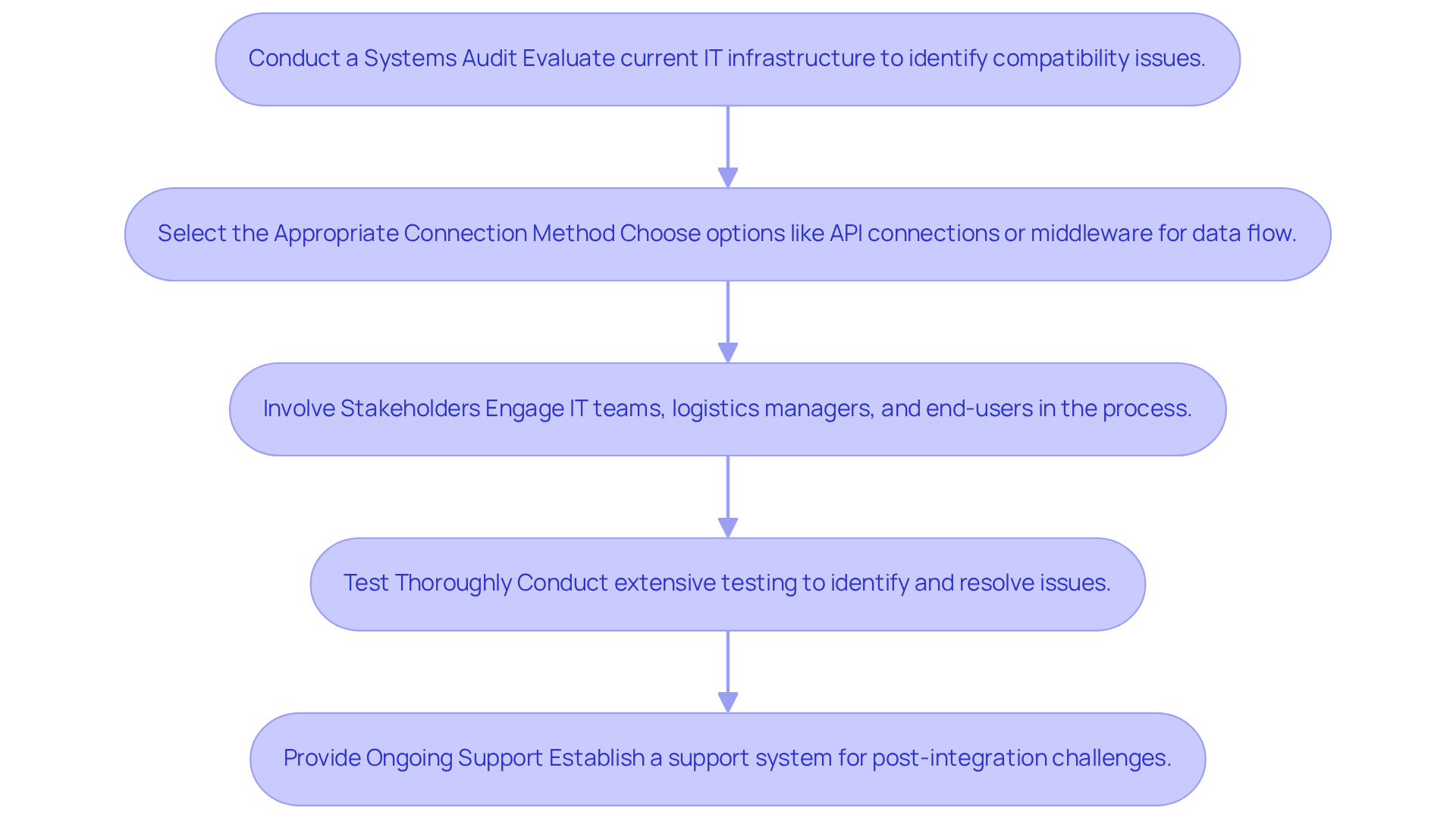
- Conduct a Systems Audit: Evaluate your current IT infrastructure to identify compatibility issues and integration points. Identifying compatibility issues can be challenging, but it is essential for a successful integration. This audit helps in understanding the existing landscape and prepares for a smoother transition.
- Select the Appropriate Connection Method: Depending on your systems, consider options such as API connections, middleware solutions, or direct links to facilitate seamless data flow. Meight's API connection facilitates enhanced supply chain solutions by streamlining workflow automation and improving service delivery.
- Involve Stakeholders: Engage IT teams, logistics managers, and end-users throughout the incorporation process. Involving key stakeholders early in the process is critical, as their insights can shape the requirements list and mitigate potential challenges.
- Test Thoroughly: Conduct extensive testing before going live to identify and resolve any issues that may occur during the merging process. This step is vital to ensure that the transport management software for cross border transport companies operates smoothly within the existing framework. Metrics such as enhancements in load building speed and decrease in manual tasks can be utilized to assess the success of the incorporation. Utilizing Meight's Planificador can streamline load planning, providing a comprehensive view of operations from collection to delivery.
- Provide Ongoing Support: Establish a robust support system to address any challenges users may face post-integration. Ongoing support is crucial for sustaining efficiency and user satisfaction. Engaging internal teams for feedback can help identify common pitfalls and enhance the overall integration experience.
Ultimately, effective integration can transform operational capabilities and drive competitive advantage in the market.
Implement Comprehensive Training and Support for Effective TMS Utilization
To fully leverage Transport Management Software (TMS), a well-structured training and support framework is essential. Here are essential strategies to consider:
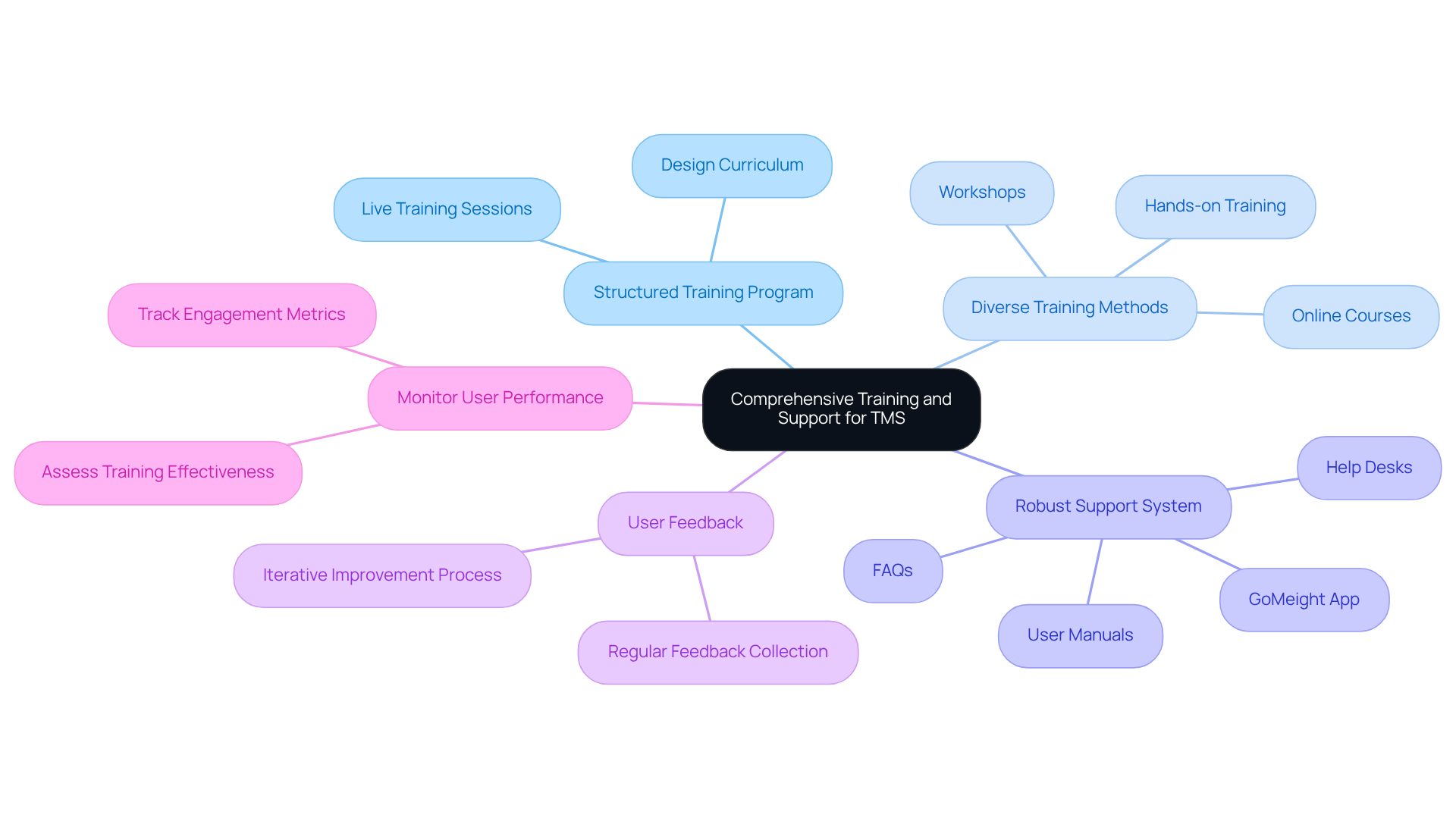
- Develop a Structured Training Program: Design a training curriculum that encompasses all facets of the TMS, including navigation, reporting, and compliance functionalities. This ensures users are well-versed in the system's capabilities. Live training sessions provided by Meight equip planners, drivers, and administrators with the necessary skills to navigate the platform effectively from the outset.
- Utilize Diverse Training Methods: Employ a combination of hands-on training, online courses, and workshops to accommodate various learning preferences. This approach caters to different learning styles, ensuring that all users can engage with the material effectively and retain critical information.
- Establish a Robust Support System: Offer continuous support through help desks, user manuals, and FAQs. This resource availability aids users in troubleshooting and enhances their confidence in using the TMS. The GoMeight app additionally enables automated order dispatch and truck navigation, further enhancing supply chain operations.
- Encourage User Feedback: Regularly gather feedback from users to pinpoint areas for improvement in both the TMS and the training program. This iterative process fosters a culture of continuous enhancement.
- Monitor User Performance: Track user engagement and performance metrics to assess the effectiveness of the training. This monitoring aids in guaranteeing that users are maximizing the software's potential and attaining efficiencies in their operations.
Ultimately, a strong training and support framework not only enhances user adoption but also drives significant operational improvements within logistics companies.
Conclusion
Navigating cross-border logistics without an effective transport management software (TMS) solution can lead to operational inefficiencies and compliance challenges. Utilizing TMS enables transport companies to enhance operational efficiency by streamlining processes and improving stakeholder communication, ultimately driving better customer satisfaction through timely deliveries and reduced costs.
The article outlines several best practices for utilizing transport management software effectively in cross-border logistics. Key insights include:
- Understanding essential features such as multi-currency support, customs compliance tools, real-time tracking, and integration capabilities.
- Selecting the right software involves assessing business needs, considering scalability, and ensuring thorough training and support for users.
These practices, such as implementing multi-currency support and real-time tracking, are essential for optimizing logistics operations and ensuring compliance.
Adopting these strategies can significantly improve cross-border operations and prepare businesses for future challenges in the ever-evolving logistics landscape. As logistics demands evolve, the right TMS will not just be an asset but a necessity for thriving in the industry. Organizations are encouraged to take proactive steps in evaluating their current systems and exploring innovative TMS solutions that can transform their logistics operations for the better.
Frequently Asked Questions
What is the role of transport management software in cross-border logistics?
Transport management software enhances operational efficiency and compliance for cross-border transport companies by enabling real-time tracking of shipments and facilitating coordination among customs authorities, carriers, and suppliers.
How does transport management software improve operational efficiency?
It automates documentation processes, minimizes errors associated with manual paperwork, and allows for effective load management, thereby reducing costs and enhancing customer satisfaction through timely deliveries.
What are some key features of transport management systems (TMS) for cross-border transport?
Essential features include multi-currency support, customs compliance tools, real-time tracking, integration capabilities, and automated documentation.
Why is multi-currency support important in transport management software?
Multi-currency support simplifies financial management and enhances customer satisfaction by allowing transactions and payments in local currencies.
How do customs compliance tools benefit cross-border transport companies?
These tools ensure adherence to international trade regulations, significantly reducing the risk of fines and delays during the shipping process.
What advantage does real-time tracking provide to transportation managers?
Real-time tracking offers insight into shipment status, enabling managers to proactively address potential problems and enhance overall service reliability.
Why are integration capabilities important in a transport management system?
Integration capabilities allow seamless connectivity with existing systems like ERP and WMS, streamlining operations and eliminating data silos.
How does automated documentation improve the shipping process?
By automating paperwork, this feature reduces manual errors and accelerates the customs clearance process, improving overall efficiency.

Subscribe to our newsletter
No spam! Promise!
Related posts

Best Practices for Dispatch Software in Road Freight Operations

Master Truck Routing Online: Key Practices for Logistics Success
5 Best Practices for GPS Tracking Fleet Management Software