

5 Best Practices for Transport Management Software in Road Freight

Introduction
Transport management software (TMS) is fundamentally transforming the road freight industry, serving as a crucial component for efficient logistics operations. By automating essential processes such as route optimization and shipment tracking, TMS significantly enhances operational efficiency while addressing the increasing customer demands for transparency and accuracy. As the transport management landscape continues to evolve, companies must consider how to effectively leverage these tools to maximize productivity and minimize costs. An exploration of best practices for TMS implementation reveals key strategies that can convert road freight operations into streamlined, data-driven successes.
Define Transport Management Software and Its Role in Road Freight
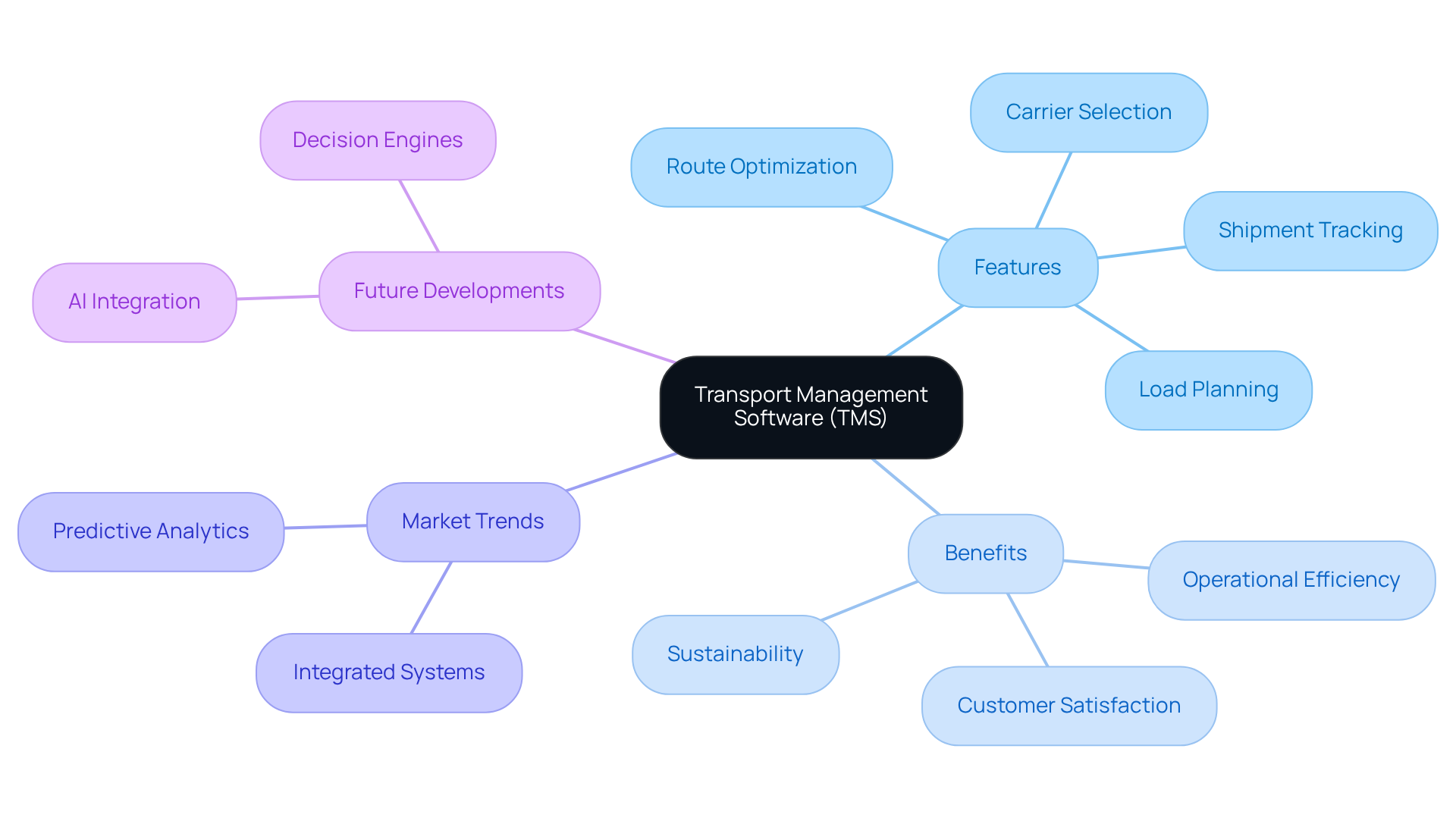
Transport management software for road freight companies is a crucial digital solution for planning, executing, and optimizing the physical movement of goods. By automating essential supply chain processes such as load planning, route optimization, carrier selection, and shipment tracking, TMS significantly boosts operational efficiency. For instance, Meight's platform effectively manages 43.8 kton of CO2 emissions, reflecting a strong commitment to sustainability in transportation. This centralization minimizes manual errors and provides real-time visibility into the supply chain, which is increasingly vital as customer expectations for accurate ETAs and live insights continue to rise.
Companies utilizing transport management software for road freight companies, such as Meight, have reported enhancements in dispatching processes, resulting in timely deliveries and increased customer satisfaction. As the market for transport management software for road freight companies expands, forecasts indicate a shift from fragmented tools to integrated execution systems. The integration of advanced features such as predictive analytics and real-time tracking will further solidify TMS as a key component of modern supply chain operations. By 2026, TMS is expected to evolve from basic reporting tools to sophisticated decision engines, enabling service providers to respond proactively to challenges and improve their operations effectively. Meight's seamless cloud integration not only streamlines load management but also enhances budget control, thereby transforming road freight operations.
Identify Essential Features of Effective TMS Solutions
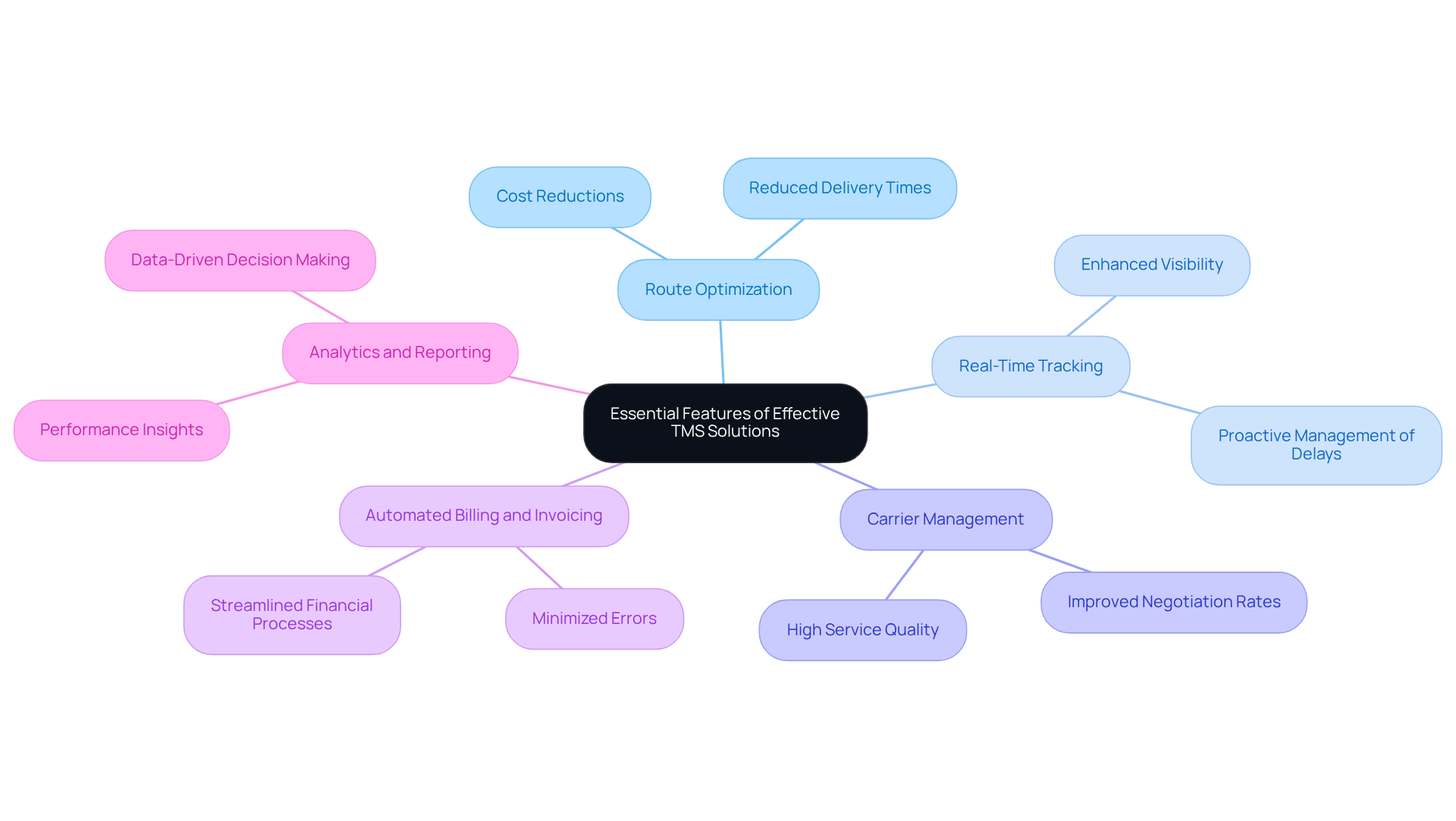
When selecting transport management software for road freight companies, it is essential to consider several key features that can significantly enhance operational efficiency.
- Route Optimization is a critical feature that analyzes various routes to identify the most efficient paths. This capability can lead to reductions in fuel costs and delivery times. For example, companies utilizing transport management software for road freight companies have reported transportation cost reductions of up to 20% through optimized routing and load consolidation.
- Real-Time Tracking is another vital aspect. With Meight's cloud-based platform, transport providers can monitor shipments in real-time, enhancing visibility and enabling proactive management of potential delays. In today's logistics landscape, real-time visibility is a baseline requirement, allowing teams to address issues before they impact customers.
- Carrier Management plays a crucial role in the selection and supervision of carriers. Efficient carrier management enables transportation providers to negotiate improved rates while maintaining high service quality, which is essential for optimizing costs and ensuring timely deliveries.
- Automated Billing and Invoicing streamline financial processes, reducing administrative burdens and minimizing errors. This contributes to overall effectiveness in logistics operations, allowing teams to focus on core activities.
- Analytics and Reporting provide strong insights into performance, enabling managers to make data-driven decisions that enhance productivity. Transport management software for road freight companies that is equipped with advanced analytics capabilities can significantly improve decision-making and operational efficiency.
Additionally, Meight's seamless cloud integration allows users to manage their loads within budget and on time with just a few clicks from their laptops. By ensuring that a TMS includes these essential features, transportation providers can optimize their operations, reduce costs, and achieve better overall outcomes.
Integrate TMS with Existing IT Systems for Seamless Operations
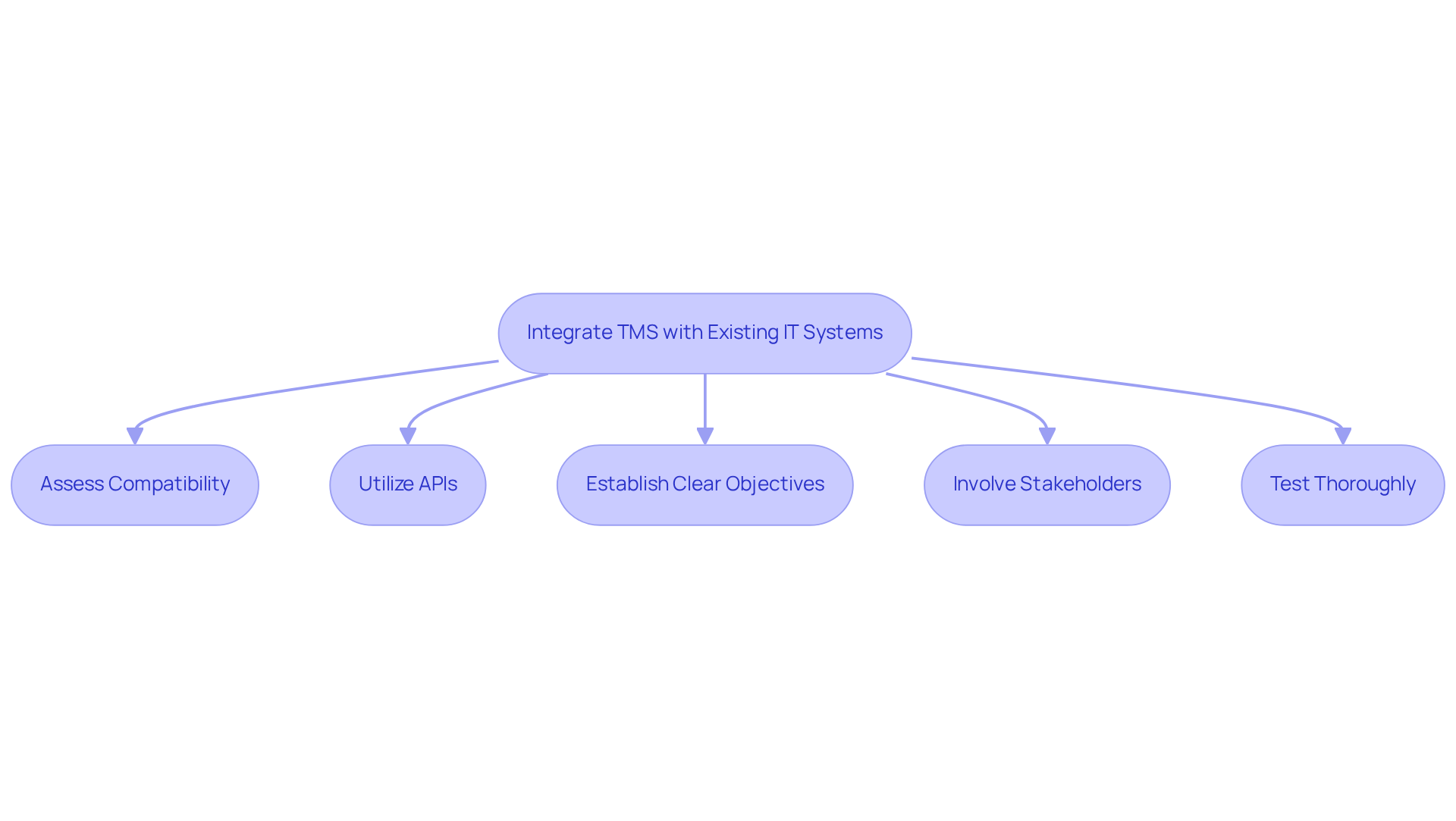
Integrating Transport Management Software (TMS) with existing IT systems, such as Enterprise Resource Planning (ERP) and Warehouse Management Systems (WMS), is essential for achieving seamless operational processes. Effective integration facilitates automatic data exchange, which minimizes manual entry and reduces the risk of errors. Below are key best practices for successful integration:
- Assess Compatibility: Evaluate the TMS's compatibility with current systems to ensure smooth data flow and ongoing functionality.
- Utilize APIs: Leverage Application Programming Interfaces (APIs) to enable real-time data exchange, enhancing visibility and responsiveness throughout the supply chain.
- Establish Clear Objectives: Define integration goals, such as improving order accuracy or reducing processing times, to effectively guide the implementation process.
- Involve Stakeholders: Engage key stakeholders from IT, operations, and management to ensure the integration addresses the diverse needs of all departments involved.
- Test Thoroughly: Conduct comprehensive testing before going live to identify and resolve potential issues, ensuring a smooth transition.
By adhering to these practices, transport providers can significantly enhance their performance and ensure that their TMS operates effectively within their current IT environment.
Utilize Data Analytics for Informed Decision-Making
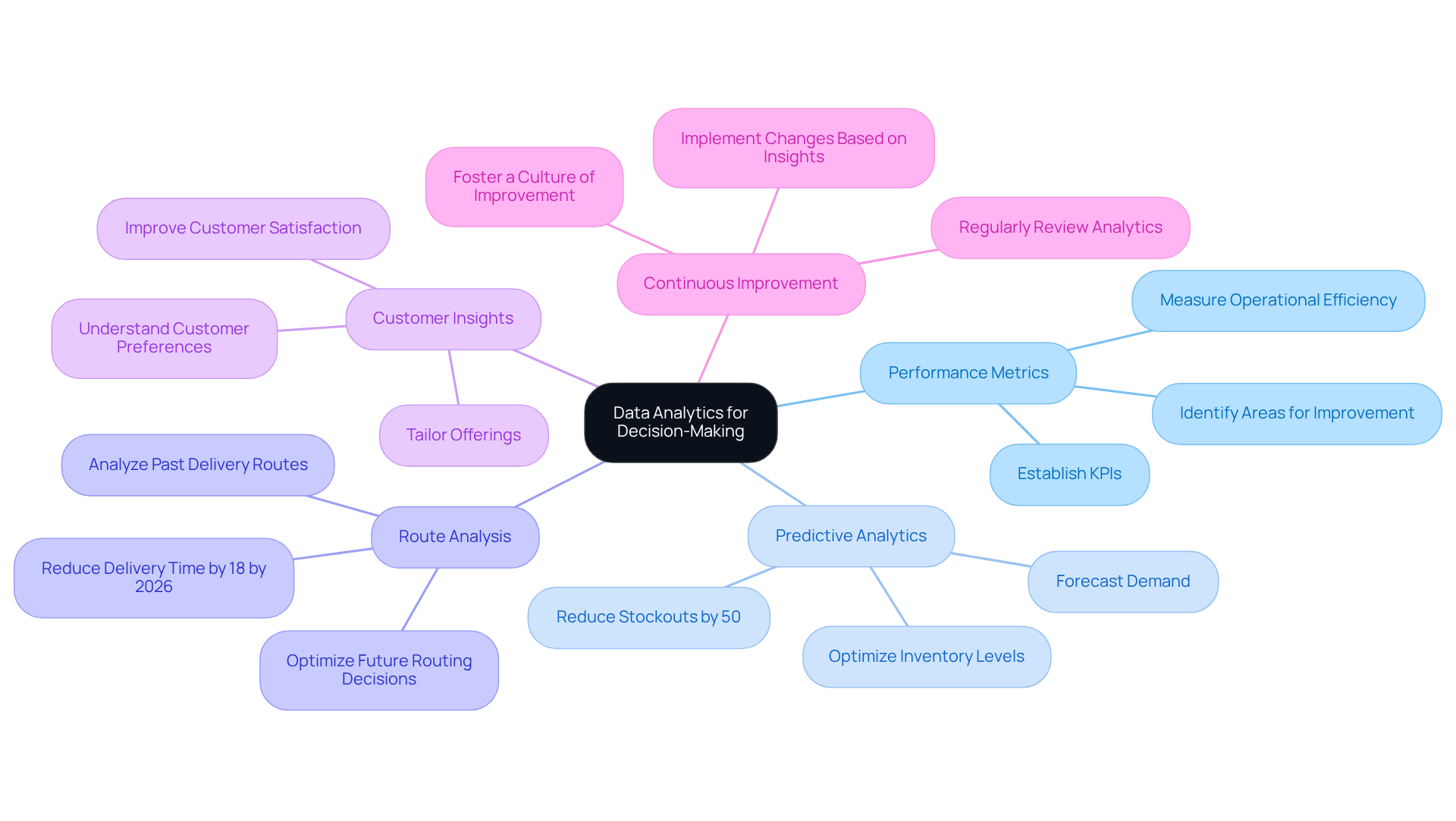
Data analytics is revolutionizing supply chain management, empowering providers to make informed decisions that enhance productivity. Here are key strategies to effectively leverage data analytics:
- Performance Metrics: Establish key performance indicators (KPIs) such as delivery times, fuel consumption, and cost per mile to measure operational efficiency. These metrics create a clear framework for assessing performance and identifying areas for improvement.
- Predictive Analytics: Utilize historical data to forecast demand and optimize inventory levels. This approach ensures efficient resource allocation, reducing stockouts by up to 50% and improving overall service delivery.
- Route Analysis: Conduct thorough analyses of past delivery routes to uncover patterns that can inform future routing decisions. By optimizing routes, transportation providers can achieve significant cost savings and enhance service levels, with dynamic routing expected to reduce delivery time by 18% by 2026.
- Customer Insights: Harness customer data to gain insights into preferences and behaviors. This understanding allows service providers to tailor their offerings, thereby improving customer satisfaction and loyalty.
- Continuous Improvement: Regularly review analytics to identify areas for enhancement. Implementing changes based on data insights fosters a culture of continuous improvement, driving operational performance to new heights.
By integrating data analytics into their decision-making processes, transportation providers can achieve higher productivity, lower costs, and improved service delivery, positioning themselves for success in an increasingly competitive landscape.
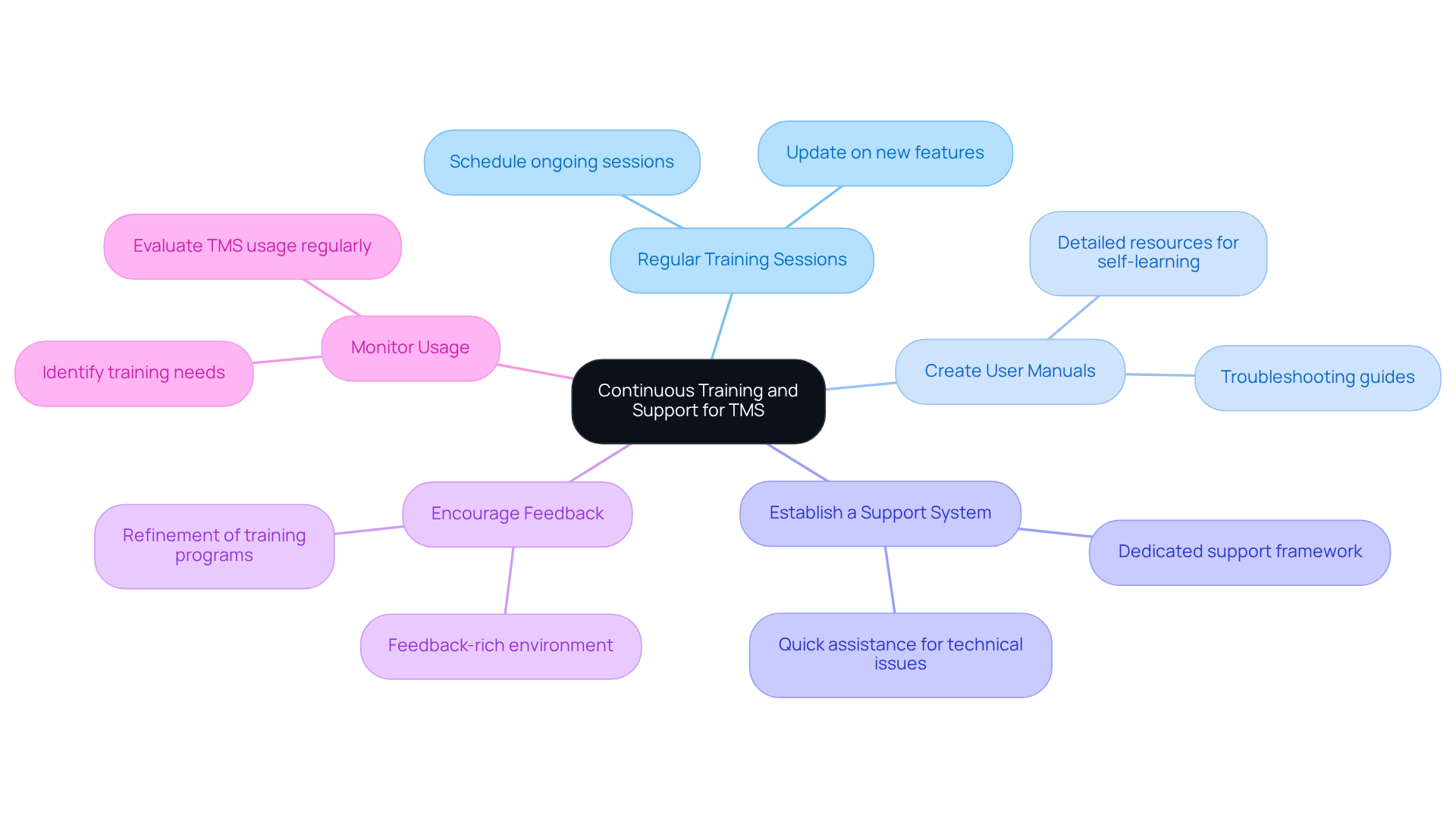
Ensure Continuous Training and Support for Effective TMS Use
To fully leverage the advantages of Transport Management Software (TMS), logistics providers must prioritize ongoing training and support for their teams. Continuous training and support are essential for maximizing TMS effectiveness. Here are best practices to ensure effective TMS utilization:
- Regular Training Sessions: Schedule continuous training sessions to keep staff informed about new features and best practices. This enables them to use the TMS to its fullest potential.
- Create User Manuals: Develop detailed user manuals and resources that staff can access for self-learning and troubleshooting. This promotes independence and productivity.
- Establish a Support System: Implement a dedicated support framework where users can quickly seek assistance for technical issues or inquiries. This ensures prompt problem resolution.
- Encourage Feedback: Cultivate a feedback-rich environment where users can share their experiences and suggestions. This aids in the refinement of training programs and system usage.
- Monitor Usage: Regularly evaluate TMS usage across the organization to identify training needs and areas for enhancement.
Investing in continuous training and support not only boosts user proficiency but also leads to improved operational efficiency and overall performance.
Conclusion
Transport management software (TMS) is essential for road freight companies, as it streamlines operations and boosts efficiency through automation and data-driven insights. By adopting best practices in TMS implementation, logistics providers can enhance their operational performance, lower costs, and satisfy the increasing customer demand for real-time visibility and timely deliveries.
The article emphasizes key features such as:
- Route optimization
- Real-time tracking
- Effective carrier management
By integrating TMS with existing IT systems and utilizing data analytics, companies can make informed decisions, optimize resources, and promote continuous improvement. Furthermore, prioritizing ongoing training and support equips teams to fully leverage TMS benefits, leading to increased productivity and customer satisfaction.
In today's competitive logistics environment, effectively utilizing transport management software is essential. By embracing these best practices, road freight companies can adeptly navigate challenges and position themselves for future success. Adopting TMS and its capabilities not only streamlines operations but also fosters innovation and growth in the dynamic landscape of supply chain management.
Frequently Asked Questions
What is transport management software (TMS) and its role in road freight?
Transport management software is a digital solution that helps road freight companies plan, execute, and optimize the movement of goods. It automates supply chain processes such as load planning, route optimization, carrier selection, and shipment tracking, improving operational efficiency and providing real-time visibility into the supply chain.
How does TMS contribute to sustainability in transportation?
TMS, such as Meight's platform, can manage significant CO2 emissions, reflecting a commitment to sustainability. By optimizing logistics processes, TMS helps reduce environmental impact while improving operational efficiency.
What improvements have companies seen by using TMS?
Companies using transport management software have reported enhancements in dispatching processes, leading to timely deliveries and increased customer satisfaction.
What is the expected future of TMS in the market?
The market for transport management software is expected to evolve from fragmented tools to integrated execution systems. By 2026, TMS is anticipated to become sophisticated decision engines, incorporating advanced features like predictive analytics and real-time tracking.
What are the essential features to consider when selecting TMS solutions?
Key features to consider include route optimization, real-time tracking, carrier management, automated billing and invoicing, and analytics and reporting.
How does route optimization benefit transport management?
Route optimization analyzes various routes to identify the most efficient paths, leading to reductions in fuel costs and delivery times. Companies have reported transportation cost reductions of up to 20% through optimized routing and load consolidation.
Why is real-time tracking important in TMS?
Real-time tracking enhances visibility of shipments, allowing transport providers to proactively manage potential delays and address issues before they impact customers.
What role does carrier management play in TMS?
Carrier management is essential for selecting and supervising carriers, enabling transportation providers to negotiate better rates while ensuring high service quality, which optimizes costs and ensures timely deliveries.
How does automated billing and invoicing improve logistics operations?
Automated billing and invoicing streamline financial processes, reducing administrative burdens and minimizing errors, which contributes to overall effectiveness in logistics operations.
How does analytics and reporting enhance decision-making in TMS?
Analytics and reporting provide insights into performance, allowing managers to make data-driven decisions that enhance productivity and operational efficiency.

Subscribe to our newsletter
No spam! Promise!
Related posts

Best Practices for Dispatch Software in Road Freight Operations

Master Truck Routing Online: Key Practices for Logistics Success
5 Best Practices for GPS Tracking Fleet Management Software