

Discover the Best Transport Management Software for Small Companies

Introduction
In the competitive logistics sector, small transport companies face significant challenges in optimizing their operations, prompting many to consider transport management software (TMS) as a potential solution. This software streamlines shipping processes and offers features such as:
- Route optimization
- Real-time tracking
These features can greatly improve efficiency and lower costs. With numerous TMS options available, many small transport companies struggle to identify the most suitable solution for their specific operational challenges. Understanding the specific features and benefits of various TMS solutions is crucial for small companies aiming to enhance their operational efficiency and support future growth.
Define Transportation Management Software (TMS)
In an increasingly complex logistics landscape, transport management software for small transport companies emerges as a crucial tool for optimizing the movement of goods. TMS plays a crucial role in optimizing the planning, execution, and movement of goods. Serving as a central point for transportation activities, TMS allows companies to effectively oversee their shipping processes. Key features of transport management software for small transport companies include:
- Route optimization
- Load planning
- Shipment tracking
- Carrier management
By automating these critical functions, TMS significantly reduces operational costs, enhances service levels, and boosts overall efficiency.
Recent trends indicate a shift towards connected, predictive, and action-oriented TMS platforms, which are increasingly viewed as strategic assets rather than mere logistical tools. Advancements in AI are driving this evolution, enhancing forecasting capabilities and enabling better decision-making with real-time data integration. For instance, companies adopting modern TMS solutions have reported substantial improvements in delivery reliability and customer satisfaction, as these systems provide accurate tracking and proactive communication throughout the delivery process.
Real-world examples demonstrate the effectiveness of TMS in enhancing supply chain activities. A leading 3PL, for example, enhanced inventory accuracy and onboarding speed by implementing a modern TMS that integrates seamlessly with warehouse management systems (WMS). This integration not only streamlined operations but also allowed for better resource allocation and reduced waste.
Specialists in the supply chain sector emphasize the importance of investing in transport management software for small transport companies. As one industry leader noted, 'Transportation management is no longer a support function; it’s the strategic backbone that connects demand signals with real-time execution, customer experience, and cost control.' This perspective underscores the critical role that TMS plays in driving operational excellence and maintaining a competitive edge in the logistics sector. To stay competitive in today’s logistics environment, investing in advanced TMS solutions is essential.

Identify Key Features for Small Transport Companies
Selecting the right transport management software for small transport companies is crucial for those aiming to enhance operational efficiency and profitability.
- Route Optimization: This feature is essential for planning the most efficient routes, leading to a 15-25% reduction in fuel consumption. Effective route optimization reduces costs and shortens delivery times, enhancing operational efficiency.
- Real-Time Tracking: With real-time tracking, organizations gain visibility into shipment status, enabling proactive management of delays and enhanced communication with customers. Shippers are increasingly demanding better transparency in logistics operations, making this capability vital.
- Load Planning: This feature assists in maximizing vehicle capacity and minimizing empty miles, which is crucial for cost efficiency. By optimizing load planning, businesses can significantly enhance their profitability.
- Carrier Management: A robust carrier management system facilitates the selection and oversight of carriers, ensuring competitive pricing and high service quality. This is particularly important in a market where shippers are under pressure to manage costs effectively.
- Reporting and Analytics: Comprehensive reporting and analytics provide insights into operational performance, allowing companies to make data-driven decisions that improve efficiency and reduce costs.
- User-Friendly Interface: A simple and intuitive interface is essential for quick adoption and ease of use by staff, ensuring that all team members can effectively utilize the system.
- Integration Capabilities: The ability to integrate with existing systems, such as ERP or CRM, is vital for seamless operations. Improved connectivity facilitates better data movement and operational unity, which is becoming more crucial as supply networks grow more intricate.
By concentrating on these features, small transport firms can choose transport management software for small transport companies that not only addresses their current needs but also fosters future growth and efficiency. Focusing on these key features will empower small transport firms to not only meet current demands but also position themselves for sustainable growth in a competitive market.

Compare Top TMS Solutions for Small Transport Companies
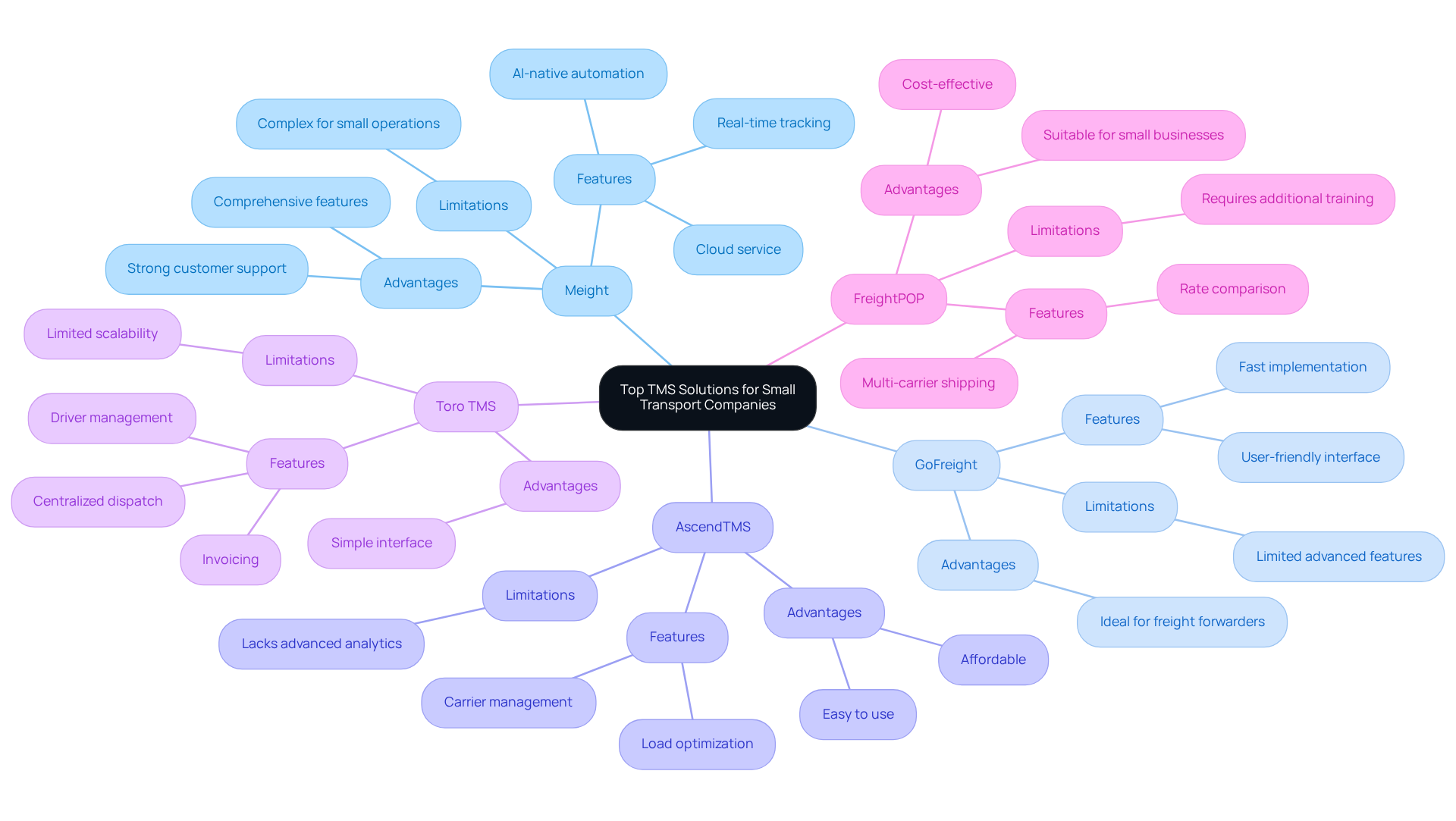
When evaluating TMS solutions, it is crucial to consider their features, advantages, and limitations to make an informed decision. Below is an analysis of several TMS solutions, highlighting their key features, pros, and cons.
- Meight offers AI-native automation and real-time tracking, integrating seamlessly with existing systems. Its highly-secured cloud service provides comprehensive features and strong customer support, though it may be complex for very small operations.
- GoFreight is known for its fast implementation and user-friendly interface, making it ideal for freight forwarders. However, it has limited advanced features compared to larger systems.
- AscendTMS is a cloud-based solution that excels in carrier management and load optimization. It is affordable and easy to use, although it may lack some advanced analytics capabilities.
- Toro TMS features centralized dispatch, invoicing, and driver management. Its simple interface is effective for short-haul operations, but it has limited scalability for larger fleets.
- FreightPOP provides multi-carrier shipping and rate comparison, making it cost-effective and suitable for small businesses. However, it may require additional training for full utilization.
Ultimately, the choice of transport management software for small transport companies should align with the specific operational needs and growth potential of the business.
Evaluate Benefits and Challenges of TMS Implementation
Small transport companies face numerous challenges, yet implementing transport management software for small transport companies can provide critical advantages that address these issues. These advantages include:
- Increased Efficiency: Automating manual processes can drastically reduce the time spent on logistics management, allowing teams to focus on strategic tasks. For instance, companies using Meight's solutions have reported significant improvements in operational efficiency, allowing teams to focus on strategic initiatives.
- Cost Savings: Enhanced routing and load planning have demonstrated a decrease in fuel and operational costs, with firms like SwiftTrans realizing a 20% reduction in transportation expenses within the first year of TMS implementation. This platform enables firms to analyze their logistics data effectively, leading to informed decisions that drive cost savings.
- Improved Visibility: Real-time tracking capabilities enhance transparency throughout the supply chain, leading to increased customer satisfaction as clients receive timely updates on their shipments. TMS can reduce customer service inquiries by up to 40% through this transparency. The GoMeight application enhances this visibility by automating load dispatching and providing real-time navigation for truck fleets.
- Data-Driven Decisions: Advanced analytics tools offer valuable insights that aid in strategic planning and operational enhancements, allowing organizations to respond proactively to market changes. Dustin Torok emphasizes that measuring success through operational efficiency and visibility metrics is vital for informed decision-making. Meight's solutions empower organizations to leverage data for enhanced operational strategies.
However, small transport companies must also navigate several challenges during TMS adoption:
- Integration Issues: Existing systems may struggle to integrate seamlessly with new TMS solutions, potentially causing disruptions in operations. Technical complexities can arise during this integration process, but Meight's focus on collaboration and modern technology aims to mitigate these challenges.
- Training Requirements: Staff may need comprehensive training to effectively utilize the new system, which can be a time-consuming process that impacts productivity. A lack of skilled personnel can further complicate this training requirement, emphasizing the importance of user-friendly solutions like those offered by Meight.
- Initial Costs: While TMS can result in long-term savings, the upfront investment can be a significant barrier for smaller businesses, necessitating careful financial planning. Meight's commitment to providing scalable solutions can help ease this transition.
- Change Management: Resistance to change from employees accustomed to traditional methods can impede successful implementation, highlighting the need for effective change management strategies. Meight encourages partners to embrace innovation and be part of a transformative movement in logistics.
Without a clear understanding of these benefits and challenges, small transport companies risk falling behind in an increasingly competitive market.

Conclusion
In an increasingly competitive logistics environment, small transport companies face significant challenges that can hinder their growth and efficiency. Transport management software (TMS) serves as a crucial tool, enabling these companies to streamline operations and improve operational performance and responsiveness to market demands. By leveraging advanced features such as route optimization, real-time tracking, and load planning, small businesses can significantly reduce costs and enhance service delivery. The shift towards more sophisticated, AI-driven TMS solutions underscores the importance of these tools not merely as logistical aids, but as strategic components that drive operational excellence.
The article explored the essential features necessary for small transport companies to thrive, including:
- User-friendly interfaces
- Integration capabilities
- Robust analytics
Real-world examples highlighted the tangible benefits of TMS implementation, such as improved visibility and data-driven decision-making, while also addressing the challenges associated with adopting new technology. Integration issues, training demands, and initial costs represent potential hurdles that require careful navigation.
As the logistics industry continues to evolve, investing in the right transport management software is essential for small transport companies aiming to maintain a competitive edge. Embracing TMS not only enhances operational efficiency but also positions businesses for sustainable growth in a rapidly changing market. It is imperative for companies to assess their specific needs and seek out TMS solutions that align with their operational goals, ensuring they are well-equipped to meet the demands of the future. Without the right TMS solutions, small transport companies risk falling behind in a market that demands agility and innovation.
Frequently Asked Questions
What is Transportation Management Software (TMS)?
Transportation Management Software (TMS) is a tool designed to optimize the planning, execution, and movement of goods within logistics, serving as a central point for overseeing shipping processes.
What are the key features of TMS for small transport companies?
Key features of TMS include route optimization, load planning, shipment tracking, and carrier management.
How does TMS benefit small transport companies?
TMS benefits small transport companies by automating critical functions, which significantly reduces operational costs, enhances service levels, and boosts overall efficiency.
What recent trends are shaping TMS platforms?
Recent trends indicate a shift towards connected, predictive, and action-oriented TMS platforms, which are increasingly seen as strategic assets rather than just logistical tools.
How is AI influencing TMS?
Advancements in AI are enhancing forecasting capabilities and enabling better decision-making through real-time data integration, leading to improvements in delivery reliability and customer satisfaction.
Can you provide an example of TMS improving supply chain activities?
A leading 3PL enhanced inventory accuracy and onboarding speed by implementing a modern TMS that integrates with warehouse management systems, streamlining operations and improving resource allocation.
Why is investing in TMS important for small transport companies?
Investing in TMS is crucial as it serves as the strategic backbone for connecting demand signals with real-time execution, customer experience, and cost control, thus driving operational excellence and maintaining a competitive edge in logistics.

Subscribe to our newsletter
No spam! Promise!
Related posts

Best Practices for Dispatch Software in Road Freight Operations

Master Truck Routing Online: Key Practices for Logistics Success
5 Best Practices for GPS Tracking Fleet Management Software