

Maximize Efficiency with GPS Tracking for Business Vehicles

Introduction
The integration of GPS tracking technology presents both opportunities and challenges for businesses managing vehicle fleets. This technology provides clear insights and enhanced management capabilities for operations. By harnessing GPS tracking, companies can improve safety measures and lower operational costs. However, organizations often struggle with the integration of GPS tracking systems into their established operations. Addressing these challenges is crucial for businesses to fully leverage the advantages of GPS tracking technology.
Understand GPS Tracking Technology and Its Functionality
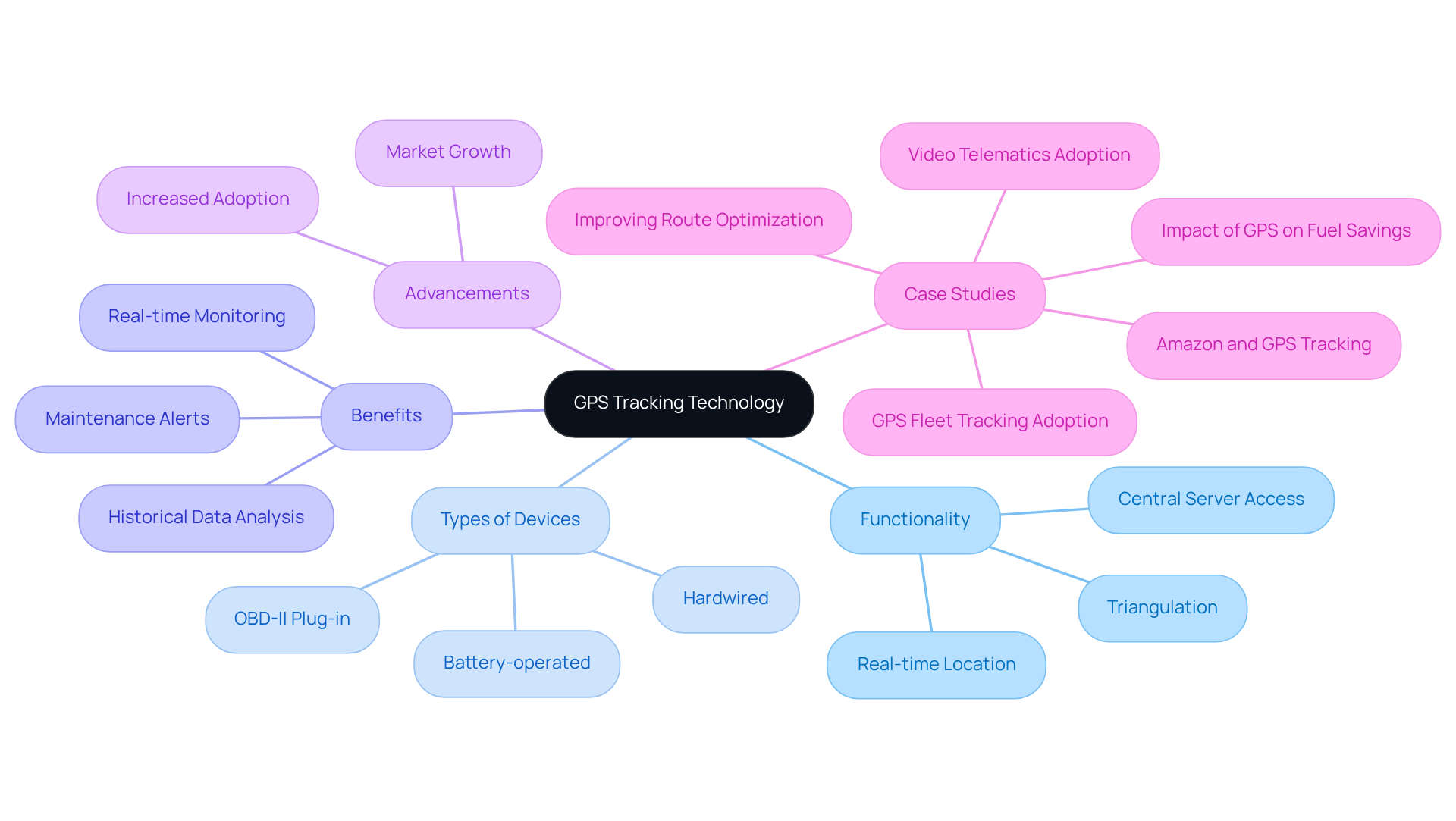
GPS tracking for business vehicles is essential for managing real-time vehicle locations, leveraging satellite networks for precise positioning. The system calculates the vehicle's position through triangulation by receiving signals from multiple satellites. This location information is sent to a central server, accessible by vehicle managers through specialized software applications. Understanding the various types of GPS tracking for business vehicles, including hardwired, battery-operated, and OBD-II plug-in devices, is essential for selecting the right solution for vehicle management. Each type offers unique benefits tailored to specific operational needs, including real-time monitoring, historical data analysis, and maintenance alerts.
Recent advancements in GPS monitoring technology have significantly enhanced vehicle management capabilities. In 2026, approximately 80% of vehicle management professionals reported utilizing GPS vehicle monitoring, marking an 11-point increase from the previous year. This increase underscores the recognition of GPS tracking for business vehicles as a critical factor in operational optimization and cost reduction. For instance, users of GPS tracking for business vehicles have experienced an average 12% reduction in fuel expenses, attributed to features such as idle alerts and route optimization.
Case studies further illustrate the effectiveness of GPS tracking for business vehicles in logistics. For example, Meight partners have successfully utilized advanced GPS systems to manage their logistics operations, showing the measurable improvements in operational efficiency and customer satisfaction achieved through intelligent transport solutions. By leveraging Meight's AI-driven platform, logistics providers can enhance delivery precision and customer satisfaction while optimizing their vehicle management processes. Furthermore, the integration of GPS tracking for business vehicles with RFID solutions has transformed logistics operations, improving service quality and operational efficiency. As the global GPS monitoring device market is projected to reach $14.78 billion by 2035, embracing GPS technology is no longer optional but a necessity for maintaining competitive advantage.
Leverage GPS Tracking to Enhance Operational Efficiency and Safety
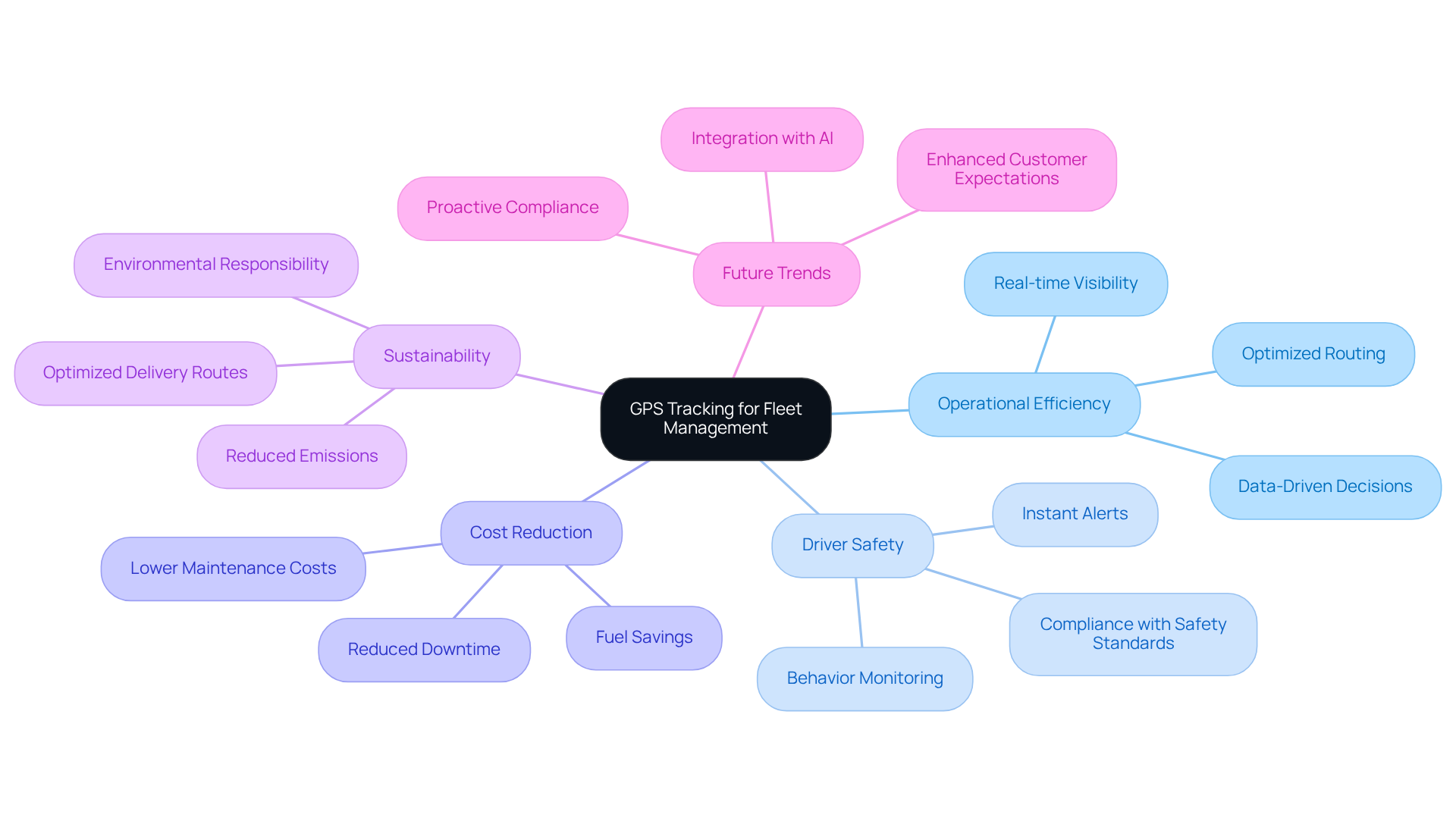
Enhancing operational efficiency and safety in fleet management hinges on the implementation of GPS tracking for business vehicles. By utilizing GPS tracking for business vehicles to provide real-time visibility into vehicle locations, businesses can optimize routing, significantly reduce idle time, and minimize fuel consumption. For instance, GPS data enables the identification of the most efficient routes, effectively avoiding traffic congestion and reducing travel times.
Furthermore, GPS tracking for business vehicles plays a crucial role in enhancing driver safety by observing behaviors such as speeding and harsh braking, which facilitates timely interventions and targeted training. Companies that utilize GPS tracking for business vehicles report operational cost reductions of up to 20%. This underscores its potential to significantly enhance the bottom line.
Meight's automated solutions revolutionize freight planning and driver matching, replacing cumbersome processes with a cloud-based tool that offers a comprehensive real-time perspective of operations from pickup to delivery. Case studies illustrate that businesses leveraging GPS tracking for business vehicles experience enhanced vehicle visibility, improved route planning, and better delivery coordination, ultimately leading to more effective logistics management.
In 2026, the evolution of GPS tracking for business vehicles has established it as an essential framework for compliance, service readiness, and customer trust, making it a critical asset for logistics providers aiming to thrive in a competitive landscape. Moreover, GPS tracking for business vehicles supports sustainability practices by optimizing delivery routes and reducing emissions, making it a vital resource for logistics providers striving to succeed in a competitive environment.
As noted, 'GPS is no longer optional, and the right platform can redefine performance,' emphasizing the critical need for this technology.
Implement Best Practices for Effective GPS Tracking Integration
Integrating GPS tracking for business vehicles into vehicle management systems presents a significant opportunity for enhancing operational efficiency. Here are best practices to ensure a successful implementation:
- Define clear objectives: Establish specific goals for your GPS tracking for business vehicles, such as reducing fuel costs or improving delivery times. This clarity will guide your implementation strategy.
- Choose the Right Technology: Select GPS devices that meet your operational needs. Key features to consider include accuracy, real-time updates, durability, and ease of installation. By 2026, the integration of 5G-enabled devices with management platforms will be essential for enhancing visibility and operational efficiency through GPS tracking for business vehicles.
- Train your team: Thorough training is essential for maximizing the effectiveness of GPS tracking for business vehicles. It is important to ensure that all employees, including drivers and fleet managers, are well-versed in utilizing the GPS system effectively. This training should address information interpretation and the significance of adhering to regulations.
- Monitor and adjust: Regularly evaluate the information gathered from GPS tracking for business vehicles. This practice helps identify areas for improvement, allowing you to adjust strategies effectively. For example, groups that combine telematics information with other systems have reported decreases of 25-30% in downtime and 15-20% in maintenance expenses.
- Ensure Compliance: Stay informed about regulations related to GPS monitoring. Compliance is not just about legal adherence; it also enhances operational integrity. Platforms like REACH automate compliance with DVIR records connected to GPS data, ensuring that your vehicles remain audit-ready.
By implementing these best practices, organizations can significantly enhance their operational capabilities and customer service outcomes.

Utilize Data Insights for Continuous Improvement in Fleet Management
The integration of GPS tracking for business vehicles is transforming vehicle management by providing critical insights that drive continuous improvement. Fleet managers can analyze key metrics like fuel consumption and route efficiency to identify trends and areas for improvement. For instance, if data indicates that specific routes frequently cause delays, adjustments can be made to enhance those paths, thereby increasing overall efficiency. Regular performance assessments using GPS data can identify driver training needs, fostering safer driving habits and reducing accident rates.
Embracing data-driven decision-making enhances operational efficiency and supports long-term success in vehicle management. Indeed, 72% of transportation experts believe that combining telematics with training has led to a decrease in accidents and claims, underscoring the tangible benefits of utilizing GPS data. Furthermore, with 69% of vehicle groups actively employing GPS tracking for business vehicles in their logistics and operations, the urgency to adopt improved management practices is clear, especially in light of tightening emissions regulations set to begin in 2027.
The Meight App, used by drivers, exemplifies this integration, optimizing routes through AI technology to reduce fuel consumption and enhance profitability while also contributing to carbon emission reduction. This shift towards data utilization not only enhances safety but also positions fleets for future regulatory challenges. Integrating telematics with other fleet systems is crucial to avoid data silos, ensuring that insights from GPS data are effectively utilized within a broader fleet management strategy.

Conclusion
The integration of GPS tracking in business vehicle management represents a critical evolution in operational efficiency and safety. By leveraging advanced GPS technology, businesses can gain real-time insights into vehicle locations, optimize routes, and significantly reduce costs. The integration of GPS tracking systems has become essential for companies aiming to maintain a competitive edge in logistics and fleet management.
This article highlights several key benefits of GPS tracking, including improved fuel efficiency, enhanced driver safety, and streamlined operations. Case studies demonstrate how businesses like Meight have successfully implemented GPS solutions to achieve measurable improvements in customer satisfaction and operational efficiency. Furthermore, best practices for integrating GPS tracking systems emphasize the importance of clear objectives, proper technology selection, and ongoing training to maximize the benefits of this technology.
In a rapidly evolving landscape, the adoption of GPS tracking for business vehicles is crucial for organizations striving for continuous improvement and sustainability. As the market for GPS monitoring devices expands, embracing this technology not only enhances operational efficiency but also positions businesses to meet future regulatory challenges. Prioritizing GPS tracking integration is essential for organizations aiming to thrive in an increasingly competitive landscape.
Frequently Asked Questions
What is GPS tracking technology used for in business vehicles?
GPS tracking technology is used for managing real-time vehicle locations, leveraging satellite networks for precise positioning, and providing location information to vehicle managers through specialized software applications.
How does GPS tracking determine a vehicle's location?
GPS tracking determines a vehicle's location through triangulation by receiving signals from multiple satellites, which allows for accurate positioning.
What are the different types of GPS tracking devices for business vehicles?
The different types of GPS tracking devices include hardwired devices, battery-operated devices, and OBD-II plug-in devices, each offering unique benefits tailored to specific operational needs.
What benefits do GPS tracking systems provide for vehicle management?
GPS tracking systems provide benefits such as real-time monitoring, historical data analysis, maintenance alerts, and can lead to cost reductions, including an average 12% reduction in fuel expenses.
How has the adoption of GPS vehicle monitoring changed in recent years?
In 2026, approximately 80% of vehicle management professionals reported utilizing GPS vehicle monitoring, marking an 11-point increase from the previous year, indicating its growing importance in operational optimization.
Can you provide an example of how GPS tracking has improved logistics operations?
Meight partners have successfully utilized advanced GPS systems to manage logistics operations, resulting in measurable improvements in operational efficiency and customer satisfaction through intelligent transport solutions.
What is the projected market growth for GPS monitoring devices?
The global GPS monitoring device market is projected to reach $14.78 billion by 2035, highlighting the necessity of embracing GPS technology for maintaining a competitive advantage.

Subscribe to our newsletter
No spam! Promise!
Related posts

Best Practices for Dispatch Software in Road Freight Operations

Master Truck Routing Online: Key Practices for Logistics Success
5 Best Practices for GPS Tracking Fleet Management Software