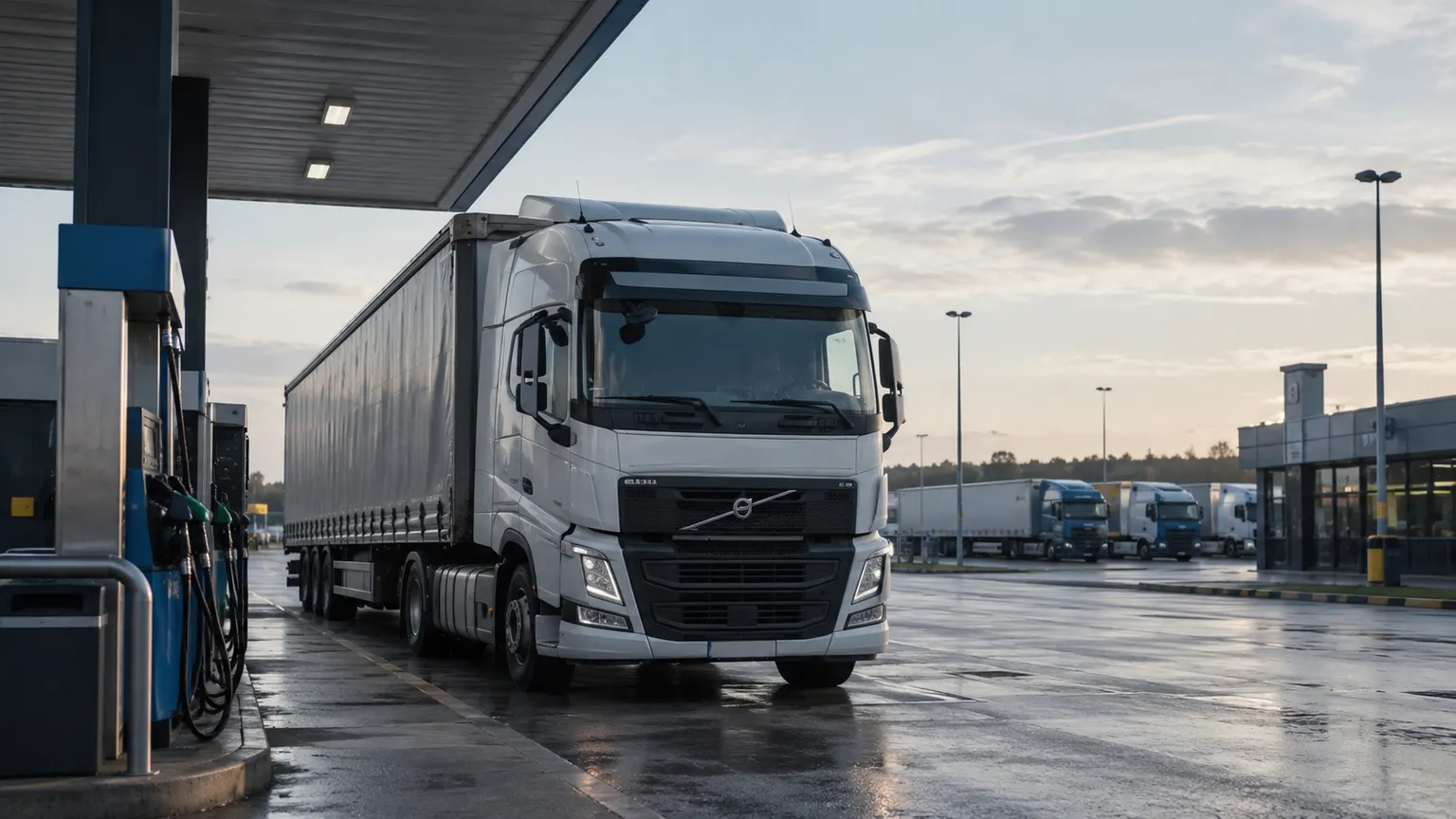

A freight exchange is an online platform where companies with goods to move can find carriers with space on their trucks. Shippers and forwarders publish the loads they need transported, and carriers either search through those loads or advertise their own free trucks so the work comes to them. The price for each job is agreed directly between the two companies.
On long-distance routes, one of the most practical uses of a freight exchange is finding a load for the return journey. After a truck delivers in France or Germany, it still has to drive back, and if it makes that journey empty, those kilometres are driven without a load to invoice.
There are several exchanges to choose from, and they differ in the regions they cover and in how much protection they give a carrier dealing with companies it doesn't know yet. Those differences decide how useful a particular exchange will be for a particular carrier.
How a freight exchange works
Everything on an exchange starts with an offer. A shipper or forwarder posts a load with what a carrier needs to know to decide whether the job fits its truck, from the collection and delivery dates to the type of trailer required. Some offers come with a price already set, and others ask carriers to quote.
A carrier can find work on an exchange in two ways. A dispatcher can search for loads near where one of the trucks will be free, filtering the offers by area and date. The carrier can also post the truck itself as available capacity and wait for shippers and forwarders to get in touch. Sometimes, the exchange also has a mobile app, which helps when plans change during the day.
Before agreeing anything, the carrier can check who is on the other end. Each member has a profile on the exchange, often with a note saying whether the platform has verified the company, and depending on the platform it can also show how long the company has been a member and what other members have said about working with it. The price is then negotiated through the exchange's chat or over the phone. Prices for these one-off jobs follow supply and demand on each route, so what the same trip pays can change noticeably from one week to the next.
Once both sides agree, the client sends a transport order confirming the price and the conditions. This document matters more than it might seem, because the exchange only brought the two companies together and the contract is between them. If something goes wrong later, the transport order is how the carrier shows what was agreed. From there the job runs like any other, with the CMR travelling with the goods and the carrier invoicing the client on the payment terms they set. After delivery, both companies can usually rate each other on the platform.
Carriers also use exchanges from the other side. When a carrier has more work than trucks, it can post the load itself and let other carriers bid for it, which puts it in the client's position for that job.
Public and private freight exchanges
A public exchange is open to any company that passes the platform's checks. Its value comes from the number of companies using it, since a carrier can find work with clients it has never dealt with, in regions where it has no regular customers. The same openness means working with companies the carrier doesn't know yet, so the platform's vetting and each member's profile carry a lot of weight. Prices are set in open competition with every other carrier looking at the same load.
A private exchange works with a closed group. The carrier running it invites the partners it wants, usually the subcontractors it already works with, and shares its loads only with them. Each load goes to companies whose service the carrier already knows, so there is no stranger to vet before handing over the job, and the bids and paperwork for that job stay between the carrier and its own network. Some transport management platforms include a private exchange, which lets the carrier manage subcontracted loads in the same place as the rest of its operation.
The two kinds do different jobs. A public exchange is useful for finding return loads and new clients, and a private one is built for the work a carrier passes on to its regular partners.
What to compare before choosing a freight exchange
Freight exchanges vary from one platform to another, and these are the main things to look at before signing up for one.
- Whether it has loads on the routes you run
- How it checks the companies that join
- What it costs, and what it can do if a client doesn't pay
- Whether it connects to the system you use for planning
- Whether you can offer loads to your own partners first
The first thing to check is whether the exchange has loads on the routes your trucks drive. Exchanges often advertise how many offers they publish each day, but those figures cover the whole platform, so they don't tell you how many loads will be on your own routes. The most reliable way to find out is to search the routes you actually drive and see what comes up.
Eurostat's figures on empty running show what is at stake. In 2025, 21.8% of the kilometres driven by road freight vehicles in the EU were driven empty, a little over one kilometre in every five. The share was higher on national transport, at 26.0%, than on international transport, at 12.9%, and Eurostat links that gap to the economic importance of securing loads for the return journey.
Then look at how the exchange decides who gets in. Exchanges check companies before letting them join, and what they check varies from one platform to another. Knowing what has been checked tells you how much you can rely on a member's profile before you work with that company.
On cost, some exchanges charge a subscription, some give a price only after a demo, and some are free for verified companies. Some also offer services to help when a client doesn't pay, with conditions that are different on each platform.
Regarding TMS, always check if the exchange connects to the transport management software your office uses. When it does, a load agreed on the exchange goes into your planning without extra work, which saves the office time.
Carriers that subcontract should also check whether they can offer loads to their own partners first and go to the open market only when none of them can take the job.
How Meight Exchange fits in
Meight Exchange is Meight's own freight exchange, built for carriers working in Portugal and Spain. It only covers those two countries, so every load you see on it is on Iberian routes. Using it costs nothing, with no subscription or sign-up fee for verified companies, and every company on it has been checked against its NIF, so you know who you're dealing with.
When you post a load, you decide whether the whole exchange sees it or only your own partners. That makes it useful for finding a load for the way back and also for passing extra work to subcontractors you already trust. They can send you a price through a link, even if they've never used the exchange before, and you see all the offers next to each other before you choose.
If you already use the Meight TMS, the freight you have there can go onto the exchange directly. You can also use the exchange on its own. Loads can be uploaded in bulk, or you can simply email them over.
Find out more about Meight Exchange and start publishing your loads for free.
Want to see how Meight can help with your trucks and your routes? Book a call with one of our specialists today.
Frequently asked questions
Who is Meight Exchange for? Meight Exchange is mostly for carriers looking for loads for their trucks. Shippers and freight forwarders can also use it to publish their loads and find a carrier for them. For now, it covers only Portugal and Spain.
What does it cost to publish a load? Nothing. Once your company is verified, you can publish loads or available trucks at no cost. There are no subscription or sign-up fees.
How do I know who I'm dealing with? Every company that publishes on the exchange has an approved NIF. Prices can also come in from a shared link, so each proposal shows the company behind it, with the verification symbol if it's verified. That way you can see who you're dealing with before you accept a price.
Can I change or take down a listing? Yes. You can edit any of a listing's details at any time, and withdraw it when you no longer need it, which takes it off the exchange.
Do I need to use Meight to use the exchange? No. You can use Meight Exchange on its own, without the rest of Meight. Simply register your company, get verified, and you can start publishing loads.
I already use Meight. Can I publish from there? Yes. If the freight is already in Meight, you can publish it to the exchange from there, without typing the details in again.